Cordless vs Corded Vacuum: Which One Should You Buy?
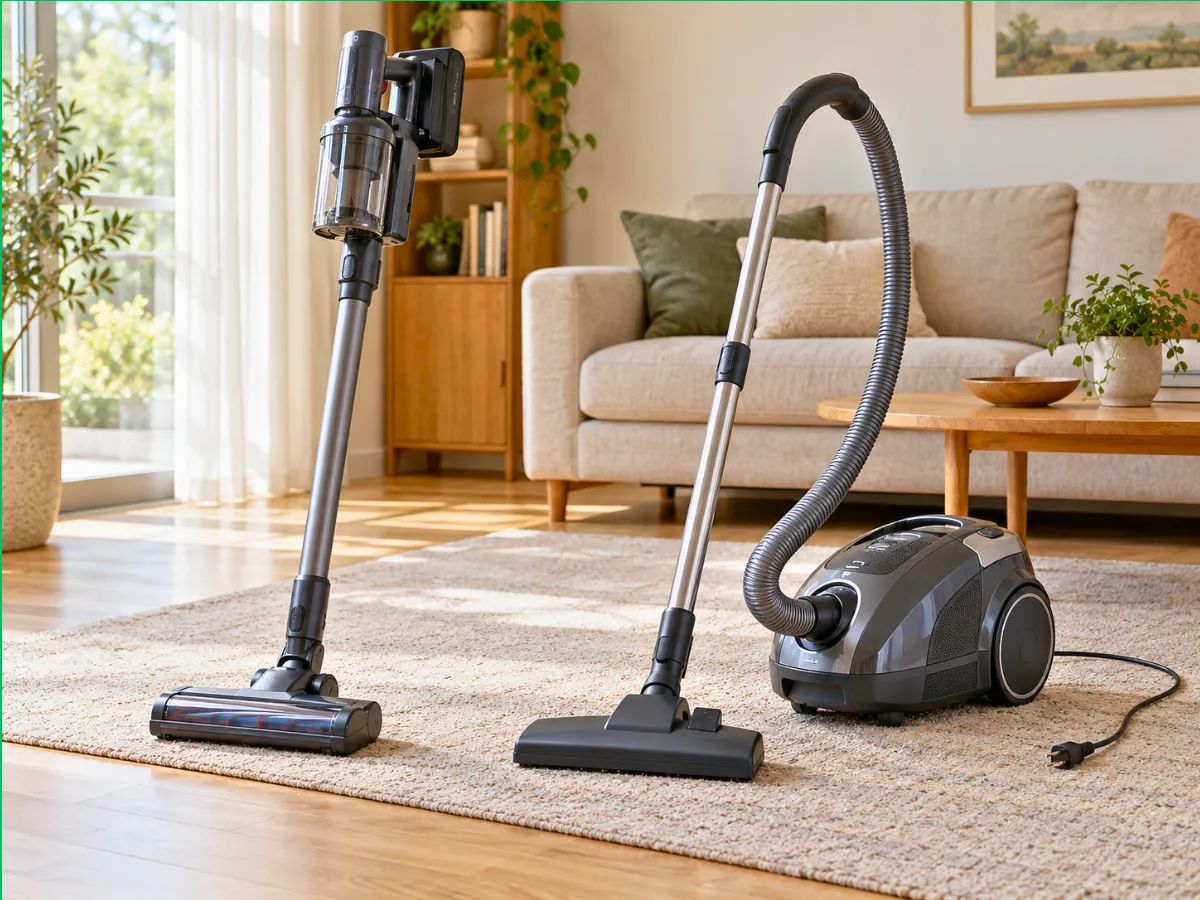

Buy a cordless vacuum for short, frequent cleanups and easy movement between rooms, stairs, and the car. Buy a corded vacuum when you prefer longer cleaning sessions without recharge breaks. Either can be your main cleaner if its floorhead, pickup, capacity, and handling suit your home.
The cordless vs corded vacuum decision is about how you finish the job. A strong cordless model is still inconvenient if it runs out halfway through your routine. A capable corded cleaner may stay in the cupboard if managing the cable makes every small cleanup feel like work.
When comparing the best vacuum cleaners, start with your floors and cleaning habits, then choose the power source that fits. You do not automatically need one of each.
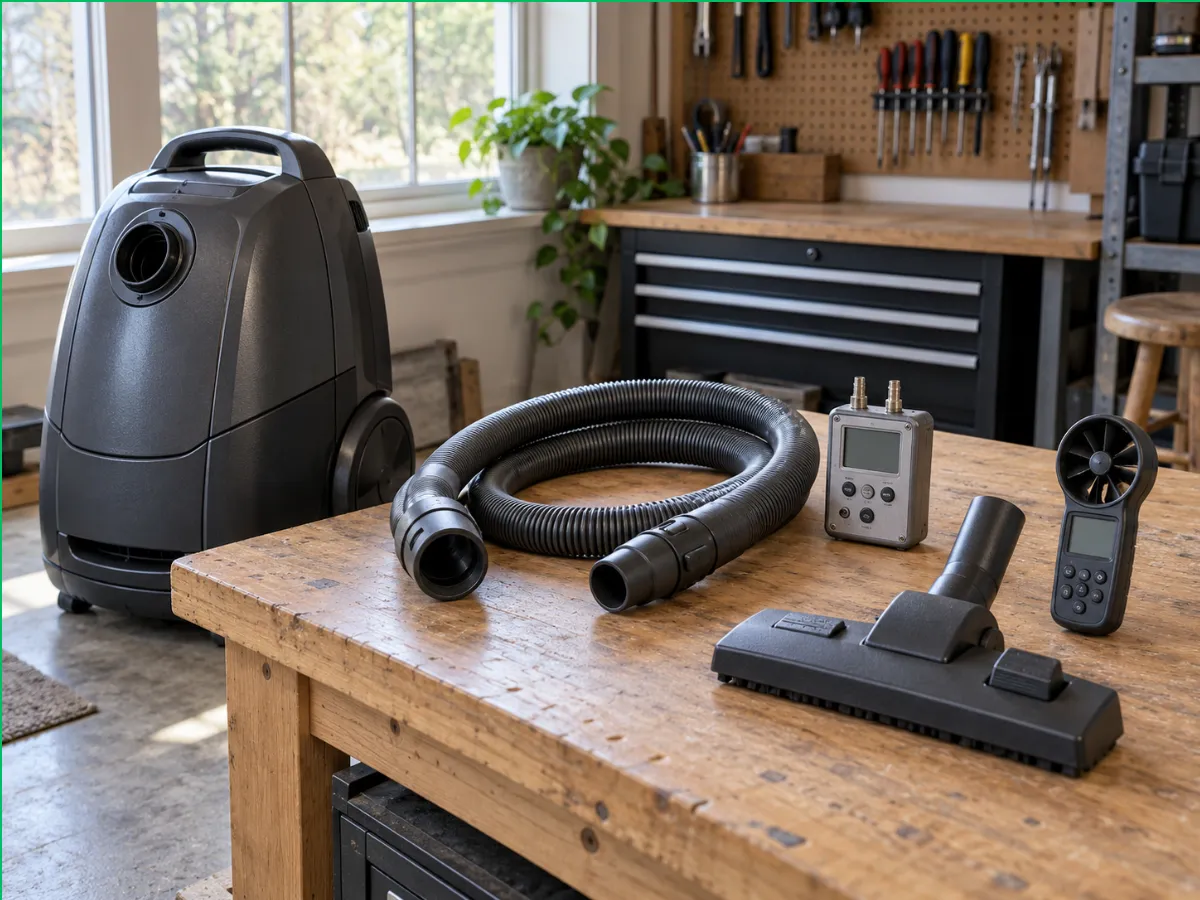
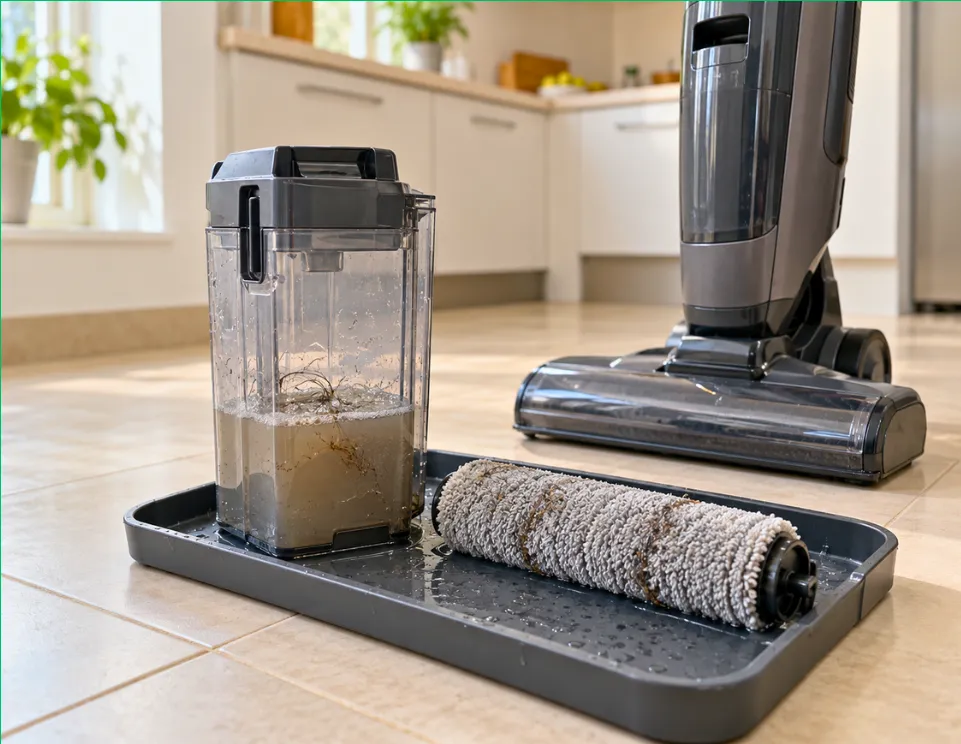
This comparison focuses on manually operated dry household vacuums. Robot cleaners, wet-floor washers, and workshop vacuums have additional requirements.
Cordless vs Corded Vacuum at a Glance
| Factor | Cordless vacuum | Corded vacuum |
|---|---|---|
| Power source | Rechargeable battery | Wall outlet |
| Main convenience | No cable to manage or outlets to change | No waiting for a battery to recharge |
| Session limit | Working runtime depends on mode, tool, load, and battery condition | Cord reach and routine emptying or maintenance still matter |
| Handling | Check handle weight and handheld balance | Check body style, hose reach, and cable management |
| Collection capacity | Compact sticks may need frequent emptying | Full-size designs may hold more; corded sticks can still have small bins |
| Storage | Charging location, battery access, and dock footprint | Space for body, cord, hose, and accessories |
| Long-term costs | Battery and charger, plus filters and wear parts | Cord or reel repairs, plus filters, bags where fitted, and wear parts |
Cleaning performance is model-specific. The power supply cannot tell you how well the head handles carpet grit, hard-floor dust, or larger crumbs.
First, Separate Power Source From Vacuum Type
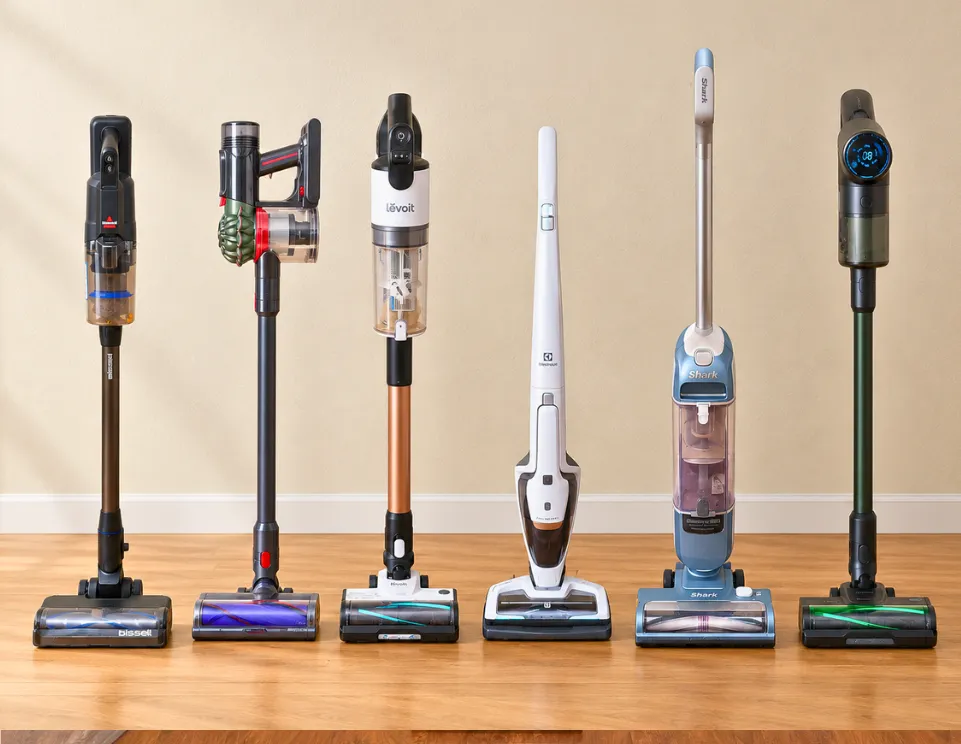
Cordless does not mean stick vacuum, and corded does not mean heavy upright.
Both power sources appear in different designs. Corded stick vacuums offer a slim body without battery charging, while canister vacuums keep much of the machine’s weight on the floor. Cordless designs also vary in where the motor and battery sit.
For example, the Shark POWERDETECT Ultra-Light HZ4002 is a corded stick vacuum. It illustrates why the choice is not simply between a cordless stick and a bulky upright.
If you like the stick format, compare our best stick vacuums. Decide how you want the cleaner to handle before assuming that a particular power source is necessary.
Dirt collection is another separate choice. Although bagless cordless sticks are common, battery-powered machines with disposable collection pods or bags also exist.
Which Cleans Better: Cordless or Corded?
Judge cleaning performance with the intended floorhead and power setting. Brush agitation, airflow, nozzle openings, and surface contact all affect pickup.
Corded operation lets you keep using the required setting without a battery recharge. Cordless operation may be just as practical if the machine cleans well in a mode that lasts for the whole job. A brief peak-power claim cannot settle that comparison.
Treat motor watts, suction pressure, and air watts as different measurements. Motor wattage describes electrical input; air watts describe air power under stated test conditions. Neither establishes carpet pickup or how easy the head is to move. Compare equivalent test conditions and power modes before ranking two machines by a number.
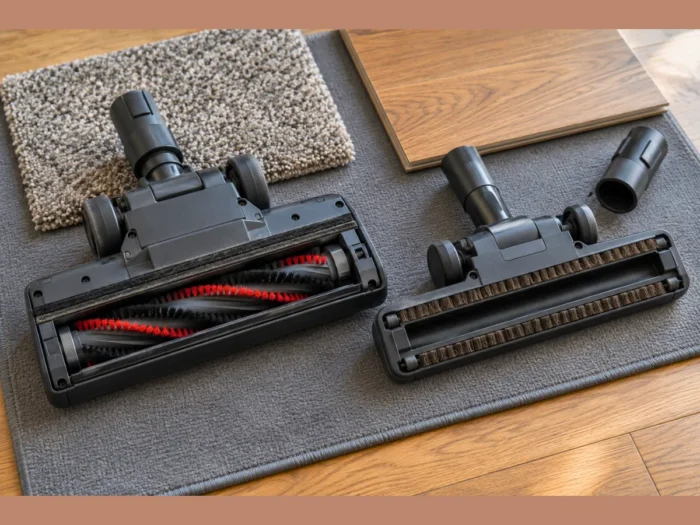 Compare the supplied floorhead and its suitability for your floors alongside the power source.
Carpet and embedded dirt
For a carpet-heavy home, prioritize embedded-dirt pickup, suitable brush height or floor settings, and a head you can push comfortably.
A suitable corded upright or powered canister is a sensible shortlist starting point for several carpeted rooms cleaned in one session.
For a cordless alternative, look for pickup results and runtime with the main floorhead attached. Do not assume every carpet requires boost mode.
For thick or delicate rugs, follow the rug maker’s care instructions. More suction or a more aggressive brush is not automatically better. Our best upright vacuum cleaners guide is a useful starting point if you prefer that format.
Hardwood, tile, laminate, and vinyl
On hard floors, cleaner-head design deserves at least as much attention as the power source. Look for a head suited to the surface, good fine-dust pickup, access for larger crumbs, and wheels that stay clean and roll freely.
A soft roller can be useful for fine dust and loose debris. Keep the head and wheels clear of grit, and follow the flooring and vacuum care instructions; a soft roller is not a universal guarantee against scratches.
Cordless operation is convenient for short kitchen or entryway cleanups. A corded canister or stick can be equally appropriate if you prefer its handling and have convenient outlets.
Pet hair on floors and furniture
Choose for the surfaces where hair collects. Embedded fur in carpet, loose hair along baseboards, and hair caught in upholstery require different tools.
Check brush access, hair wrap, collection capacity, and the supplied upholstery attachment. A “pet” badge does not establish that a powered furniture tool is included.
For long sessions through shedding season, avoiding recharge breaks may favor corded operation. For frequent furniture touch-ups, a compact cordless body may be easier to use. Our best vacuums for pet hair guide compares choices around those cleaning jobs.
Battery Runtime vs Corded Cleaning Time
Cordless runtime is useful only when you know the conditions behind it. The longest advertised figure may use a low-power setting and a non-motorized attachment, rather than the main floorhead on carpet.
Check these separately:
- Runtime with the powered floorhead attached.
- Performance and runtime in normal or automatic mode.
- Boost runtime, if your intended jobs require that mode.
- Full recharge time.
- Battery removability and compatible spare availability.
Do not assume the maximum suction claim and maximum runtime describe the same operating setup. Shark’s runtime guidance, for example, qualifies certain maximum figures by power mode and attachment.
How much runtime do you actually need?
Use your cleaning routine rather than a generic apartment-size chart. Time how long the vacuum is actively running during a normal session, then consider whether the candidate model can complete that job in the required mode.
A large home cleaned one room at a time may suit cordless operation. A smaller home cleaned intensively in one session may be more demanding on a battery.
Allow some margin rather than choosing a battery that barely covers the job when new. A spare can extend the session, but it adds purchase cost, charging arrangements, and another item to store. Confirm whether it is included or sold separately.
Does suction weaken as the battery drains?
Not necessarily. Some cordless designs regulate output instead of gradually becoming weaker throughout the charge. Their practical limit may be the point at which they stop and need charging.
Mode changes, attachments, cleaning load, and battery condition still affect runtime. Use boost as directed rather than assuming it is the normal setting for every job. Dyson’s battery guidance, for example, describes high-power modes as suitable for intensive bursts of spot cleaning.
Battery lifespan is different from runtime
Runtime tells you how long one charge lasts. Battery lifespan concerns how long the pack remains useful before reduced capacity makes replacement necessary. Lithium-ion batteries age, and the rate depends on use, storage, temperature, and the pack’s design.
Check the replacement procedure, battery warranty, and availability of the correct pack. Follow the specified charger and storage instructions. Avoid a fixed “replace every few years” rule that ignores the machine’s actual condition.
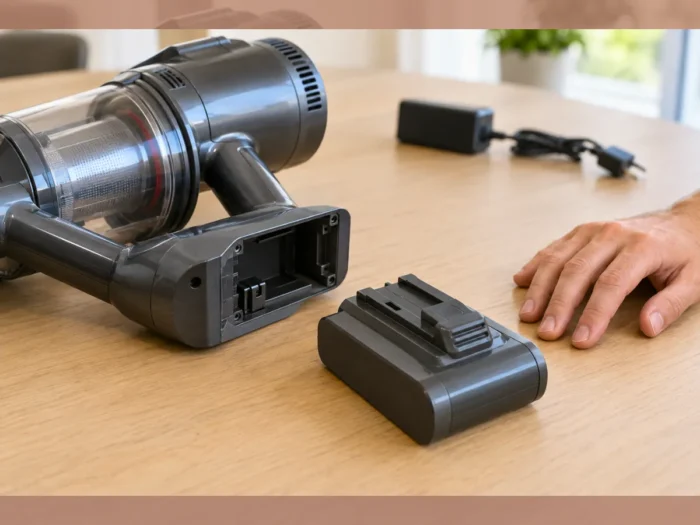 Check battery compatibility, replacement availability, warranty terms, and charging requirements.
Corded operation removes this battery concern. It still requires stops for emptying, maintenance, and outlet changes, and a blockage can reduce pickup regardless of the power supply.
Weight, Wrist Load, and Stair Cleaning
Total weight does not tell you how a vacuum feels in your hand.
A stick vacuum with the motor and battery near the handle can place noticeable load on the wrist, particularly when cleaning shelves or holding an upholstery tool above a seat. A canister may weigh more overall while leaving a lighter hose and wand in your hand.
Try to assess:
- How much weight you support while cleaning.
- Whether the head turns comfortably around furniture.
- How far you must lift the machine between rooms or floors.
- Whether controls are easy to reach and require continuous pressure.
- Whether the vacuum stands securely during a pause.
Cordless operation removes cable handling on stairs, but a bulky handheld body can still be tiring. Corded lift-away designs or canisters can work well when their hose reach and placement suit the staircase.
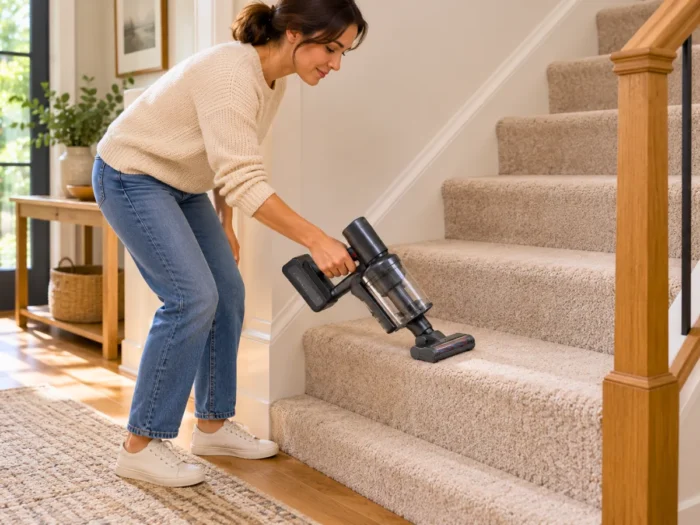 Assess the complete handheld configuration, including its balance, weight, and attachment.
For stairs and furniture, compare the complete handheld setup—not just the floor-cleaning configuration. Our best handheld vacuums guide covers compact alternatives if a full stick body feels awkward.
Cord Reach, Storage, and Charging
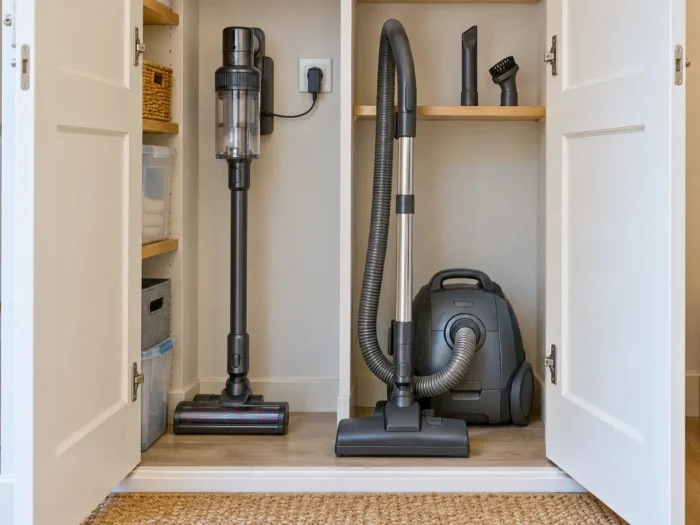 Allow space for charging, hoses, tools, and the machine’s complete stored configuration.
For a corded vacuum, consider the route from each outlet to the area you need to clean. Furniture, doorways, and the cord attachment point affect usable reach. A listed cord length is not the same as an unobstructed cleaning radius.
For stairs or a car parked outside, check the complete reach of the cord, hose, and tool without stretching the setup. Follow the manual’s guidance if additional electrical equipment is needed.
A cordless vacuum needs a practical place to charge, not merely a narrow gap in a cupboard.
Check whether the battery charges on the machine or separately, whether a wall mount requires drilling, and whether the vacuum can stand without support. An auto-empty dock may occupy substantially more space than a simple charger.
For a corded vacuum, consider the stored hose, wand, accessories, and wrapped cord. A canister’s footprint can be compact while its attachments still need somewhere to go.
For either type, follow the specified storage conditions. In particular, check battery temperature guidance before planning to keep a cordless vacuum in an unheated or very hot garage.
Dust Capacity, Bags, and Filtration
Frequent emptying can become more disruptive than either plugging in a cord or changing a battery. Compare collection capacity against the amount of dirt and hair you normally collect.
Compact cordless sticks often trade bin capacity for a smaller body. Full-size uprights and canisters may carry more, but the exact model matters: some corded sticks also have small bins.
Bagged vs bagless is a separate decision
 Examine how collected dirt is contained and removed, regardless of whether the vacuum is cordless or corded.
A bagged system keeps collected dirt inside a replaceable container. A bagless system lets you reuse the bin but requires direct emptying and periodic cleaning as instructed.
If you dislike handling loose dust, examine the bag closure or bin-emptying process closely. Sealing bags can reduce direct handling of collected debris. Bagless disposal can disturb dust, especially if hair needs to be pulled out by hand.
An auto-empty dock changes this routine, but it does not eliminate maintenance. Check whether the dock uses replacement bags and which tasks it actually performs. Emptying the bin does not automatically clean the filters or remove wrapped hair from the brush.
A HEPA label is not the whole filtration system
HEPA means high-efficiency particulate air. Look for documented whole-machine filtration and an air path designed to prevent air from bypassing the filter. Then consider what happens when you empty the container.
A filter specification does not describe dust released during emptying. Evaluate filtration during use and disposal as two parts of dust control. EPA’s explanation of HEPA vacuums also distinguishes a suitably designed machine from one merely fitted with a HEPA filter.
Check filter access, the cleaning schedule, and drying time. A washable filter may leave the vacuum unavailable while it dries unless an approved spare is ready. Wash only parts identified as washable, and keep the specified filters fitted during operation.
Purchase Price vs Long-Term Ownership Cost
There are inexpensive and expensive machines in both categories. Compare the complete setup you need rather than assuming cordless always costs more or corded always represents better value.
| Ownership item | What to check |
|---|---|
| Battery and charger | Replacement availability, compatibility, cost, and separate warranty terms |
| Bags or collection pods | Availability and recurring purchase cost |
| Filters | Cleaning method, replacement interval, and availability |
| Brushrolls and belts | Access for cleaning and availability of the correct replacements |
| Attachments | Whether the floorhead and powered furniture tool you need are included |
| Repairs | Service options, parts support, and warranty exclusions |
A removable battery is useful only if a suitable replacement remains available and makes economic sense. Check the actual parts listing rather than relying solely on “replaceable battery” in a feature list.
Both types can need motor, switch, hose, seal, or brush-drive repairs, depending on their construction. Corded models also have the power cord and any rewind mechanism; cordless models add the battery and charging system.
Neither power source guarantees a particular lifespan. Parts support, construction, workload, and maintenance all affect how long the vacuum remains useful.
What About Cars and Garage Cleanup?
For car interiors, cordless equipment is convenient when an outlet is inconvenient or unavailable. Check whether the body fits between seats and whether the hose or nozzle reaches beneath them.
A corded vacuum can also work when suitable power and reach are available. Our best car vacuum cleaners guide helps narrow the choice around vehicle access and attachments.
Garage cleanup raises a separate equipment question. Choose a vacuum rated for the material and task rather than sending workshop debris or liquids into an ordinary dry household cleaner.
Should You Buy Cordless, Corded, or Both?
| Your situation | Start here | Confirm before buying |
|---|---|---|
| Short, frequent cleanups | Cordless | Easy handling, suitable head, and convenient charging |
| Several rooms in one long session | Corded, or cordless with sufficient working runtime | Capacity, reach, pickup, and recharge requirements |
| Mostly carpet | A capable powered-head cleaner in either category | Embedded-dirt pickup, movement on your carpet, and useful runtime |
| Mostly hard floors | Either power source | Fine-dust pickup, debris entry, surface suitability, and handling |
| Frequent stairs or furniture cleaning | A comfortable handheld configuration | Weight in hand, powered tool availability, and reach |
| Minimal loose-dust handling | A suitable bagged or contained-disposal design | Filtration, bag closure, emptying, and replacement supplies |
| Existing main vacuum that still cleans well | A companion only if it fills a clear gap | Whether easier daily use justifies another machine |
Buy cordless for easier daily access
Cordless makes sense when the cable or setup effort is what keeps you from tackling small messes. It can also serve as a main cleaner if pickup, capacity, and runtime meet your needs.
Use our best cordless vacuum cleaners guide to compare suitable models after deciding which floorhead and working runtime you require.
Buy corded for longer sessions without recharging
Corded makes sense when you prefer to finish larger cleaning sessions in one go or do not want to manage batteries. Choose the body style and attachments around your floors and physical comfort.
Do not overlook a corded stick or compact canister simply because you associate corded cleaners with heavy uprights.
Buy both only when the jobs are different
A compact cordless for quick touch-ups and a capable corded cleaner for longer sessions can be practical. It is not a requirement for a clean home.
Keep a working vacuum if it still does its job. Add another only when it solves a specific inconvenience or cleaning gap, and you have room for the extra storage and maintenance.
Frequently Asked Questions
Can a cordless vacuum replace a corded vacuum completely?
Yes, if it cleans your surfaces effectively, has enough capacity, and completes your normal routine in a suitable mode. Home size alone cannot settle the question. If the job needs repeated recharging or constant emptying, a different design may be more practical.
Which costs less to run?
The cord alone does not answer that. Electricity use depends on input power and operating time, with charging losses also relevant to cordless models. For ownership costs, include filters, bags or pods, batteries, and repairs. A lower purchase price does not necessarily mean a lower total cost.
Should you leave a cordless vacuum charging all the time?
Follow the instructions for the specific battery, charger, and dock. Some systems are designed for storage on the charging dock, but temperature limits and charging guidance vary. Use the approved charging equipment.
Conclusion
Choose cordless when moving freely and starting quickly make cleaning easier. Choose corded when you want to finish the work without planning around battery charge.
Then compare the details that determine whether either choice will work: pickup on your floors, the correct attachments, comfortable handling, useful capacity, dust disposal, and parts support. Buy one machine that meets those needs before assuming you need two.
Engr. Hm Jamal
Founder & Lead Technical EditorFounder of Wits Engineer, with a practical background in electrical and water systems. His product reviews focus on setup, performance, maintenance and the trade-offs that affect everyday ownership.