Best Portable Power Stations of 2026 for Home Backup & Camping
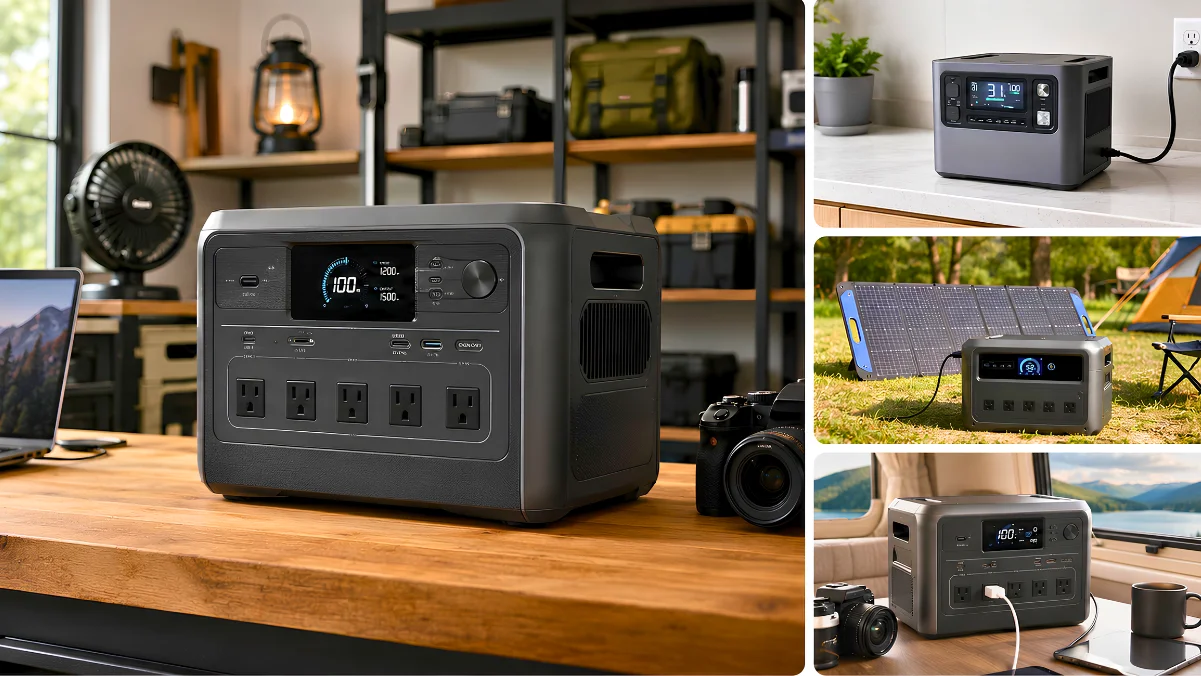

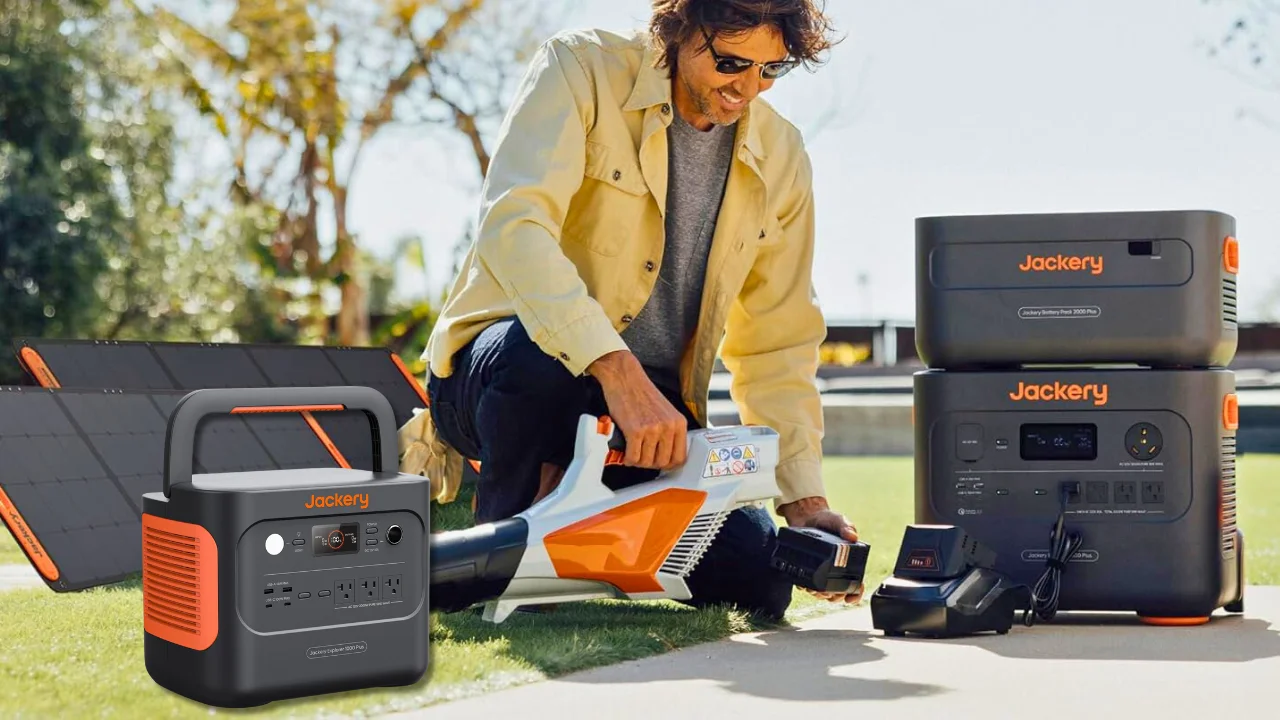
The best portable power station matches your real power needs, not the biggest number on the box. This guide covers the best portable power stations for 2026 with detailed reviews, comparisons, and buying advice for U.S. homeowners, campers, RV users, off-grid workers, drone creators, and anyone needing backup power during outages.
Portable power stations provide quiet, indoor-safe backup power for essential devices during outages, camping trips, RV travel, and short-term home backup. A 1,000Wh unit may suffice for phones, laptops, Wi-Fi routers, lights, CPAP support, and short refrigerator backup. A 2,000Wh to 3,000Wh power station suits RV trips, larger appliances, portable refrigerators, power tools, and extended outages.
A portable power station is a rechargeable battery-powered generator. It stores energy in a battery, then uses an internal inverter to convert stored direct current power into alternating current power. Energy is distributed via AC outlets, USB ports, USB-C ports, USB-A ports, DC outputs, and, sometimes, RV ports.
A Battery Management System helps protect the battery during charging and use. A charge controller regulates the flow of electricity during charging from a wall outlet, solar panels, or other sources. Most portable power stations require no fuel storage, produce no fumes, run quietly, and offer simple plug-and-play operation for indoor use.
Quick Picks: Best Portable Power Stations
| Award | Product | Capacity | Watts | Best For |
|---|---|---|---|---|
| Best Overall | EcoFlow DELTA 3 Plus | 1,024Wh | 1,800W | Home backup, camping, RV |
| Best Fast Charging | Anker SOLIX C1000 Gen 2 | 1,024Wh | 2,000W | Fast outage prep |
| Best Value 1kWh | OUPES Mega 1 Lite | 1,024Wh | 2,000W | Budget backup power |
| Best Solar Bundle | Goal Zero Yeti 1500 + Nomad 200 | 1,505Wh | 2,000W | Off grid solar use |
| Best for Camping | Jackery Explorer 1000 v2 | 1,070Wh | 1,500W | Camping trips and field use |
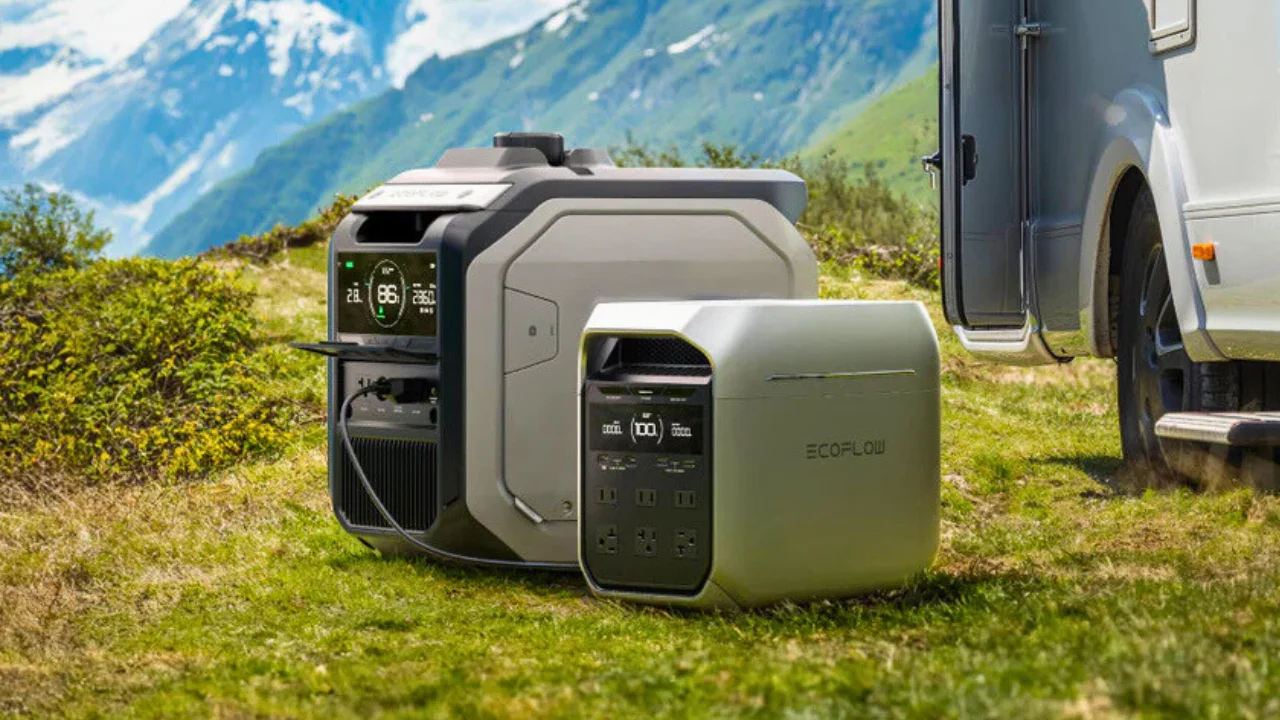
| Best for RVs | BLUETTI Elite 300 | 3,014Wh | 2,400W | RVs and home backup |
| Best for Drone Operators | DJI Power 2000 | 2,048Wh | 3,000W | Drones, cameras, creators |
| Best High-Capacity Budget | AFERIY P280 | 2,048Wh | 2,800W | Appliances and outages |
Prices, bundles, and solar panel availability change often, so check current listings before deciding. For a safe pick for most homes, start with the EcoFlow DELTA 3 Plus. We chose it as best overall because its high solar input offers better off-grid flexibility than the Anker SOLIX C1000 Gen 2, even though Anker has faster AC charging and slightly higher rated output.
How We Selected These Portable Power Stations
We compared portable power stations based on battery capacity, inverter output, charging speed, solar input, battery chemistry, portability, warranty support, and overall value.
We prioritized products with a clear use case rather than choosing models based solely on advertised specifications. Where independent testing was unavailable, manufacturer specifications were treated as claims and evaluated alongside buyer fit, feature set, and practical limitations.
Comparison Table: Capacity, Output, Ports, Solar Input, and Weight
| Product | Battery | Output | Solar Input | Key Ports | Weight Class | Best Use |
|---|---|---|---|---|---|---|
| EcoFlow DELTA 3 Plus | 1,024Wh LFP | 1,800W | Up to 1,000W | AC, USB-C, USB-A, DC | Midweight | Best overall |
| Anker SOLIX C1000 Gen 2 | 1,024Wh LFP | 2,000W | Up to 600W | 10 output ports | Midweight | Fast charging |
| OUPES Mega 1 Lite | 1,024Wh LFP | 2,000W | Up to 800W | AC, 140W USB-C, DC | Midweight | Value 1kWh |
| Goal Zero Yeti 1500 + Nomad 200 | 1,505Wh LFP | 2,000W | Up to 900W | AC, USB-C, 12V | Heavy | Solar bundle |
| Jackery Explorer 1000 v2 | 1,070Wh LFP | 1,500W | Up to 400W | AC, USB-C, USB-A, car | Portable 1kWh | Camping |
| BLUETTI Elite 300 | 3,014Wh LFP | 2,400W | Up to 1,200W | TT-30, AC, 12V/30A | Heavy | RV backup |
| DJI Power 2000 | 2,048Wh LFP | 3,000W | Solar-ready | AC, USB-C, USB-A, SDC | Heavy | Drone creators |
| AFERIY P280 | 2,048Wh LFP | 2,800W | Up to 1,200W | AC, USB-C, USB-A, DC | Heavy | Budget 2kWh |
The table shows the main trade-off. Smaller power stations are easier to carry but store less energy. Larger power stations offer more battery capacity and output power but require a garage, RV, or two-person carry.
For a simple apartment emergency kit, a small power station can keep phones, lights, a laptop, and a Wi-Fi router running.
Apartment users should prioritize indoor use, low noise, a compact footprint, USB-C ports, and enough battery capacity for a router, laptop, phone, light, and CPAP machine.
For portable refrigerators, coffee makers, power tools, medical equipment, or larger appliances, you need more power and stronger surge protection.
Our Top Picks
Detailed product reviews
EF EcoFlow DELTA 3 Plus — Best Overall Portable Power Station
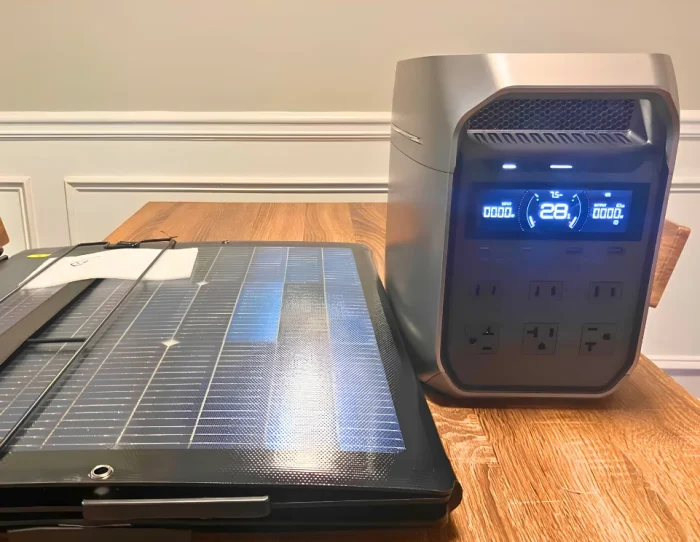
The EcoFlow DELTA 3 Plus is the best portable power station for most buyers because it balances capacity, charging speed, output power, solar input, and portability. It features a 1,024Wh LiFePO4 battery, 1,800W AC output, 3,600W surge support, 140W USB-C, and fast AC charging from a wall outlet.
This portable power station fits several jobs without becoming too large. It supports home backup basics, camping trips, RV use, routers, laptops, lights, fans, portable refrigerators, and CPAP support, as well as short-term refrigerator backup. It is not a whole-home system but provides enough power for essential devices during normal outages.
The 1,000W solar input is the main reason it wins overall over the Anker SOLIX C1000 Gen 2. Anker charges faster from AC and has a higher-rated output, but EcoFlow offers better solar charging flexibility for off-grid use and extended outages when paired with enough solar panels.
The 1,800W output also gives useful headroom for many household appliances. Still, buyers should check surge protection requirements before using it with refrigerators, pumps, compressors, or other power-hungry items.
Its main weakness is price. EcoFlow is a reputable brand with a strong app and accessory ecosystem, but you often pay more for that polish. Solar panels are sold separately unless you buy a bundle.
Pros
Fast wall outlet chargingStrong 1,800W outputHigh 1,000W solar inputUseful 140W USB-C
Cons
Solar panels cost extraHigher than budget brandsNot whole-home backup
Who it’s for: The EcoFlow DELTA 3 Plus is best for homeowners, campers, RV users, and emergency-prep buyers who want a single reliable backup power unit for a range of common situations.
Who should skip it: Skip it if you need a large expandable system for an entire home or if your primary concern is the lowest price per watt-hour.
Verdict: The EcoFlow DELTA 3 Plus is the strongest all-around pick because it gives practical battery capacity, fast charging, strong solar input, and enough output power for most everyday backup needs.
Anker SOLIX C1000 Gen 2 — Best Fast-Charging Power Station
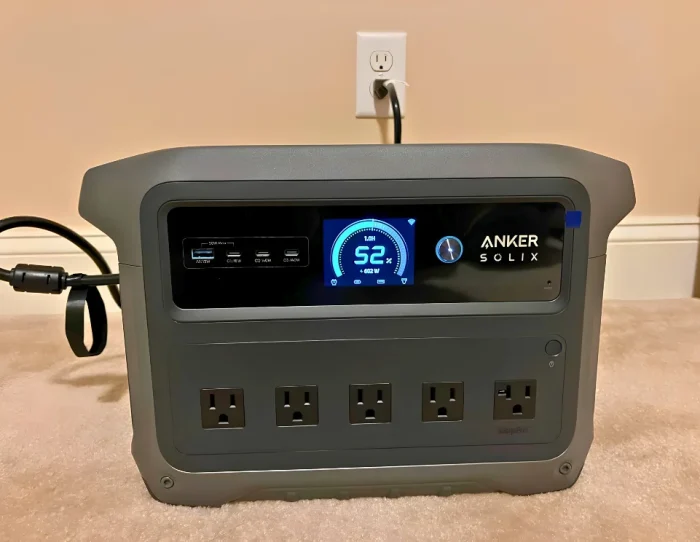
The Anker SOLIX C1000 Gen 2 is the best portable power station here if recharge speed matters most. It has a 1,024Wh LiFePO4 battery, 2,000W AC output, 3,000W peak output, 10 output ports, 10ms UPS support, 600W solar input, and a claimed full recharge in 49 minutes when the fastest mode is enabled.
That fast wall outlet recharge is not just a spec-sheet benefit. During storm season, a power station that refills in under an hour is easier to keep ready. You can top it off quickly before outages, then use it to power phones, laptops, Wi-Fi routers, lights, a fan, CPAP support, and other essential devices.
The 2,000W output gives it more headroom than many 1kWh power stations. It can run more household appliances than a small power station, though runtime is limited by the 1,024Wh battery capacity. A coffee maker or microwave may run briefly, but those loads drain power quickly.
Anker also gives this model a strong trust angle. The brand is familiar, the design is clean, and the product has a clear role: fast charging, strong output, and simple emergency backup. It offers better trusted-brand value than many unknown high-spec units.
The trade-off is solar input. Up to 600W is useful but not as high as the EcoFlow DELTA 3 Plus or the AFERIY P280. Solar panels are optional, and the fastest AC charging mode may require app control.
Pros
Very fast 49-minute chargingStrong 2,000W outputUseful 10ms UPS supportTen output ports
Cons
Solar panels sold separatelyNot a long-outage systemThe app may unlock the best settings
Who it’s for: The Anker SOLIX C1000 Gen 2 is best for buyers who want quick emergency backup power for outages, CPAP use, routers, lights, laptops, and short appliance support.
Who should skip it: Skip it if you need expandable capacity, RV ports, or solar charging as your main power source.
Verdict: The Anker SOLIX C1000 Gen 2 is the best fast-charging 1kWh power station in this lineup. It is a strong choice for storm prep and quick recharge needs.
OUPES Mega 1 Lite — Best Value 1kWh Portable Power Station
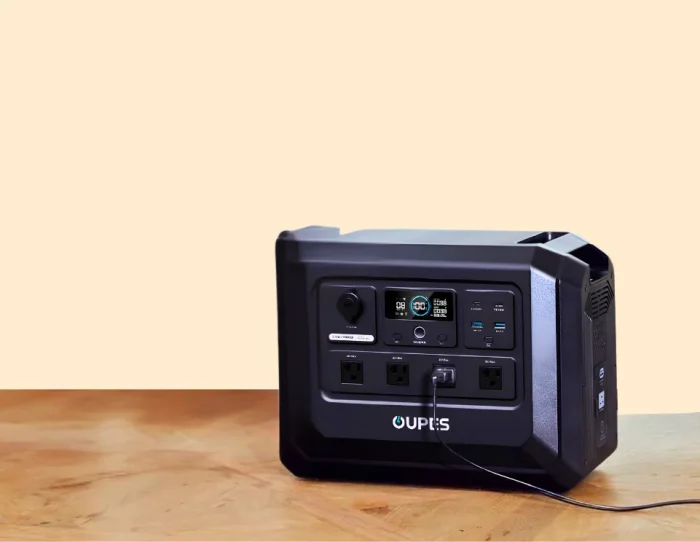
The OUPES Mega 1 Lite is the value pick for buyers who want a 1,024Wh LiFePO4 portable power station with high output power and expandable capacity without paying premium-brand pricing. It offers 2,000W AC output, 4,500W peak output, 140W USB-C PD, UPS support, and expansion up to 5,120Wh with extra batteries.
Its role is clear. It does not try to beat EcoFlow or Anker on ecosystem polish. Instead, it offers strong numbers for the money. That makes it useful for budget-focused homeowners, campers, RV users, and anyone who wants backup power for small electronics, lights, laptops, Wi-Fi routers, a mini fridge, fans, and short appliance use.
The 2,000W rated output is strong for this battery capacity class. It gives the Mega 1 Lite enough power for many household appliances and camping loads. The 4,500W peak sounds large, but buyers should treat surge ratings carefully. Always check starting watts of refrigerators, pumps, compressors, and power tools before relying on peak output.
The expandable capacity is the most interesting feature. A single unit delivers 1,024 Wh, but expansion batteries can turn it into a larger backup power setup. That makes it more flexible than many small power stations that cannot grow.
The downside is brand confidence. OUPES is less familiar than Jackery, EcoFlow, Anker, Goal Zero, or BLUETTI. Check warranty terms, seller support, and accessory availability before purchase.
Pros
Strong 2,000W outputExpandable battery capacityGood price-to-spec ratio140W USB-C PD
Cons
Less mainstream brandSupport may vary by sellerThe app ecosystem is less mature
Who it’s for: The OUPES Mega 1 Lite is best for budget buyers who want a powerful 1kWh station for home backup, camping, RV use, and emergency charging.
Who should skip it: Skip it if brand reputation, long-term support, and accessory ecosystem matter more than raw value.
Verdict: The OUPES Mega 1 Lite is the best value portable power station in the 1kWh class. It offers more power for the money, but buyers should verify the warranty and seller support.
Goal Zero Yeti 1500 + Nomad 200 — Best Solar Panel Bundle
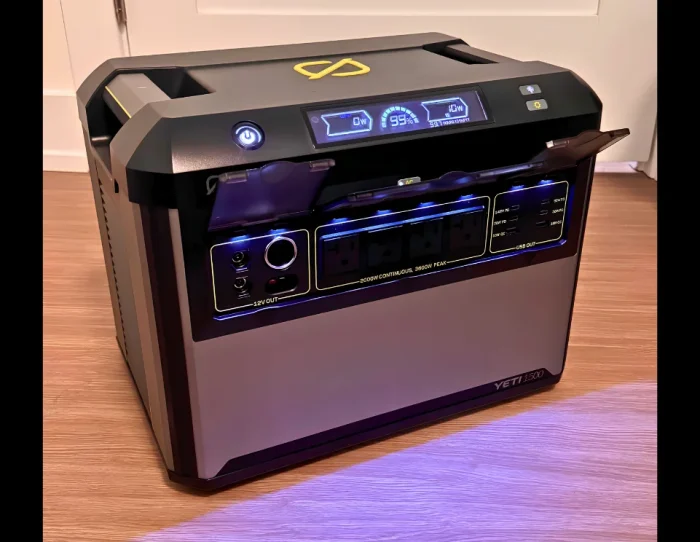
The Goal Zero Yeti 1500 with Nomad 200 solar panel is the best solar bundle in this roundup. It pairs a 1,505Wh LiFePO4 power station with a 200W foldable solar panel, giving buyers a more complete off-grid setup than a power station alone.
This is not the lightest or cheapest portable power station. The Yeti 1500 weighs about 53 pounds, so it fits better in a vehicle, garage, cabin, overlanding setup, or campsite base station than in a lightweight camping pack. That weight also brings more battery capacity than 1kWh units.
The 2,000W continuous output and 3,600W surge support make it useful for larger loads, including portable refrigerators, lights, routers, laptops, small appliances, and some tools. The 900W max solar input is also practical if you add more compatible solar panels beyond the included Nomad 200.
Goal Zero’s strength is outdoor trust. The brand has been around for more than a decade, and many campers recognize its Yeti and Nomad products. The included solar panel also helps readers who do not want to build a separate solar generator kit from scratch.
The weakness is value. A bundle can cost more than buying a budget power station and solar panels separately. It is also overkill if you only need to charge phones, cameras, lights, or small devices.
Pros
Includes solar panel bundleStrong 1,505Wh capacity2,000W AC inverter900W max solar input
Cons
Heavy 53-pound bodyCosts more than 1kWh unitsOverkill for light use
Who it’s for: The Goal Zero Yeti 1500 + Nomad 200 is best for campers, overlanders, cabin users, van-life travelers, and homeowners who want a ready solar generator-style bundle.
Who should skip it: Skip it if you want a small power station for casual charging or the cheapest watt-hours per dollar.
Verdict: The Goal Zero Yeti 1500 + Nomad 200 is the best choice here for buyers who want a reputable solar bundle, not just a battery box.
Jackery Explorer 1000 v2 — Best Portable Power Station for Camping
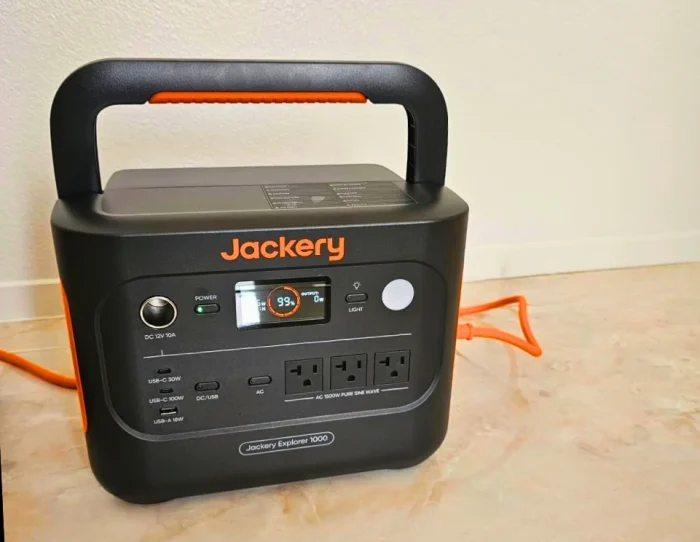
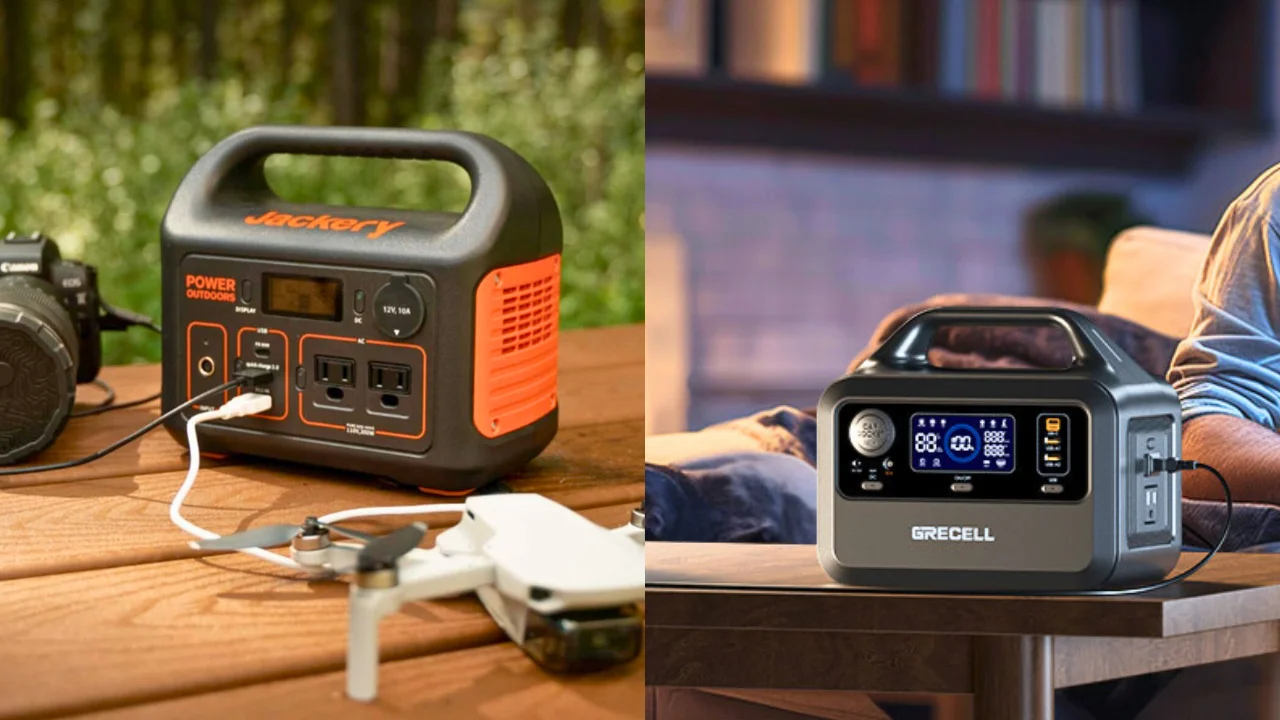
The Jackery Explorer 1000 v2 is the best portable power station for camping because it keeps the formula simple: a 1,070Wh LiFePO4 battery, 1,500W AC output, 3,000W surge support, 100W USB-C, 3 AC outlets, 2 USB-C ports, 1 USB-A port, a car outlet, and a user-friendly design that is easy to move and understand.
Jackery is one of the most familiar names in portable power. That matters for campers who want a simple unit for lights, phones, cameras, laptops, fans, portable refrigerators, projectors, and weekend gear. The Explorer 1000 v2 is not the most powerful 1kWh unit here but is one of the easiest to recommend for outdoor adventures.
The 1,500W output is enough for many camping and emergency loads. It can support a mini fridge, router, lights, and small appliances, but it has less headroom than the Anker SOLIX C1000 Gen 2 or OUPES Mega 1 Lite. If you plan to run a microwave, coffee maker, or power tools frequently, check the output requirements carefully.
The main advantage is portability. This is a practical single unit for car camping, tailgating, RV trips, and short-term backup. It does not feel like a garage-only battery. Controls are familiar, port selection covers basic needs, and the brand ecosystem is easy to understand.
The limitation is solar charging. Solar panels are optional, and solar input is not as aggressive as some competitors. For off-grid use over several days, you may want more panel capacity or a larger station.
Pros
Practical camping size1,070Wh LiFePO4 batterySimple, user-friendly designFamiliar Jackery ecosystem
Cons
Lower output than some rivalsSolar panels sold separatelyLimited for heavy appliances
Who it’s for: The Jackery Explorer 1000 v2 is best for campers, road-trippers, RV travelers, tailgaters, and buyers who want a simple, portable power station for weekend use.
Who should skip it: Skip it if you want maximum output power, faster solar charging, or larger home backup capacity.
Verdict: The Jackery Explorer 1000 v2 is not the highest-spec 1kWh power station, but it is one of the easiest camping picks to live with.
BLUETTI Elite 300 — Best Portable Power Station for RVs
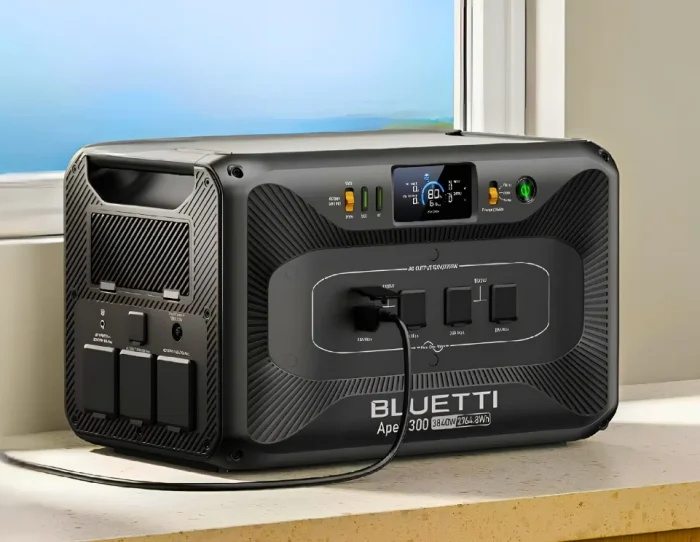
The BLUETTI Elite 300 is the best portable power station for RV use in this lineup because it has a 3,014Wh LiFePO4 battery, 2,400W AC output, 4,800W surge support, TT-30 RV port, 12V/30A DC output, up to 1,200W input, and a body that stays under 60 pounds.
This is a larger power station, not a casual camping cube. It suits RVs, garages, cabins, and home backup better than frequent hand-carry use. The extra weight provides much more battery capacity than 1kWh models.
For RV owners, the TT-30 outlet is the key detail. Many portable power stations can charge gadgets, but fewer are designed with an RV connection in mind. The 12V/30A DC output also helps with DC-powered RV and van equipment.
The 3kWh battery capacity makes the Elite 300 useful for refrigerators, portable refrigerators, lights, Wi Fi routers, fans, small appliances, and extended outage support. It can handle more household appliances than smaller units, although buyers still need to manage loads carefully. It will not power an entire home unless it is connected to a properly designed backup system.
BLUETTI has a strong brand presence in home backup and solar generators, aiding accessory availability and buyer trust. The main weakness is it does not suit light users. If you only need to charge phones, laptops, and small electronics, this has too much battery and weight.
Pros
Large 3,014Wh capacityRV-ready TT-30 port2,400W AC output12V/30A DC output
Cons
Heavy for casual useCosts more than 1kWh unitsNot a small power station
Who it’s for: The BLUETTI Elite 300 is best for RV owners, van users, and homeowners who need reliable backup power for larger loads and longer outages. For more options, see our guide to the best power stations for home backup.
Who should skip it: Skip it if you need a lightweight portable device charger or a compact camping unit.
Verdict: The BLUETTI Elite 300 is the strongest RV pick here because it combines battery capacity, RV-specific ports, and enough output power for more demanding use.
DJI Power 2000 — Best Portable Power Station for Drone Operators
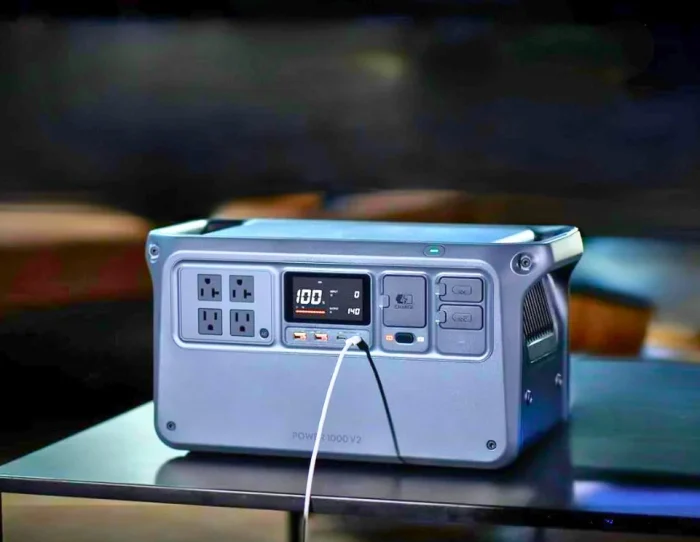
The DJI Power 2000 is the best portable power station for drone operators, photographers, creators, and field teams. It has a 2,048Wh LFP battery, 3,000W AC output, fast 0–80% recharge, SDC ports for DJI gear, multiple AC/USB outputs, quiet operation claims, and expandable capacity up to 22,528Wh with extra batteries.
This product has a clearer niche than most power stations. Many models can charge laptops, cameras, and phones, but the DJI Power 2000 is a natural fit for people already working in the DJI ecosystem. Drone batteries, camera gear, production laptops, lights, monitors, and small field appliances all benefit from a high-output power station with many ports.
The 3,000W output gives it serious headroom. It can handle more power-hungry items than most 1kWh units and can support household appliances during outages. That makes it more than a creator accessory. It can also work for RV trips, home backup, off-grid work, and emergency backup.
The 2,048Wh battery capacity is a practical middle ground. It is much stronger than a small power station but not as massive as a full home backup cabinet. Expansion support gives it long-term flexibility if you want more power later.
The drawback is buyer fit. If you do not use DJI gear or creator equipment, some of its unique value may be wasted. It is heavy enough to be treated as a vehicle, jobsite, studio, RV, or home backup unit rather than a casual carry product.
Pros
Strong 3,000W outputGood for DJI users2,048Wh LFP batteryExpandable capacity
Cons
Heavy for casual carryingBest value for creatorsAccessories add cost
Who it’s for: The DJI Power 2000 is best for drone pilots, photographers, filmmakers, field workers, RV users, and anyone who needs reliable power for production gear and appliances.
Who should skip it: Skip it if you only need basic backup power for phones, laptops, lights, and routers.
Verdict: The DJI Power 2000 earns its place because it serves a real group most roundups underserve: creators who need high-output portable power away from the grid.
AFERIY P280 — Best High-Capacity Budget Power Station
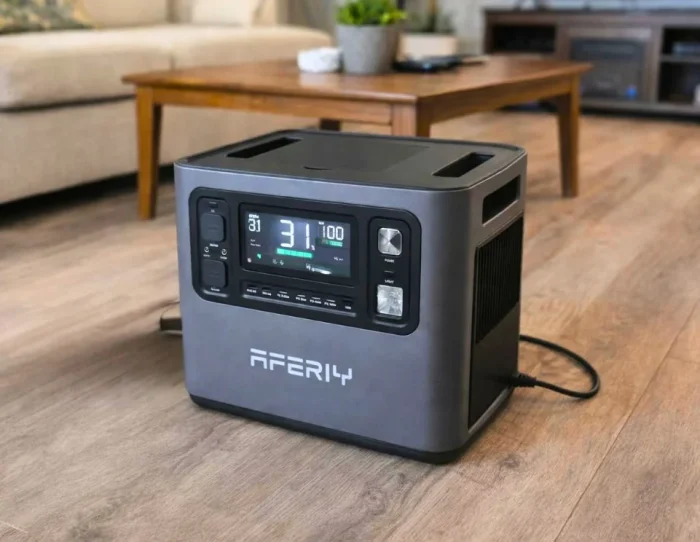
The AFERIY P280 is the best high-capacity budget pick because it offers a 2,048Wh LiFePO4 battery, 2,800W pure sine wave output, 5,600W peak output, 1,200W solar input via dual solar paths, fast AC charging, <10ms UPS support, dual 140W USB-C PD ports, and expandable capacity up to 10,240Wh.
This product suits buyers who want more power for less money. It has enough battery capacity and output power for home backup, outages, RV use, refrigerators, coffee makers, larger appliances, power tools, and off-grid work. It is not a small power station but offers stronger backup than most 1kWh units.
The 2,800W output is the main reason to consider it. Many power stations in the 2kWh range sit closer to 2,000W. That extra output helps when running higher-demand devices, though buyers should check surge needs and avoid overloading the system.
The 1,200W solar input is also useful. With enough compatible solar panels, the P280 can recover power faster than many cheaper units. That matters for extended outages and off-grid adventures where a wall outlet is not available.
The trade-off is brand confidence and portability. AFERIY does not have the same mainstream recognition as EcoFlow, Anker, Jackery, BLUETTI, or Goal Zero. The unit is also heavy, so it fits better as a home, RV, garage, or campsite power station than a grab-and-go device.
Pros
Large 2,048Wh batteryStrong 2,800W inverter1,200W solar inputExpandable over 10kWh
Cons
Heavy and bulkyLess famous brandEcosystem is less proven.
Who it’s for: The AFERIY P280 is best for budget-focused buyers who need high output, backup power, expandable capacity, and support for appliances during power outages.
Who should skip it: Skip it if you want the safest mainstream brand choice or a lightweight unit for camping trips.
Verdict: The AFERIY P280 is a strong-value 2kWh power station. It is not the most polished brand pick, but the capacity, output, and solar input are hard to ignore for the price.
Which Portable Power Station Should You Buy?
Choose EcoFlow DELTA 3 Plus if you want the best overall portable power station for home backup, camping, and general use.
Anker SOLIX C1000 Gen 2 if fast wall outlet charging matters most.
OUPES Mega 1 Lite: If you want a strong 1kWh value, pick the expandable capacity model.
Goal Zero Yeti 1500 + Nomad 200 for a solar generator bundle for off-grid adventures.
Jackery Explorer 1000 v2 is a simple, familiar, camping-friendly power station.
BLUETTI Elite 300 is the best choice if you need RV-ready ports, greater battery capacity, and stronger home backup.
DJI Power 2000 is for charging drones, cameras, laptops, and production gear in the field.
AFERIY P280 if you want high-capacity backup power for the money.
Compare the products
Choose the products you want to compare. Ratings retain each product’s original rubric.
| Product | EF EcoFlow DELTA 3 Plus — Best Overall Portable Power Station | Anker SOLIX C1000 Gen 2 — Best Fast-Charging Power Station | OUPES Mega 1 Lite — Best Value 1kWh Portable Power Station | Goal Zero Yeti 1500 + Nomad 200 — Best Solar Panel Bundle | Jackery Explorer 1000 v2 — Best Portable Power Station for Camping | BLUETTI Elite 300 — Best Portable Power Station for RVs | DJI Power 2000 — Best Portable Power Station for Drone Operators | AFERIY P280 — Best High-Capacity Budget Power Station |
|---|---|---|---|---|---|---|---|---|
| Check current price | Check price on Amazon ↗ | Check price on Amazon ↗ | Check price on Amazon ↗ | Check price on Amazon ↗ | Check price on Amazon ↗ | Check price on Amazon ↗ | Check price on Amazon ↗ | Check price on Amazon ↗ |
Portable Power Station vs Solar Generator vs Gas Generator
A portable power station is a battery-powered generator. A solar generator typically refers to a portable power station paired with solar panels. A gas generator creates electricity from gasoline, propane, or natural gas.
Portable power stations run quietly, produce no fumes, and are safe for indoor use when operated correctly. They are better for laptops, phones, Wi Fi routers, medical equipment, lights, and smaller household appliances.
Gas generators can run high loads for longer if you have fuel, but they produce exhaust and must stay outdoors. They are not safe for indoor use.
| Indoor use | Yes | Battery indoors | No |
| Noise | Quiet | Quiet | Loud |
| Fumes | None | None | Yes |
| Fuel | Stored battery | Solar + battery | Gas or propane |
| Maintenance | Low | Low | Higher |
| Best for | Essential devices | Off grid and outages | Long high-load outages |
Never backfeed a home outlet with a power station or generator. If you want to power home circuits, use a proper transfer switch, interlock, smart panel, or electrician-approved inlet setup. For most buyers, the safer approach is to plug essential devices directly into the power station.
How to Choose the Best Portable Power Station
Choosing the best portable power station starts with your actual devices. Do not buy only by brand, size, or discount. Match the station to how much power you need, how long you need it, and where you will use it.
For more details, see our full guide to choosing the best portable power station.
Start With Your Power Requirements
List the devices you want to run.
Phones, tablets, cameras, laptops, Wi Fi routers, and LED lights use modest power. Portable refrigerators, coffee makers, microwaves, pumps, and power tools need much more output power.
Then decide whether you need short-term backup or extended outages support. A power station for camping trips is not the same as one for home backup.
Understand Watt Hours
Watt-hours show how much energy the battery stores.
A 1,000Wh power station can theoretically run a 100W device for about 10 hours. The actual runtime is lower because the inverter and electronics consume power.
This is why battery capacity matters for runtime, while output power decides what the unit can run at once.
Understand Watts and Output Power
Watts tell you how much power the station can deliver at one time.
A 300W small power station may charge portable devices and small electronics. A 1,500W to 2,000W unit can handle many household appliances. A 2,400W to 3,000W unit gives more headroom for larger appliances and heavier loads.
Always check rated output, not just surge output.
Pick the Right Battery Capacity
| Phones, lights, small electronics | 300–500Wh |
| Laptop, router, fan, cameras | 500–1,000Wh |
| CPAP, mini fridge, camping trips | 700–1,500Wh |
| Refrigerator backup | 1,000–2,000Wh |
| RV trips and larger appliances | 2,000–3,000Wh |
| Extended outages and home backup | 3,000Wh+ or expansion batteries |
For context, small models like the Jackery Explorer 300 and EcoFlow River 2 Max are better for phones and laptops, while larger units like the Bluetti AC200L or EcoFlow Delta Max move closer to refrigerator and appliance backup.
Check Battery Chemistry
LiFePO4, or lithium iron phosphate, is the preferred chemistry for many modern portable power stations. It usually offers longer cycle life and better durability than older Li-ion battery packs.
Li-ion can still be lighter, but LiFePO4 is better for many home backup and emergency backup buyers who care about long battery life.
Look at Solar Input and Compatible Solar Panels
Solar charging is useful, but only if the power station has enough solar input.
A 1,000Wh unit with 200W solar panels may recharge slowly. A station with 800W to 1,200W solar input is better for off-grid use, especially during extended outages.
| 300–500Wh | 100–200W solar panel |
| 700–1,000Wh | 200–400W solar panels |
| 1,500–2,000Wh | 400–800W solar panels |
| 3,000Wh+ | 800–1,200W+ solar input |
Real solar output is often lower than the panel rating due to clouds, heat, angle, cable losses, and time of day. Do not expect a 200W panel to deliver 200W all day.
Check compatible solar panels, voltage limits, connectors, and whether cables are included.
Check Ports Before You Buy
Good port selection saves frustration.
Look for grounded AC outlets, USB-C ports, USB-A ports, a 12V car outlet, and enough spacing for bulky plugs. RV users should look for a TT-30 port. Laptop users should look for 100W or 140W USB-C.
If you need to power several devices at once, check the total output limit across all ports.
Consider Weight and Portability
A small unit is easy to move but has limited battery capacity. Larger power stations provide more power, but some exceed 50 pounds.
For camping, weight and handle design matter. For home backup, battery capacity and output matter more. RV trips, port selection, and solar charging may be more important than compact size.
What Will a 1000 Watt Power Station Run?
A 1,000Wh portable power station can run phones, laptops, Wi Fi routers, LED lights, cameras, fans, CPAP machines, and some small appliances. It can also support a mini fridge or portable refrigerator for a limited time.
A 1,000W output rating means the unit can power devices up to about 1,000 watts at once. Runtime depends on battery capacity and device wattage.
| Smartphone | 5–15W | Many recharges |
| Laptop | 45–100W | 8–15 hours |
| Wi Fi router | 10–25W | 24–50 hours |
| LED light | 5–20W | 30–100+ hours |
| CPAP | 30–80W | 8–24 hours |
| Mini fridge | 40–100W cycling | 8–20 hours |
| Coffee maker | 800–1,200W | Short use only |
| Microwave | 1,000–1,500W | Only if output supports it |
For CPAP users, battery size depends heavily on humidifier and heated hose settings. A CPAP machine may run overnight from a 500Wh to 1,000Wh power station, but heated humidification can sharply cut runtime. For better efficiency, use the CPAP’s DC adapter when available and keep a second backup plan for critical medical equipment.
Refrigerator runtime is harder to predict because compressors cycle on and off. A fridge may only draw 100–200W while running, but the startup surge can be much higher. For short outages, a 1,000Wh power station can help. For an overnight refrigerator backup, a 1,500Wh to 3,000Wh unit is safer.
Is It Worth Buying a Portable Power Station?
Yes, a portable power station is worth buying if you need quiet, indoor-safe backup power for essential devices during power outages, camping trips, RV use, or off-grid work.
It is especially useful for charging phones, laptops, routers, cameras, LED lights, CPAP machines, portable refrigerators, and small household appliances.
It is not worth it if you expect a small power station to power an entire home, central AC, electric ovens, space heaters, or multiple power-hungry items for days.
For those needs, consider a larger home backup system, expansion batteries, solar panels, or a properly used outdoor gas generator.
How Long Will a Portable Power Station Last?
Runtime Per Charge
Runtime depends on battery capacity, device wattage, AC inverter loss, temperature, and whether you leave the AC outlet active.
Use this formula:
Runtime = usable watt hours ÷ device watts.
A laptop may run for many hours. A coffee maker may drain the same battery quickly. Refrigerators vary because compressors cycle on and off.
Battery Life Over Years
Battery life depends on the chemistry, cycle count, storage conditions, heat, and charging habits.
LiFePO4 batteries often last thousands of cycles, which is why they are common in the best power stations. A Battery Management System helps protect the battery from overcharging and overheating.
For storage readiness, check the battery every few months and recharge before storm season. Do not store a power station empty for long periods. Keep it indoors, dry, and away from direct sunlight and high heat.
What’s the Best Portable Power Station for the Money?
The best portable power station for the money depends on the capacity class.
For a 1kWh unit, the OUPES Mega 1 Lite delivers strong output power, expandable capacity, and useful ports at a price. A more established brand, the Anker SOLIX C1000 Gen 2 is a better balance of speed, output, and trust.
For high-capacity budget backup, the AFERIY P280 offers strong specs per dollar with 2,048Wh capacity, 2,800W output, expandable capacity, and 1,200W solar input.
The price per advertised watt-hour is useful, but the price per usable watt-hour is better. AC inverter loss means a 1,024Wh station may not deliver the full 1,024Wh through AC outlets. When two power stations cost the same, the better value is the one with higher usable capacity, lower idle drain, better warranty, and ports you will actually use.
If you want the safest overall buy, the EcoFlow DELTA 3 Plus is easier to recommend than the cheapest option because it balances power, solar input, charging speed, and brand ecosystem.
Portable Power Station Mistakes to Avoid
Buying Only by Battery Capacity
A large battery is useful, but it is not the whole story. Output power, solar input, ports, charging speed, battery chemistry, and weight matter just as much.
Ignoring Surge Power
Refrigerators, pumps, compressors, and power tools often need extra startup watts. Check surge requirements before buying.
Forgetting Solar Panel Compatibility
Not all solar panels work with all power stations. Check voltage range, connector type, max solar input, and whether cables are included.
If you use solar panels often, clean them safely and keep them angled well. For maintenance tools, see our guide to the best solar panel cleaning tools.
Expecting a Small Unit to Run Everything
A small power station is great for portable devices and small electronics. It is not the right choice for a microwave, a space heater, a sump pump, or an entire home.
Treating Every Power Station Like a True UPS
Some power stations offer UPS-style backup, but switchover time varies. Many power stations switch over in 20–30ms or more. That may be fine for routers and lights, but sensitive computers, servers, or medical equipment may need a dedicated UPS or a model with a clearly rated low switchover time.
How We Chose and Tested These Portable Power Stations
We evaluate portable power stations by real-world buyer fit, not just advertised capacity. For each model, we compare battery capacity, usable output expectations, inverter rating, surge support, solar input, charging speed, port selection, battery chemistry, portability, warranty support, and whether the product makes sense for the job we recommend it for.
When hands-on test data were unavailable to us, we treated manufacturer specs as claims and focused on practical buyer fit rather than pretending every unit performed equally in lab testing. That matters because a power station can look strong on paper but feel wrong for the actual job.
We also considered whether each unit has a clear role. A best portable power station roundup should not recommend eight nearly identical boxes. The EcoFlow is the all-around pick; Anker is the fast-charge pick; OUPES is the value pick; Goal Zero is the solar bundle; Jackery is the camping pick; BLUETTI is the RV pick; DJI is the creator pick; and AFERIY is the high-capacity budget pick.
Capacity and Usable Watt Hours
Battery capacity is measured in watt-hours. A 1,024Wh portable power station stores about 1,024 watt-hours of energy before inverter losses.
Real runtime is lower than the full-rated number because the inverter, ports, display, cooling fan, and battery management system consume energy. This matters most when using AC outlets for household appliances.
A simple estimate works well: Runtime = usable watt hours ÷ device watts.
For example, a 1,000Wh unit may run a 50W device for many hours, but a 1,000W coffee maker drains the same battery quickly.
Output Power and Surge Power
Output power tells you how much power the unit can deliver at one time. This is different from battery capacity.
A power station with 2,000W rated output can handle more power-hungry items than a small unit rated for 300W or 600W. Surge power helps start refrigerators, compressors, pumps, and power tools, but rated output is the safer number for daily use.
Do not buy solely based on peak numbers. A huge surge claim does not mean the unit can run that load continuously.
Charging Speed and Solar Input
Fast AC charging matters before storms. If a portable power station can recharge from a wall outlet in about an hour, it is easier to prepare before power outages.
Solar input matters during extended outages and off-grid adventures. A 1,000Wh power station with only 100W or 200W solar panels may take most of a sunny day to recharge. A unit with 600W, 900W, 1,000W, or 1,200W solar input can recover much faster when paired with compatible solar panels.
Port Selection
Ports matter more than many buyers expect.
Look for grounded AC outlets for household appliances, USB-C ports for laptops, USB-A ports for small devices, a 12V car outlet for portable refrigerators, and RV ports if you plan to power an RV setup.
Some units include two USB-C ports, two USB-A ports, or four AC outlets. Others add TT-30 RV output, 12V/30A DC, or expansion battery ports. Also, check outlet spacing because bulky plugs can block nearby ports.
Battery Chemistry and Safety
Most of the best power stations now use LiFePO4, also called lithium iron phosphate. This chemistry usually lasts longer than older Li-ion designs and is a strong choice for home backup, indoor use, and long battery life.
A Battery Management System monitors the cells to reduce the risk of overcharging and overheating. A charge controller regulates the flow of electricity during charging from solar panels or a wall outlet.
Pure sine wave inverters are also important because they provide cleaner AC power for sensitive devices like laptops, routers, CPAP machines, and some medical equipment.
Also, check fan noise and idle drain. Some portable power stations lose noticeable battery life when the AC inverter stays on with no device connected. For bedroom use, CPAP backup, or quiet campsites, turn off AC power when it is not needed and look for reviews that mention fan behavior.
Portability and Weight
Weight decides where a power station actually fits.
A compact, low-power station is easy to carry, but it may only power devices like phones, laptops, lights, and cameras. A 50-pound unit has more battery capacity, but it is not something most people want to move every day.
The Goal Zero Yeti 1500, BLUETTI Elite 300, DJI Power 2000, and AFERIY P280 all move into the heavy class, so they are better for RV, garage, campsite, or home backup use than frequent hand carrying.
For camping trips, look for a comfortable handle and a body under roughly 30 pounds. For RV use or during extended outages, heavier units make sense because they provide more power and longer runtime.
Engr. Hm Jamal
Founder & Lead Technical EditorFounder of Wits Engineer, with a practical background in electrical and water systems. His product reviews focus on setup, performance, maintenance and the trade-offs that affect everyday ownership.