The Best Wet-Dry Vacuums of 2026: Our Team’s Top Picks
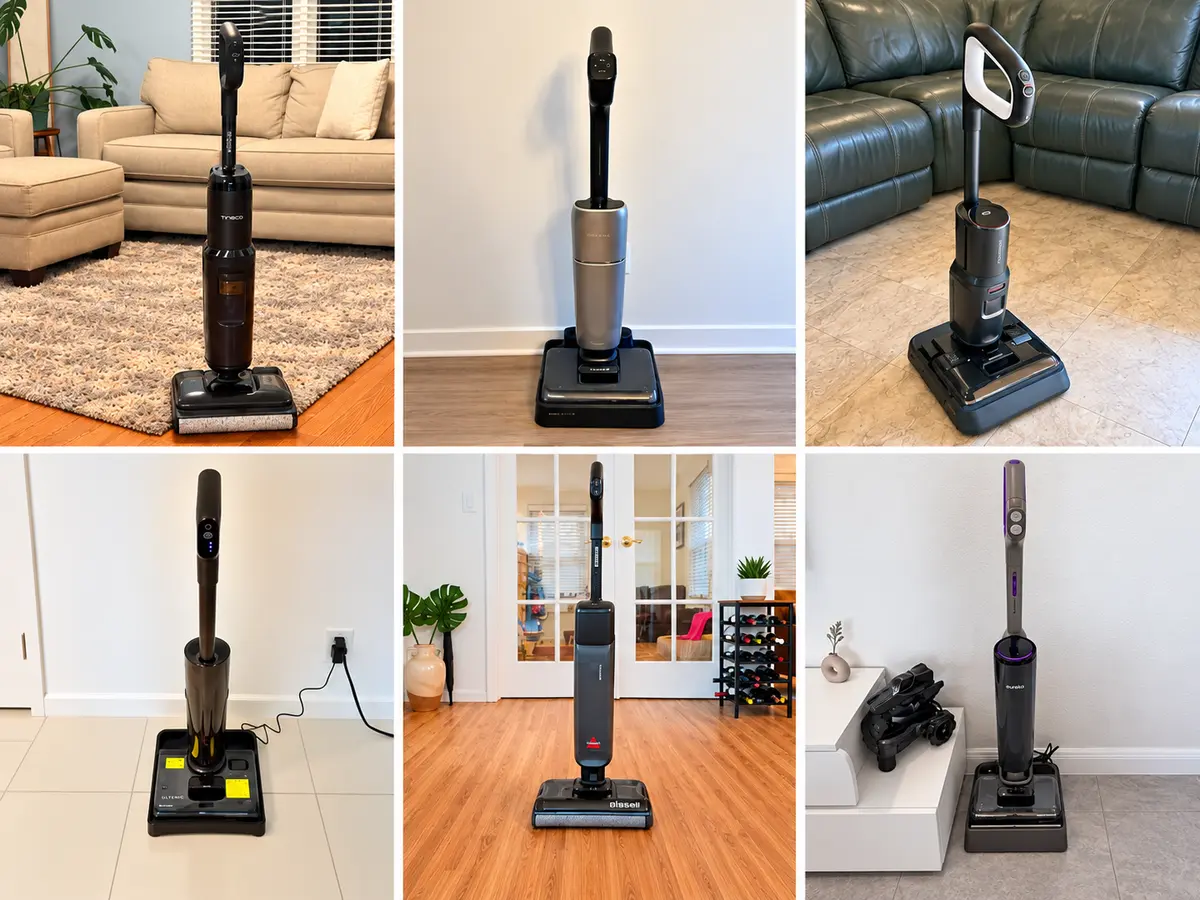

The best wet-dry vacuums need to do more than collect crumbs and wash away a spill. A roller that tangles with hair, a floor left streaky, or a dirty-water tank that takes too long to rinse can turn a convenient cleanup into another chore.
Our team evaluated six cordless vacuum-mops on sealed hard floors, checking cleaning performance alongside handling, tank interruptions, and maintenance. The Tineco FLOOR ONE S7 Stretch Ultra is our best overall pick for its balance of everyday pickup, assisted movement, and effective roller washing and drying. Choose the Dreame Aero Pro for pet hair or the Roborock F25 Ultra Steam Gen 2 for stubborn dried residue.
Here, “wet-dry vacuum” means an upright household floor washer that collects debris while washing hard flooring. It excludes shop vacuums and robot vacuum-mops. If carpet cleaning is your main concern, our guide to the best vacuum cleaners covers the wider choices.
Our Top Picks Wet-Dry Vacuums
Here is a the quick list of our favorite wet-dry vacuums recommendations.
Balanced Daily Floor Cleaning
Jump to details ↓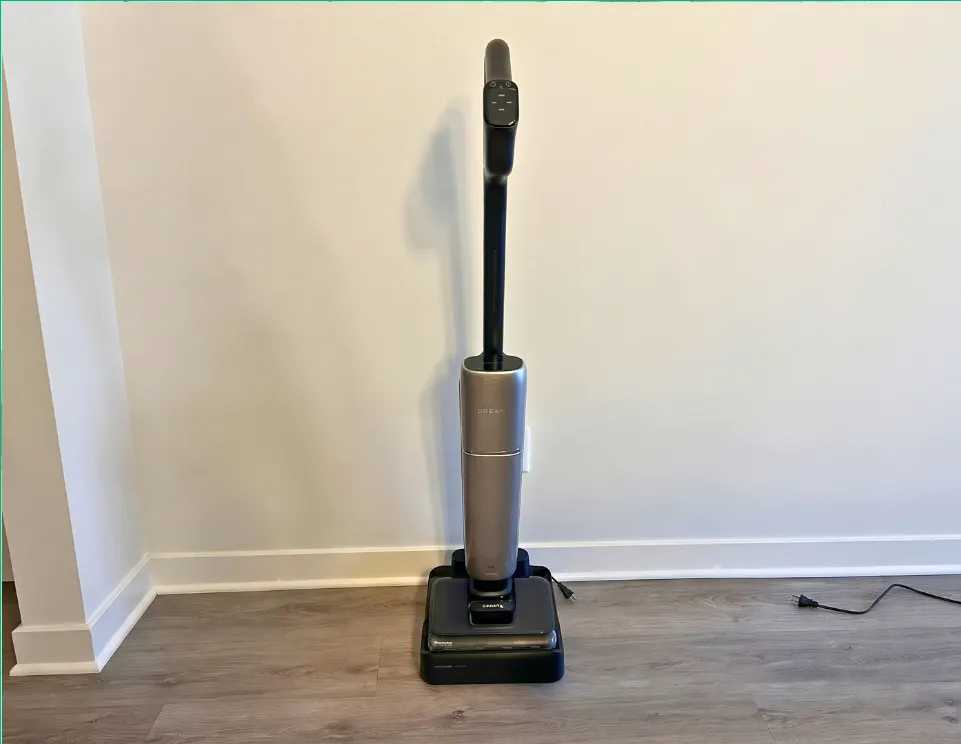
Strong Hard-Floor Hair Control
Jump to details ↓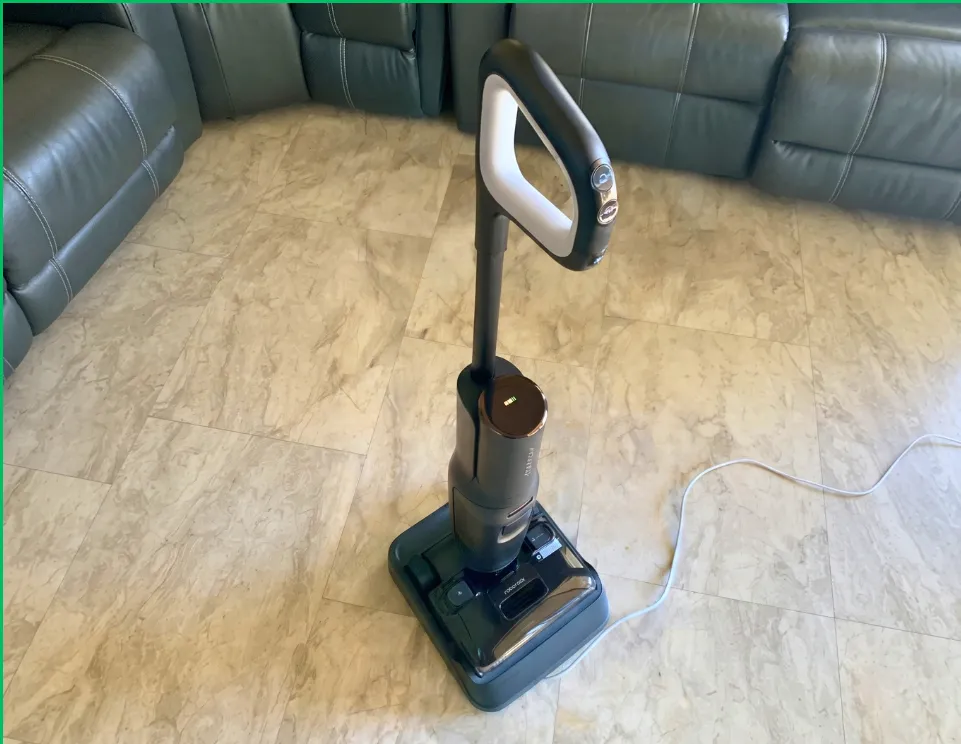
Strong Heated Stain Removal
Jump to details ↓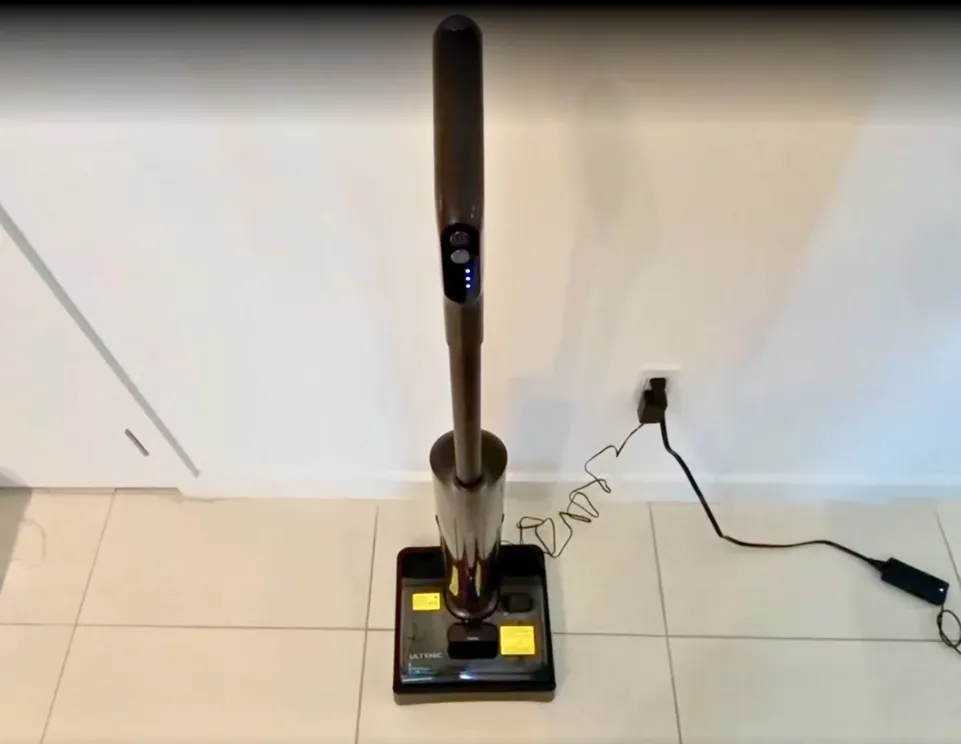
Comfortable Everyday Floor Washing
Jump to details ↓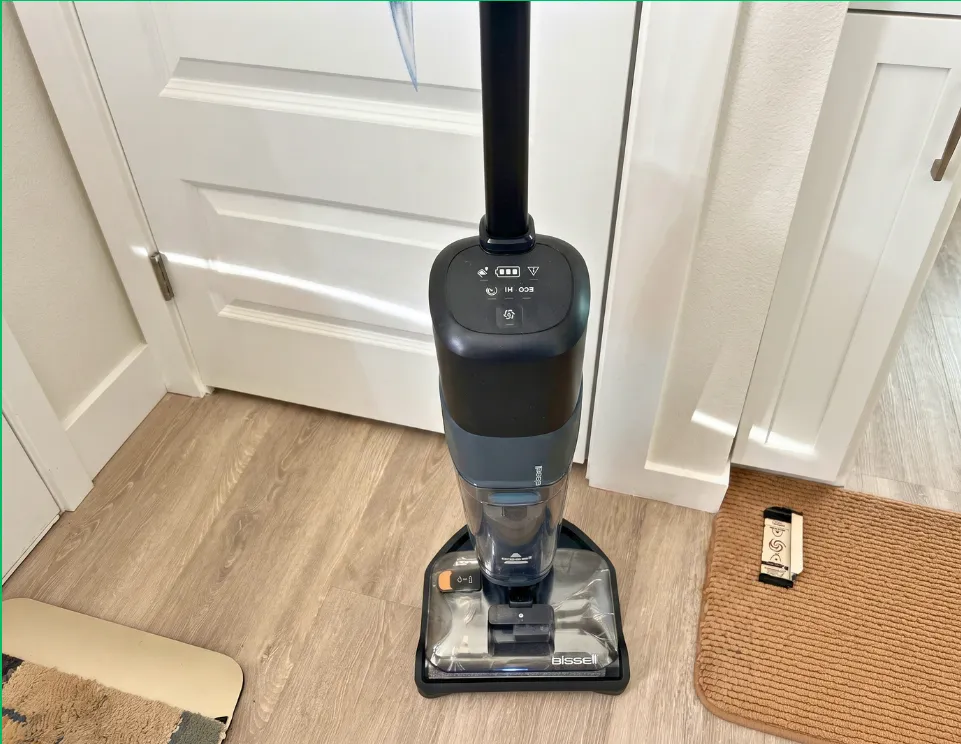
Practical Everyday Floor Washing
Jump to details ↓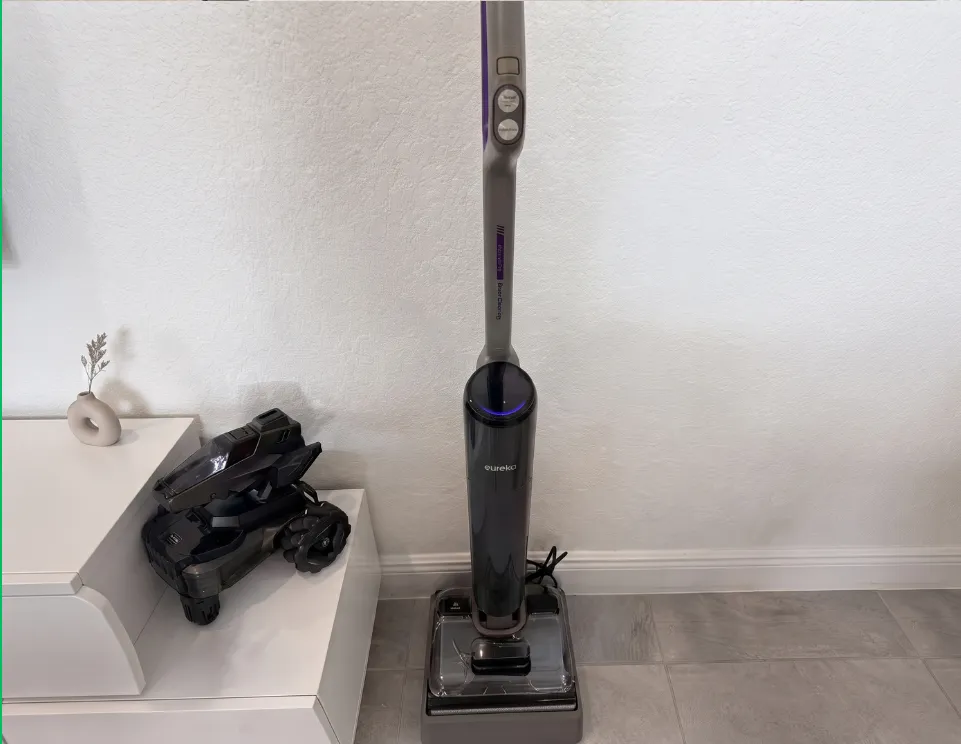
Capable Fresh-Spill Floor Cleaning
Jump to details ↓Detailed product reviews
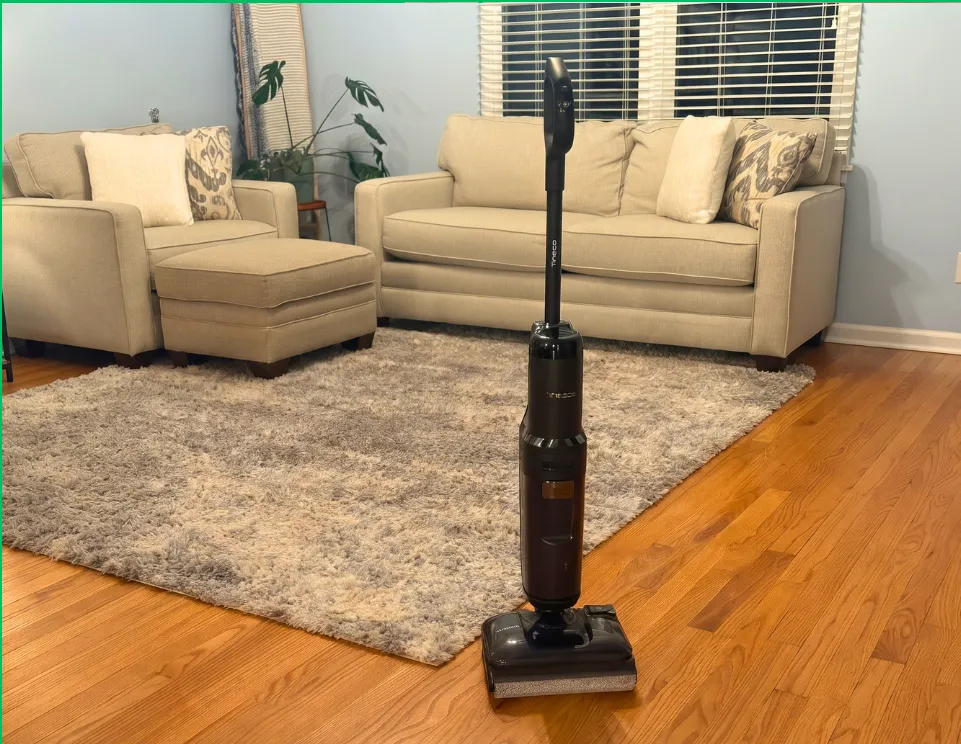
Tineco FLOOR ONE S7 Stretch Ultra
Balanced Daily Floor Cleaning
- Effective everyday debris and mixed-spill pickup
- Powered assistance helps with pushing and pulling
- Cleans close to walls on both sides
- Self-cleaning cycle leaves the roller dry
- Hardened sticky stains need repeated passes
- Wet fur can collect behind the squeegee
- Floorhead tank limits access beneath low cabinet toe-kicks
- Requires water for normal operation; cannot function as a waterless dry vacuum
Deciding result or feature: Strong everyday pickup, assisted handling, and a roller that finished dry after its dock cycle.
Primary compromise: Hardened sticky stains required repeated passes.
The Tineco FLOOR ONE S7 Stretch Ultra earns our overall recommendation because its strengths extend beyond the first cleaning pass. It picked up everyday messes effectively, helped with pushing and pulling, and returned a dry roller after its self-cleaning cycle. Hardened sugary residue was the main cleaning task that exposed its limits.
Good Pickup Without Awkward Handling
Rice, cereal, crumbs, and smaller particles cleared readily in Auto mode, as did milk with cereal and thick condiments. Dense piles of grit needed slower passes; the head handled scattered debris more easily than a concentrated heap.
Powered assistance helped us work along a wall, pull back, and reposition without fighting the machine’s forward movement. Dual-sided edge cleaning was useful beside cabinets, although the front bumper still left residue in tight corners.
Lying the body flat improved access beneath furniture. The tank on top of the floorhead remained an obstruction at low cabinet toe-kicks, so the reclining handle did not solve every clearance problem.
Our recorded Auto-mode runtime of approximately 44 to 50 minutes gave it useful endurance, but tank emptying and water use still affected uninterrupted cleaning time.
Sticky Stains Needed Persistence
Dried syrup, soda, and stubborn coffee residue needed repeated scrubbing, even in Max mode. Buyers regularly tackling those messes should consider the heated Roborock instead.
The DualBlock scraper kept long hair from wrapping tightly around the roller, but wet fur occasionally collected behind the squeegee. FlashDry washed the brush and left it dry to the touch; rinsing the dirty tank and wiping trapped debris remained manual jobs.
Best fit: A home needing one capable daily hard-floor cleaner with comfortable handling and convenient roller care. Skip it if stubborn dried stains are the main problem or waterless dry vacuuming is essential.
The Tineco FLOOR ONE S7 Stretch Ultra shown on hard flooring beside an area rug.
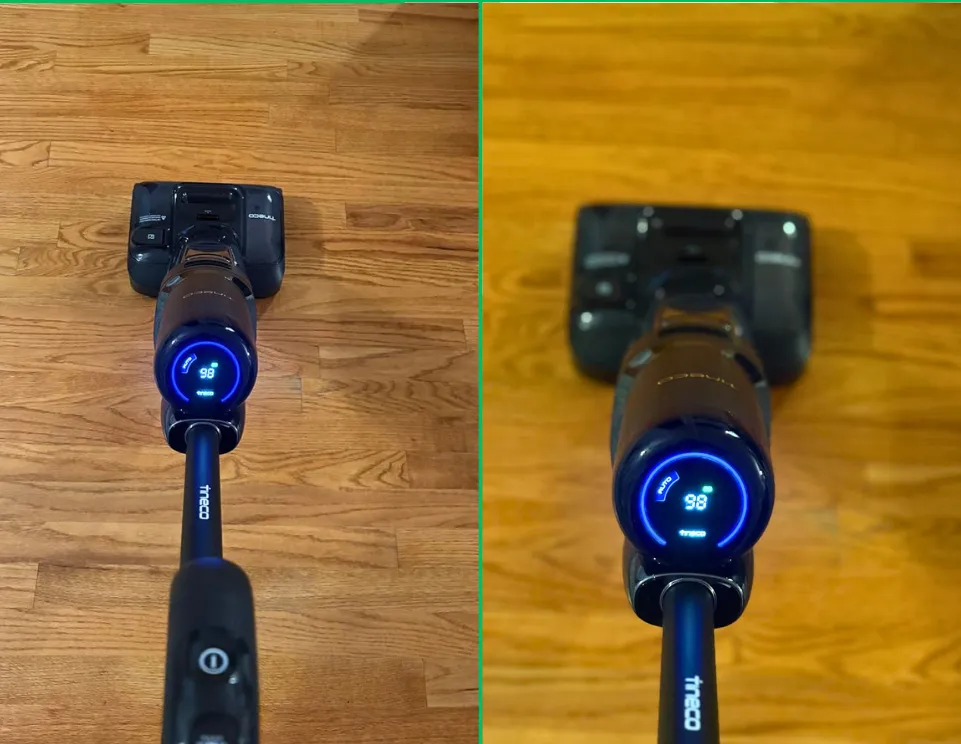 Overhead views show the illuminated display and the floorhead’s position ahead of the handle.
Dreame Aero Pro
Strong Hard-Floor Hair Control
- Picks up hair without tight roller wrapping
- Low profile reaches beneath beds and sofas
- Strong water recovery leaves little floor moisture
- Heated roller washing and drying reduce manual brush care
- Oversized kibble and hard debris can scatter
- Smaller dirty-water tank interrupts longer sessions
- Some drag when pulling backward
- Handle controls can cause accidental mode changes
Deciding result or feature: Collected hair without tight roller wrap and reached beneath low furniture
Primary compromise: Oversized debris could scatter; the dirty tank interrupted longer sessions.
The Dreame Aero Pro was particularly useful where pet hair creates extra work: around the roller and beneath furniture. Its TangleCut 2.0 system handled the strands in our trials without tight wrapping, while its low body reached places that taller floor washers could not enter.
Hair Management and Low-Furniture Reach
Collected hair moved away from the roller instead of building into a tightly wound band, reducing the amount we needed to pull off by hand. The low profile helped us collect fur beneath beds and sofas as well, extending that hair-management benefit beyond open flooring.
With a measured reclined profile of 3.88 inches, the body could enter low furniture openings, although legs and crossbars could still obstruct the head or handle.
Fine debris and mixed food spills cleaned up well. Water recovery was another strength, with a light remaining film that dried quickly in our trials. Glossy flooring could show faint streaks when we moved too quickly or used more solution.
Watch the Intake and Dirty Tank
Oversized kibble and hard popcorn kernels could scatter or get pushed ahead of the head. The Aero Pro was more convincing with hair and ordinary scattered debris than bulky dry pieces.
Its 600 mL dirty-water tank needed attention before the larger clean-water reservoir was exhausted. For messy sessions, the tank was a more immediate limitation than battery capacity. Roller traction helped forward movement, but pulling backward produced some drag. Handle placement also made accidental mode changes possible.
The heated wash-and-dry cycle cleaned the roller effectively. We still had to dump the tank and rinse its separator, including the finer sludge that remained after solids were removed.
Best fit: Shedding households with mostly sealed hard floors and hair beneath low furniture. Skip it as your only vacuum if carpet and upholstery cleaning are equally important.
The Dreame Aero Pro standing on its floor-level dock.
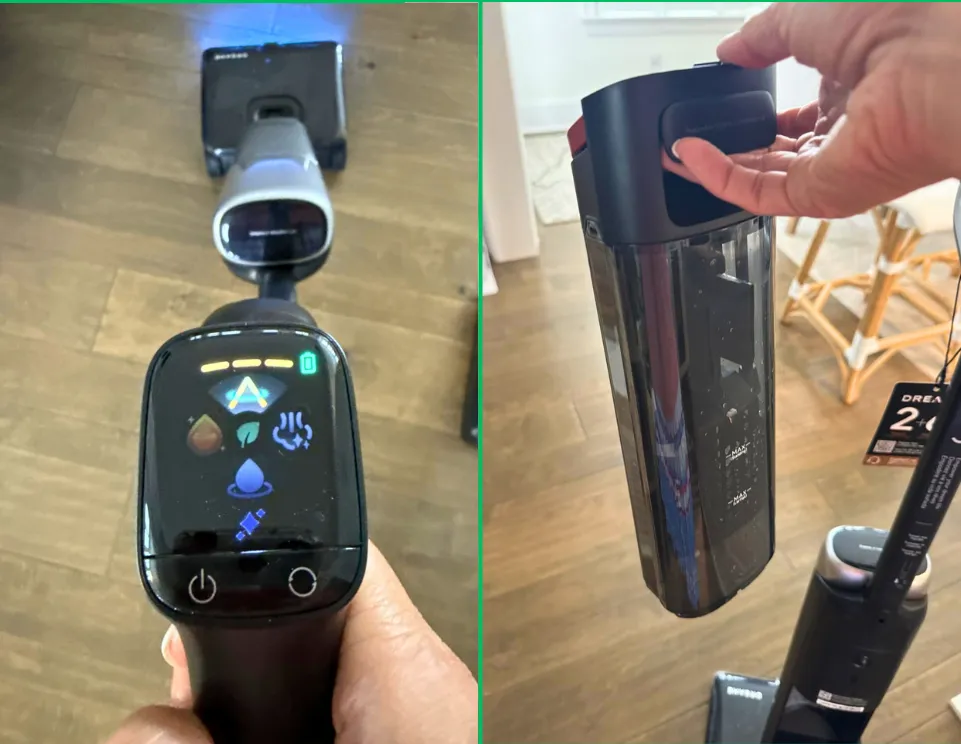 The handle controls and removable tank are shown in close-up.
Roborock F25 Ultra Steam Gen 2
Strong Heated Stain Removal
- Heated cleaning improves stubborn-stain removal
- Handles fresh mixed spills effectively
- Powered wheels help with steering
- Offers fast or quieter roller-drying options
- Continuous steam substantially shortens runtime
- Bulky floorhead struggles beneath low cabinet recesses
- Fast drying is noticeably louder
- Dirty tank and solids tray still require manual cleanup
Deciding result or feature: Heated cleaning reduced the work needed on dried mud, syrup, and grease.
Primary compromise: Steam shortened runtime; the front assembly was bulky.
The Roborock F25 Ultra Steam Gen 2 earns its place when fresh spills have already become stuck-on residue. Heated cleaning helped with dried mud, sugary deposits, and grease. That advantage was worth more than its headline temperature claim, but it came with shorter battery life and a substantial front assembly.
Heat Reduced Repeated Scrubbing
In our dried-mud trial, Steam mode cleared the patch in two passes, compared with six in Auto. Sticky syrup also needed less repeated work with heat. These were useful differences for kitchen cleanup, where the difficulty often comes from residue adhering to the floor rather than loose debris.
Fresh milk, cereal, rice, and thicker food spills were manageable in routine washing, so Auto remained a practical everyday setting. Heating was most useful when stuck-on residue justified the extra battery demand.
The SlideTech 2.0 powered wheels helped with steering, and the edge system reached close beside cabinetry. FlatReach 2.0 allowed the body to recline, although low cabinet recesses could still stop the bulkier floorhead.
Steam Uses the Battery Much Faster
We recorded approximately 15 to 26 minutes of continuous Steam operation, substantially less than in Auto. Plan around the mode you intend to use rather than the longest advertised figure.
The dock offered fast drying and a quieter, longer option. The faster setting was more intrusive during our noise checks. Neither setting removed the need to empty dirty water and clear the solids tray.
Best fit: Buyers frequently dealing with dried kitchen stains or greasy residue. Tineco is the more balanced daily recommendation when most cleanup involves crumbs and fresh spills. Before choosing Roborock for steam, check that your flooring’s care instructions permit heated cleaning.
The Roborock F25 Ultra Steam Gen 2 shown upright on its dock.
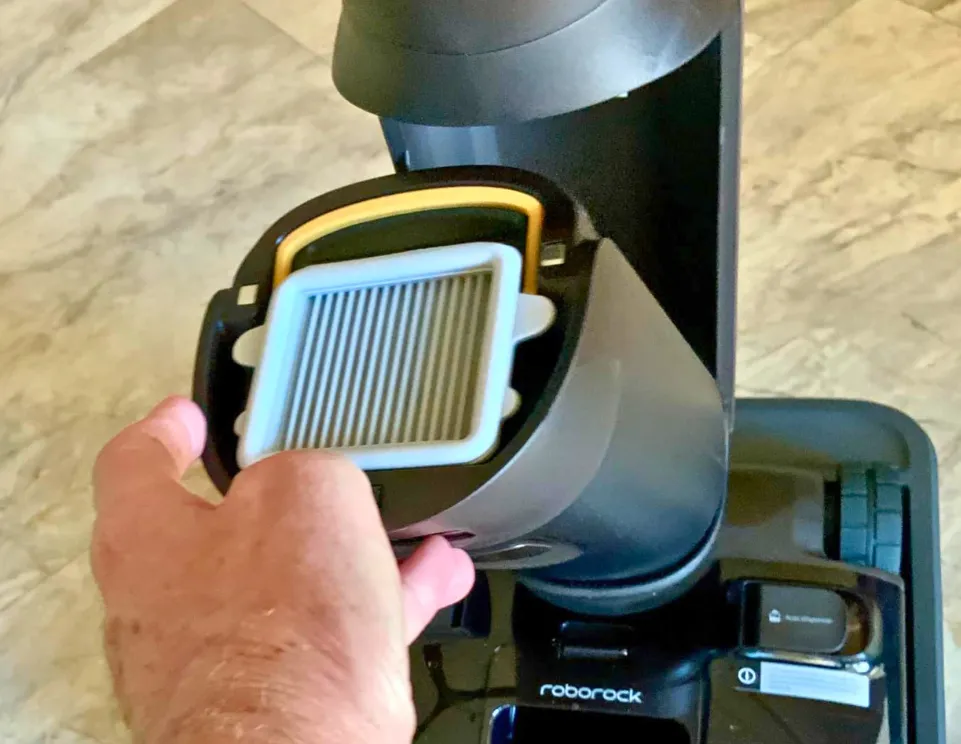 The removable tank assembly exposes the pleated filter for inspection.
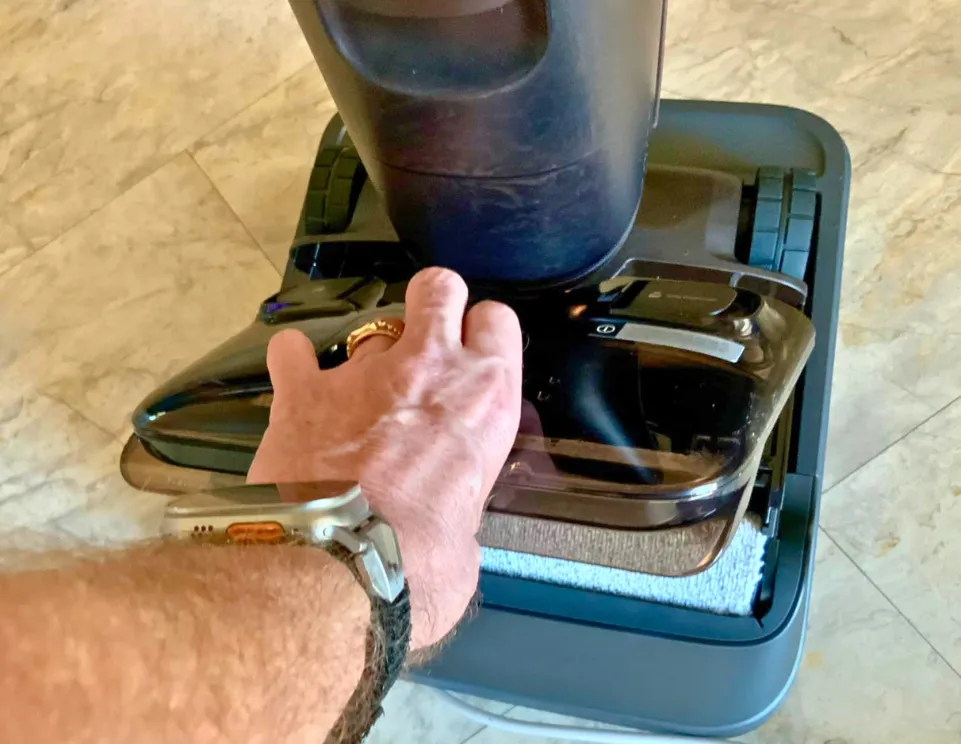 Lifting the floorhead cover provides access to the roller area.
Ultenic AC1 TriFlex
Comfortable Everyday Floor Washing
- Comfortable steering around furniture
- Assisted forward and backward movement
- Lie-flat body improves under-furniture access
- Long measured runtime in standard mode
- Large puddles can build ahead of the roller
- Hardened sugary residue needs extra passes
- Smaller dirty-water tank requires emptying during longer sessions
- No heated drying; roller must air-dry
Deciding result or feature: Easy steering and assisted movement around furniture.
Primary compromise: Weaker large-puddle recovery; manual roller drying.
The Ultenic AC1 TriFlex was comfortable to guide around furniture, with steering and assisted movement that made routine cleaning less tiring. Large standing spills and roller drying exposed the compromises behind that convenient handling.
Easy to Guide Through Everyday Messes
Crumbs, cereal, grit, and smaller mixed spills cleaned up with little repeated work. Light dried residue also lifted reasonably well, while hardened sugary spots needed more attention.
Changing direction around chair legs felt manageable. Assistance helped with forward and backward movement, and the body reclined fully to reach beneath beds and sofas. We preferred that combination for frequent maintenance cleaning over a machine that was more cumbersome to reposition.
Our recorded standard-mode runtime reached about 55 minutes. The smaller dirty-water tank still needed emptying during extended washing, so battery endurance did not eliminate cleaning interruptions.
Puddle Recovery Was a Weaker Point
During ordinary floor washing, the Ultenic left a light moisture film. A large standing puddle was a different challenge: liquid could build ahead of the roller instead of being recovered immediately. Slower, repeated passes helped, but this was not the machine we would prioritize for substantial spills.
The dock flushed the roller and internal wash path, then left drying to us. There was no hot-air drying system. Removing the damp roller and allowing it to air-dry added a storage step after cleaning.
That difference matters if you expect to finish the floor, press one button, and put everything away. Easy steering saved effort during use; it did not remove the work afterward.
Best fit: Buyers prioritizing comfortable handling, furniture access, and routine hard-floor washing. Choose another model if large-spill recovery or a heated drying dock matters more.
The Ultenic AC1 TriFlex shown upright with its charging cable nearby.
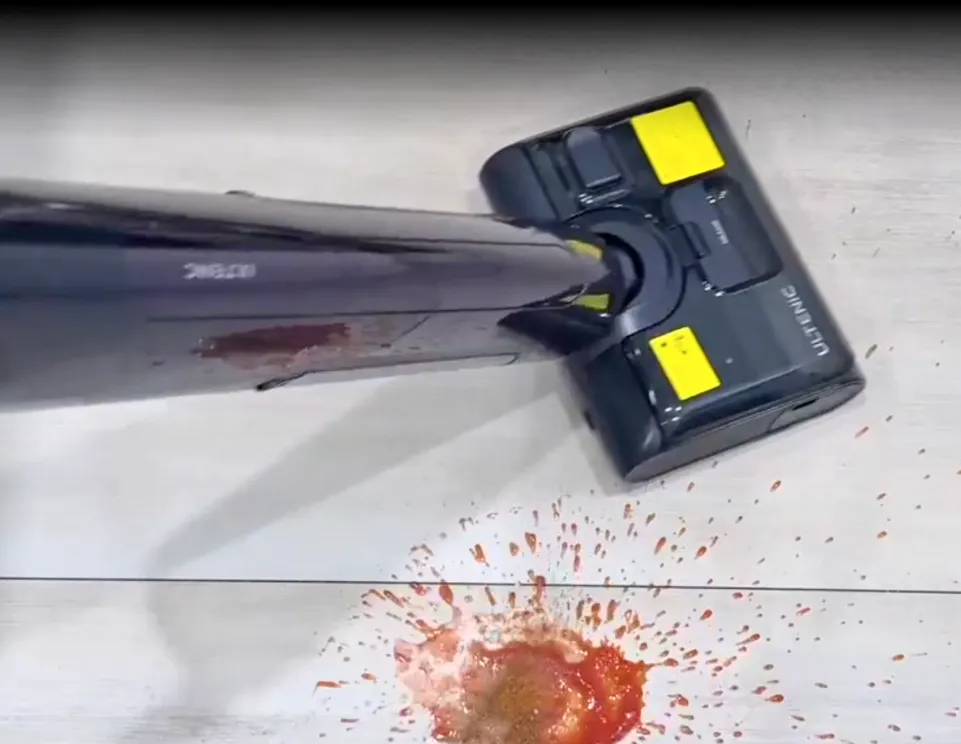 The Ultenic floorhead shown beside a red spill on hard flooring.
BISSELL CrossWave Reach 4506L
Practical Everyday Floor Washing
- Manual trigger gives direct solution control
- Effective on fresh spills and everyday debris
- Lie-flat design improves furniture reach
- Hair strainer makes collected fur easier to remove
- Bulky cereal and shell fragments can obstruct the intake
- Right-side edge cleaning requires careful positioning
- No hot-air roller drying
- Restricted to sealed hard floors; unsuitable for area rugs
Deciding result or feature: Trigger-operated dispensing let us concentrate solution on stubborn patches.
**Primary compromise: **Coarse debris could collect at the intake; no heated drying.
The BISSELL CrossWave Reach 4506L gives you direct control over solution dispensing. Its trigger was useful when a patch needed more wetting and scrubbing, rather than the same water output as the surrounding floor.
Direct Control Over Wetting and Scrubbing
Fresh juice, milk, crumbs, and light mud cleared effectively. On dried sauce, we held the trigger to wet the roller and continued working over the affected patch. Those stains needed more deliberate attention than fresh spills, but solution control made the process straightforward.
The lay-flat body improved access beneath furniture. Edge cleaning was useful along the right side, although corners still needed repositioning. The side of the roller could reach areas the front bumper could not clean flush.
Hair stayed largely free of tight wrapping in our trials. Wet fur collected on the tank strainer, making it accessible for disposal rather than leaving it around the roller shaft.
A Wash Tray, Without Heated Drying
The 4506L is the sealed-hard-floor model with a self-cleaning storage tray and no hot-air drying. The Reach Plus 4506F drying feature does not apply to this unit.
Large cereal pieces and hard shell fragments could collect at the intake lip or get pushed ahead. Mixed spills were easier when the solids were small enough to enter cleanly. Bulky pieces could interrupt an otherwise quick cleanup.
Afterward, we emptied the dirty tank, rinsed the strainer, wiped the roller cover, and left the roller to dry. The wash cycle reduced rinsing work, but it did not finish the whole storage routine.
Best fit: Buyers who prefer a manual spray trigger for targeted hard-floor washing. Skip it if you want heated roller drying or area-rug cleaning; this specific model provides neither.
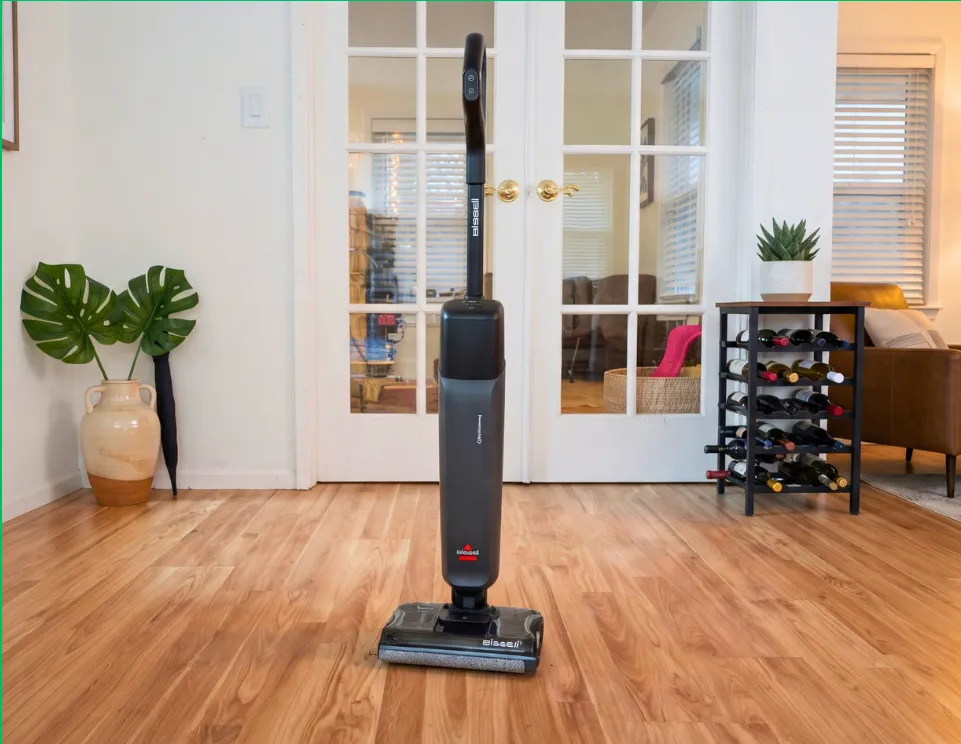 The BISSELL CrossWave Reach 4506L shown upright on hard flooring.
A closer view of the display, front tank, and floorhead resting in the tray.
Eureka FloorShine 830
Capable Fresh-Spill Floor Cleaning
- Effective pickup of everyday loose debris
- Handles fresh wet-and-dry spills well
- Cleans close along straight baseboards
- Heated drying leaves the roller dry to the touch
- Fully dried sauces can remain after repeated passes
- Turning and backward movement require more wrist effort
- No headlight for darker under-furniture areas
- Dirt collects in internal tank corners that need brushing
Deciding result or feature: Effective pickup of loose debris and fresh mixed spills.
Primary compromise: Dried sauces resisted cleaning; backward handling required more effort.
The Eureka FloorShine 830 was effective with the fresh messes that make a vacuum-mop convenient: scattered debris, wet tracked dirt, and food-and-liquid spills. It remains a practical alternative for routine washing, with clearer limitations once stains harden or the room demands frequent backward movement.
Effective With Fresh Debris and Spills
Ordinary loose debris came up readily. Fresh cereal-and-liquid spills also cleared with little repeated work. Very large solids were more awkward, sometimes building ahead of the roller instead of entering immediately.
The head cleaned close along straight baseboards. Inside corners needed a change of angle or separate attention. The body reclined for furniture access, though the lack of a headlight made debris beneath darker furniture harder to see.
Forward assistance helped across open flooring. Turning and pulling backward took more wrist effort than the lighter-feeling alternatives. The empty unit weighed 5.2 kg, and carrying it with water aboard was a different task from steering it while running.
Hardened Sauce Was the Main Cleaning Weakness
Fully dried ketchup and barbecue sauce left visible residue despite repeated slow passes. Roborock was the more suitable choice for buyers regularly dealing with that sort of stubborn cleanup.
Our recorded Normal-mode runtime was approximately 37 minutes. Continuous washing also required a refill, so the battery’s advertised maximum did not establish uninterrupted whole-home coverage.
The dock rinsed with room-temperature water before using hot air to dry the roller. The brush finished dry to the touch, but dirt caught in corners of the tank’s internal channels still needed brushing out.
Best fit: Regular cleanup of fresh messes on sealed hard floors. Choose another model for hardened-stain removal, easier backward handling, or the fewest interruptions across a large floor.
The Eureka FloorShine 830, our alternative pick for everyday spills.
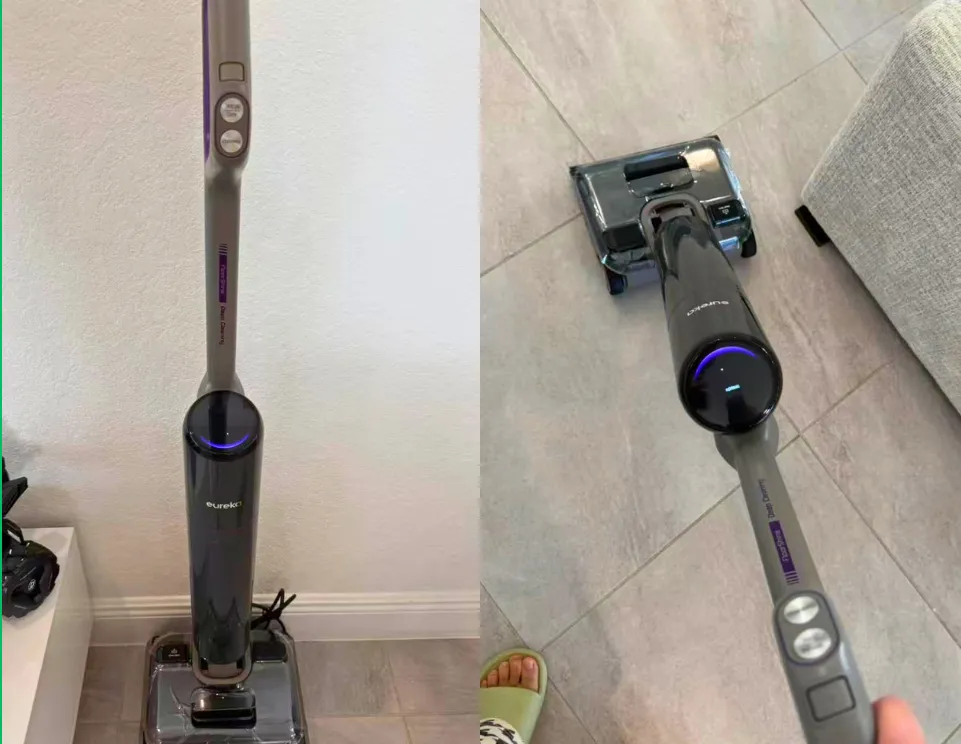 Two views show the FloorShine 830’s upright design, handle controls, and floorhead beside furniture.
Final Verdict
The Tineco FLOOR ONE S7 Stretch Ultra is our best wet-dry vacuum for most hard-floor homes. Its everyday cleaning, assisted movement, wall access, and roller care form the strongest overall balance in this group. Hardened sticky residue is the main reason to look elsewhere.
Choose the Dreame Aero Pro for pet hair and low-furniture access, or the Roborock F25 Ultra Steam Gen 2 when dried stains justify the extra heating system and shorter Steam runtime.
Ultenic prioritizes comfortable handling. BISSELL gives you direct spray control. Eureka is a practical alternative for fresh everyday spills. Their compromises are different enough that the right choice depends on what repeatedly makes your floor-cleaning routine difficult.
Compare the products
Choose the products you want to compare. Ratings retain each product’s original rubric.
| Product | Tineco FLOOR ONE S7 Stretch Ultra | Dreame Aero Pro | Roborock F25 Ultra Steam Gen 2 | Ultenic AC1 TriFlex | BISSELL CrossWave Reach 4506L | Eureka FloorShine 830 |
|---|---|---|---|---|---|---|
| Best suited for | Best Overall: | Best for Pet Hair: | Best for Dried Stains: | Best for Lightweight Handling: | Best for Manual Spray Control: | Also Great for Everyday Spills: |
| Source rating /10 | 8.3 | 8.2 | 8.1 | 8.0 | 7.8 | 7.5 |
| Price snapshot | $449.00 | $379.96 | $699.99 | $259.99 | $199.99 | Price: $294.49 |
| Verdict | Balanced Daily Floor Cleaning | Strong Hard-Floor Hair Control | Strong Heated Stain Removal | Comfortable Everyday Floor Washing | Practical Everyday Floor Washing | Capable Fresh-Spill Floor Cleaning |
| Reasons to buy |
|
|
|
|
|
|
| Reasons to consider |
|
|
|
|
|
|
| Check current price | Check price on Amazon ↗ | Check price on Amazon ↗ | Check price on Amazon ↗ | Check price on Amazon ↗ | Check price on Amazon ↗ | Check price on Amazon ↗ |
How to Choose a Wet-Dry Vacuum for Hard Floors
Prioritize Cleaning Results Over Suction Claims
Published suction figures in pascals describe pressure, not the complete floor-cleaning process. The roller must also wet the surface, scrub residue, admit debris, and recover dirty water. A higher figure alone does not establish better stain removal or a drier finish.
Our results showed why these jobs need separate attention. A machine could handle crumbs and spilled milk well yet require repeated passes over hardened sauce. Another could feel easy to steer but push a standing puddle ahead of its roller.
Choose around your recurring mess. Pet hair calls for effective pickup and accessible debris traps. Dried kitchen residue puts more emphasis on scrubbing and, where the floor permits it, heated cleaning.
Compare Runtime in the Mode You Will Use
Eco, Quiet, Auto, Turbo, and Steam are not interchangeable conditions. Automatic cleaning can change output as the mess changes; continuous heating places a different demand on the battery.
The practical question is how far you can clean before the first interruption. That might be a depleted battery, an empty clean-water tank, or a full dirty-water tank.
Use usable fill capacity when comparing reservoirs. For Eureka, the practical clean-water fill level in our evaluation was 750 mL. The larger physical reservoir volume does not describe the water available for normal operation. Likewise, a dirty tank’s shutoff can limit usable liquid capacity before the container is physically full.
Tank capacity also affects handling: carrying more water adds weight, and the tank’s position can limit access beneath furniture. Consider the capacity alongside how the filled machine moves through your home.
Match Handling to Your Furniture and Floor Plan
Edge cleaning, steering, and under-furniture clearance solve different problems. A roller that follows a wall closely can still leave a front-facing corner untouched. A reclining handle may fit beneath a sofa while the tank on the floorhead catches the frame.
Measure the opening you need to reach, then consider the entire assembly. In a dining area, easy direction changes around chair legs may matter more than maximum recline. In a multilevel home, carrying weight deserves separate attention from powered assistance during cleaning.
Look at the Floor Finish, Not Just the Collected Water
A full dirty-water tank shows that water was recovered; it does not show how much remains on the floor. Check for droplets at turns, streaks on glossy surfaces, and damp patches where the head stops.
In our trials, cleaning speed and solution dosage affected the finish. Drying observations also depended on the tested surface and room conditions. A floor that dried quickly during one session does not establish a fixed drying time for every home.
For sealed hardwood, laminate, vinyl, and tile, follow the flooring’s own care instructions as well as the cleaner’s directions. A quick-drying result is not proof that a moisture-sensitive floor tolerates every cleaning mode.
Include Post-Cleaning Work in the Decision
Self-cleaning and self-drying are separate capabilities. A dock can flush the roller but still leave it damp, as with the Ultenic and BISSELL here. Heated drying reduces that particular job, but the waste tank, separator, and accessible debris traps still need attention.
Inspect where collected hair and food go. A roller that stays untangled is useful, but fur behind a squeegee or sludge in a narrow tank channel still takes time to remove. Daily maintenance should carry real weight in a machine you expect to use frequently.
Frequently Asked Questions
Can You Use a Wet-Dry Vacuum Without Water?
Only if the exact model permits it. Collecting dry debris while washing is different from operating as a waterless dry vacuum. The Tineco FLOOR ONE S7 Stretch Ultra requires water for normal floor washing. A mode called “Suction” may refer to liquid recovery with dispensing disabled, so the name alone does not establish dry-vacuum capability.
Can These Vacuum-Mops Replace a Carpet Vacuum?
These selections are recommended for hard-floor washing. They do not provide an equivalent replacement for a carpet vacuum with upholstery tools. The BISSELL CrossWave Reach 4506L is specifically restricted to sealed hard floors, even though other CrossWave variants may have different surface permissions.
Is Heated Self-Cleaning the Same as Steam Cleaning the Floor?
No. Heated self-cleaning washes the roller or internal path while the machine is on its dock. Heated drying dries the brush afterward. Neither feature, by itself, means the cleaner applies steam during floor washing. The Roborock in this roundup provides heated floor-cleaning modes; the non-steam Tineco and Dreame selections should not be confused with their steam-equipped relatives.
Editorial Transparency
This guide was prepared by Engr. Hm Jamal using the Wits Engineer team’s recorded product evaluations. Recommendations reflect cleaning results, handling, and maintenance observations for the selected units. Published specifications and advertised maxima are distinguished from measured performance where used.
Affiliate links may generate a commission from qualifying purchases. Each recommendation includes the limitations that could make another model a better fit.
_Engineer Md Jamal, Ruly Jathra, Wits Engineer Team.
How Our Team Tested the Wet-Dry Vacuums
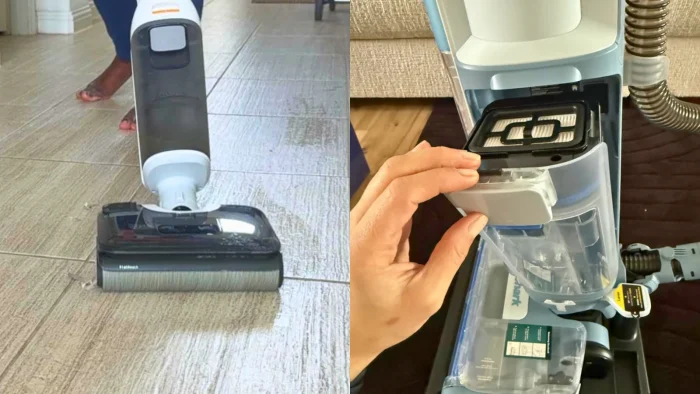
We evaluated the selected units across nine areas: hard-floor debris pickup, mixed wet-and-dry messes, dried stains, water recovery, edge cleaning, hair management, handling, runtime and tank stops, and post-cleaning maintenance.
Cleaning Performance
The cleaning records include rice, cereal, crumbs, hair, coffee, sauces, and wet tracked dirt. We examined visible residue, scattered debris, intake obstructions, remaining moisture, and the repeated passes needed to finish a patch.
Results were kept with the relevant mode. A Steam result was not treated as Auto performance, and a low-power runtime was not presented as continuous high-output washing. Where this roundup gives a pass count, it describes that recorded trial rather than a guaranteed result on every stain.
Handling and Cleaning Interruptions
We assessed pushing, pulling, turning, wall access, and reach beneath furniture. Hair checks included the roller and accessible collection path afterward, rather than stopping once the floor looked clear.
Battery duration was considered alongside water refills and dirty-tank emptying. We also separated empty weight from handling with water aboard. These observations helped determine the buyer role for each product.
Maintenance After Use
We inspected the roller after the cleaning cycle, checked its condition after drying where available, and recorded the manual work remaining. Tank rinsing, solids disposal, trapped hair, and awkward internal channels all affected the assessment.
Manufacturer specifications remain separate from our measured results. The recommendations apply to the evaluated units and recorded conditions; visual surface clearance is not presented as a weighed debris-recovery percentage.
Read More: Product Testing Methodology & Lab Criteria
Engr. Hm Jamal
Founder & Lead Technical EditorFounder of Wits Engineer, with a practical background in electrical and water systems. His product reviews focus on setup, performance, maintenance and the trade-offs that affect everyday ownership.