Best Reverse Osmosis Systems: Top Under-Sink, Tankless, Countertop & Remineralizing Picks
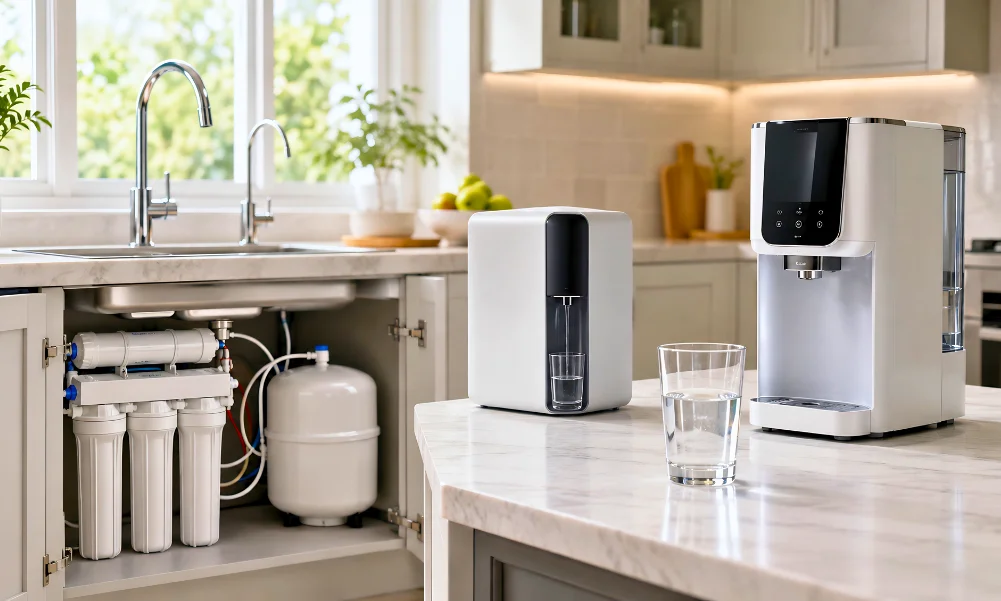

Choosing the best reverse osmosis systems is less about buying the most expensive unit and more about matching the system to your real water quality, kitchen space, water pressure, and maintenance comfort.
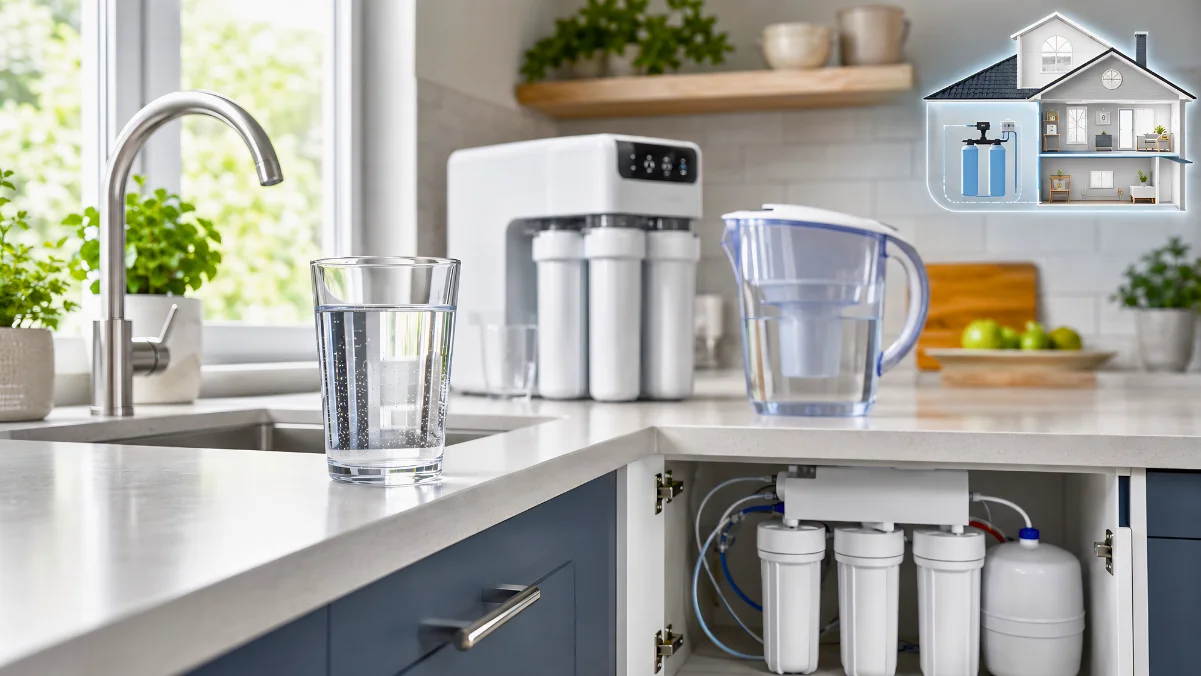
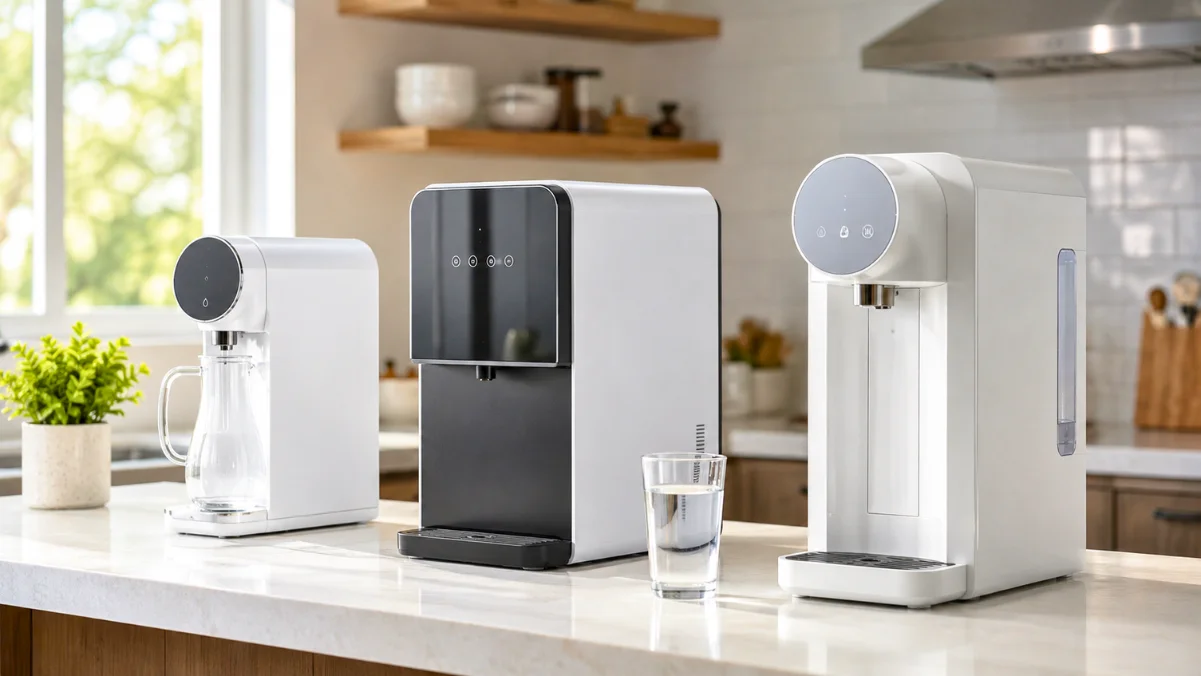
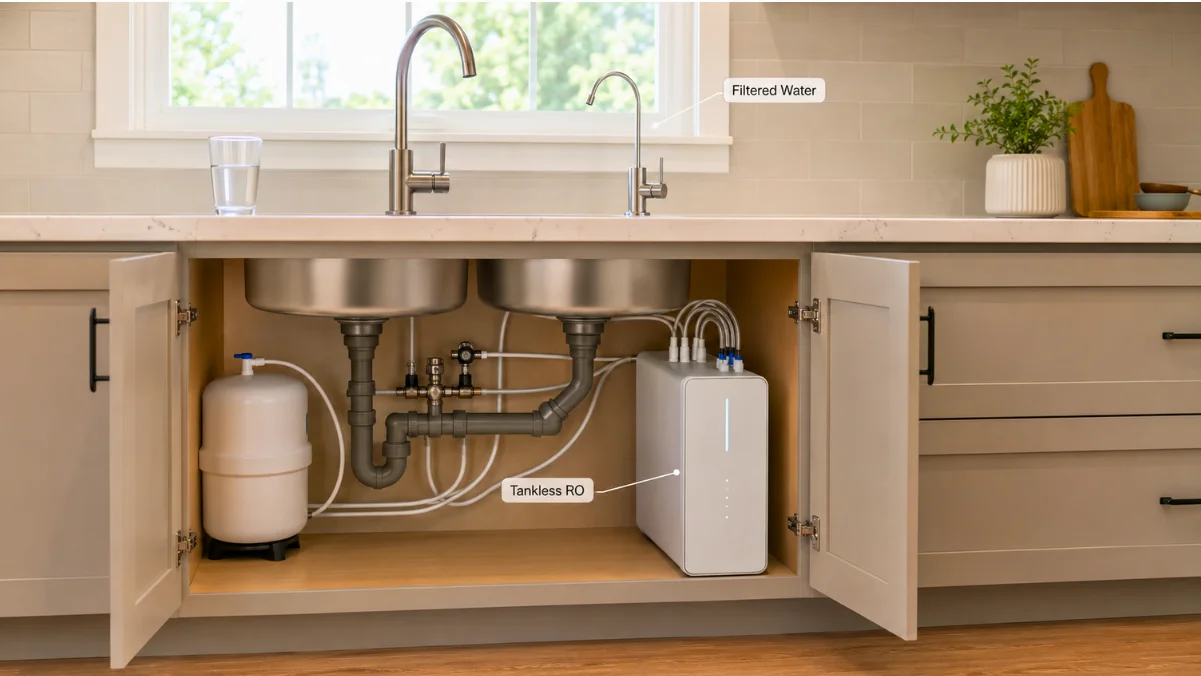
For most U.S. homes, an under-sink reverse osmosis water filter is the most practical choice for drinking water and cooking. But not every home needs the same setup. A small kitchen may need a tankless RO system. A renter may be better served by a countertop system.
A private well may need pre treatment before any RO membrane can work properly. And most people do not need a whole house RO system unless their entire home has a serious, tested water-quality problem.
This guide compares the best reverse osmosis systems by use case, not just by brand claims. You will see which RO systems make sense for under-sink use, tankless installation, countertop convenience, budget buying, remineralized RO water, and well-water support.
Reverse osmosis systems filter water by pushing feed water through a semi permeable membrane. This process helps reduce dissolved solids, heavy metals, and many other contaminants from tap water.
But the system still needs the right installation process, replacement filters, and regular maintenance to keep producing clean water.
Best Reverse Osmosis Systems: Quick Picks
| Award | Product | Best For | Main Strength | Main Limitation |
|---|---|---|---|---|
| Best Overall | APEC ROES-PH75 | Most homeowners | Under-sink reverse osmosis with remineralization | Uses cabinet space |
| Best Under-Sink Value | iSpring RCC7AK | Families and value buyers | 6-stage RO system with alkaline remineralization | Traditional storage tank |
| Best Tankless RO System | Waterdrop G3P800 | Small cabinets and modern kitchens | 800 GPD tankless RO system | Needs a power outlet |
| Best Tankless With Remineralization | Frizzlife PD600-TAM3 | Better-tasting tankless RO water | Tankless design plus mineral stage | Not the cheapest option |
| Best Countertop RO System | AquaTru Classic | Renters and apartments | No under-sink plumbing | Manual refilling |
| Best No-Installation Countertop RO | Bluevua ROPOT-UV | Small spaces and easy setup | Countertop RO with UV and remineralization | Limited water volume |
| Best Budget RO System | Express Water RO5DX | First-time RO buyers | Affordable 5-stage under-sink RO | Fewer premium features |
| Best for Well Water Support | Home Master TMHP HydroPerfection | Tested well-water users | RO, UV support, and remineralization | More complex installation process |
The real-world difference is simple: tank RO systems usually cost less, tankless RO systems save cabinet space, countertop systems are easier for renters, and well-water systems need testing before buying.
What Is the Best Reverse Osmosis System for Most Homes?
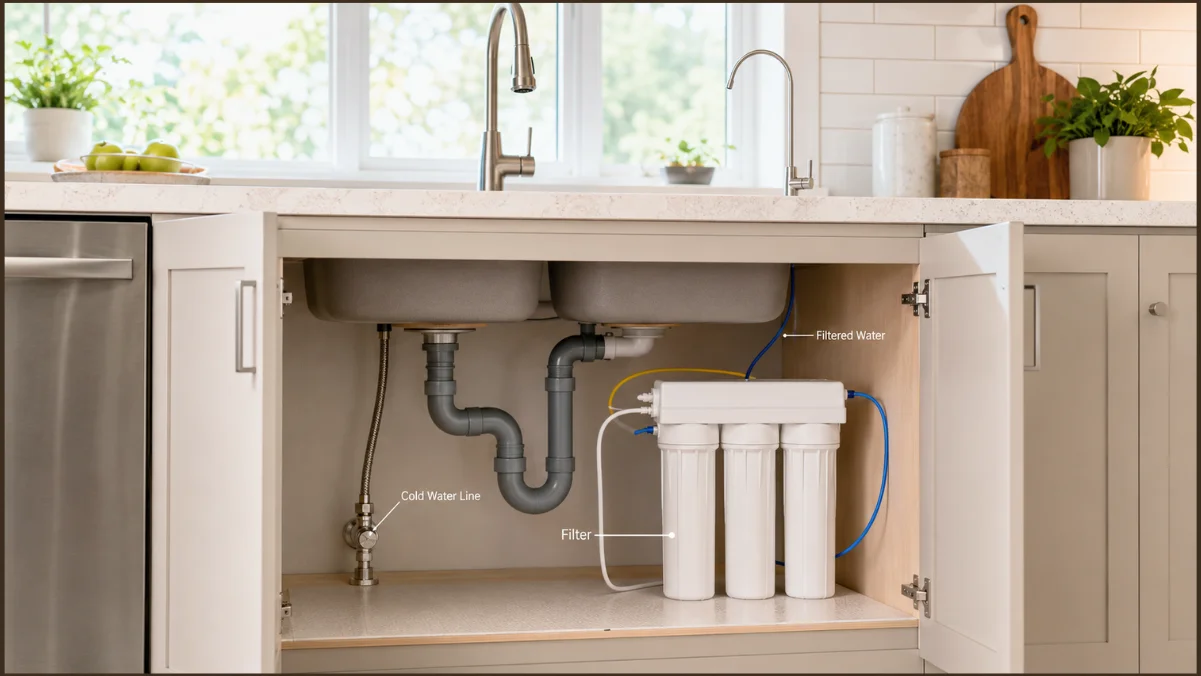
The best reverse osmosis system for most homes is an under-sink RO system that matches your water quality, water pressure, cabinet space, and replacement filter budget.
- For homeowners, a traditional under-sink system with a storage tank is usually the best value.
- For small cabinets, a tankless RO system is usually better.
- For renters, a countertop reverse osmosis water filter is the easiest setup.
A reverse osmosis system is best used for drinking water and cooking water, not usually for the entire home. Most buyers do not need a whole house RO system unless water testing shows a serious whole-house water-quality problem.
How Reverse Osmosis Works
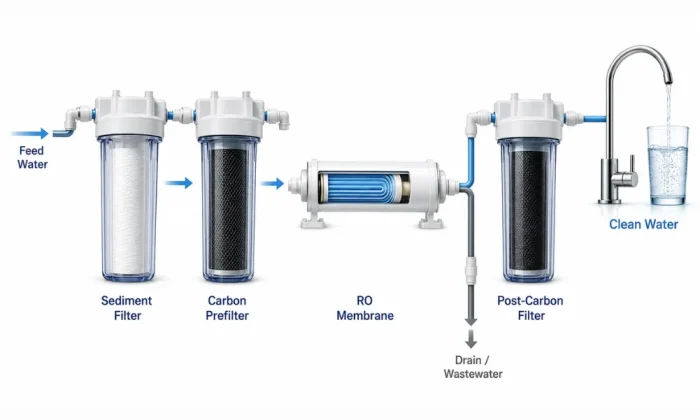
Reverse osmosis filters water by applying pressure to push tap water through a semi permeable membrane. Natural osmosis happens without external energy as water moves across a membrane toward a more concentrated solution.
Reverse osmosis works in the opposite direction by using external water pressure or mechanical pressure to separate cleaner water from dissolved solids and other impurities.
Inside an RO system, incoming feed water is divided into two streams:
- Permeate: the filtered water or purified water used for drinking and cooking
- Brine: the wastewater that carries rejected dissolved solids and other contaminants to the drain
This is why reverse osmosis systems can produce clean drinking water but also create water waste. The exact waste ratio depends on the system design, feed pressure, water pressure, filter condition, and whether the system uses a storage tank, tankless design, or permeate pump.
Most reverse osmosis systems use multi-stage filtration instead of relying on the RO membrane alone. A sediment filter catches sand, rust, and particles. A carbon prefilter helps reduce chlorine taste and odor and protects the RO membrane.
The RO membrane reduces dissolved solids, and a post-filter improves taste before the treated water reaches the dedicated faucet or clean water tank.
Advanced systems may also include remineralization, UV, filter change alerts, digital display features, or built in TDS meters. A remineralization stage may add minerals such as calcium and magnesium back into RO water to improve taste.
Best Overall Reverse Osmosis System
Our Top Picks
Detailed product reviews
APEC ROES-PH75

Why it’s a pick
The APEC ROES-PH75 is the best overall pick for homeowners who want a traditional under-sink reverse osmosis system with remineralization.
It is a 6-stage, 75 GPD under-sink system designed to produce mineral-enhanced drinking water. APEC lists it as an alkaline mineral reverse osmosis system with pH enhancement, and the product is positioned for home drinking water use.
This is a strong choice for users who want purified water from a dedicated faucet without moving into a tankless or countertop system.
Key Specs Snapshot
| Spec | Detail |
|---|---|
| System Type | Under-sink reverse osmosis system |
| Capacity | 75 GPD |
| Storage | Storage tank |
| Filtration | 6-stage RO with mineral/pH enhancement |
| Power | No regular power outlet needed |
| Noise | Not clearly specified; no normal pump noise expected |
| Warranty | APEC owner documentation references a 1-year warranty |
APEC’s owner manual references a one-year warranty for repair or replacement under stated conditions.
Key Insight
The APEC ROES-PH75 is not the smallest RO system, but it is a practical house RO system for people who want better-tasting reverse osmosis water. The remineralization stage helps improve the taste of treated water after the RO membrane removes dissolved solids.
Performance Analysis
In typical household use, this system fits homeowners who want filtered water for drinking, cooking, coffee, tea, and replacing bottled water.
The storage tank helps keep treated water ready at the dedicated faucet. That is useful for daily use, but it also means the system needs under-sink space. If your cabinet already has a garbage disposal, cleaning supplies, or tight plumbing, measure first.
This system is best for municipal water or city water users with typical drinking-water concerns. If you have private well water with sediment, iron, bacteria, or high hardness, test the water first and consider pre treatment before installing any RO membrane.
Pros and Cons:
Pros:
- Good all-around drinking water system
- Remineralization improves RO water taste
- No normal power outlet required
- Useful alternative to bottled water
- Traditional design is familiar to many installers
Cons:
- Uses under-sink cabinet space
- Requires installation process
- Storage tank may not fit every cabinet
- Filter cartridges add ongoing cost
Who it’s for: Choose this if you own your home, want purified water with better taste, and prefer a traditional under-sink reverse osmosis system over a tankless RO system.
Who should skip: Skip it if you rent, lack cabinet space, or want easy setup with no plumbing changes.
Verdict: The APEC ROES-PH75 is the best reverse osmosis system for most homeowners who want reliable under-sink filtration with remineralized drinking water.
iSpring RCC7AK
Why it’s a pick:
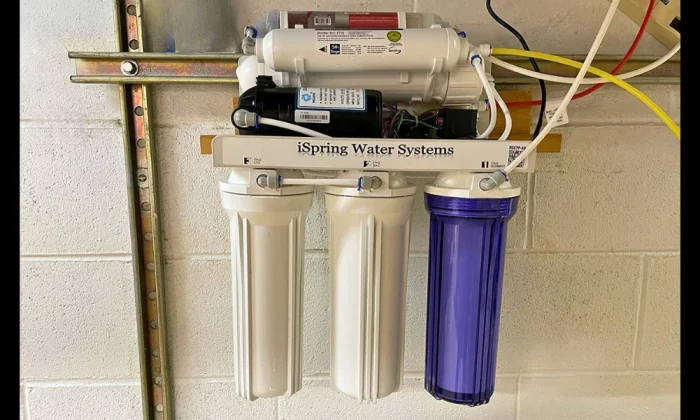
The iSpring RCC7AK is the best under-sink value pick for families who want reverse osmosis filtration, alkaline remineralization, and a traditional storage tank setup without paying for a premium tankless RO system.
Home Depot lists it as an NSF-certified 6-stage reverse osmosis system with alkaline remineralization, designed to reduce PFAS, fluoride, chromium, lead, and total dissolved solids.
Key Specs Snapshot
| Spec | Detail |
|---|---|
| System Type | Under-sink reverse osmosis |
| Capacity | 75 GPD |
| Storage | Storage tank |
| Filtration | 6-stage RO with alkaline remineralization |
| Power | No normal electricity requirement |
| Noise | Not clearly specified |
| Warranty | 1-year limited manufacturer warranty upon registration |
iSpring’s product page says the RCC7AK comes with a 1-year limited manufacturer warranty upon registration and lifetime personalized support from Georgia, USA.
Key Insight:
The RCC7AK is a practical value osmosis system because it adds remineralization without moving into a high-cost tankless design. That makes it a strong choice for families who want filtered water with better taste.
Performance Analysis:
In real-world use, this RO system is best for daily drinking water, cooking, bottle filling, and reducing reliance on bottled water. It uses a sediment filter, carbon prefilter, RO membrane, and remineralization stage to filter tap water and improve final taste.
The storage tank helps provide treated water when you open the dedicated faucet, but it also takes up cabinet space. The installation process is more involved than a countertop system because it connects to the cold water supply, drain line, and faucet.
The RCC7AK does not offer a digital display, built in TDS meters, or filter change alerts. That means the owner must track replacement filters manually. Long-term performance depends on water pressure, feed pressure, water usage, and changing filter cartridges on schedule.
Pros and Cons:
Pros:
- Strong value for a 6-stage RO system
- Alkaline remineralization improves RO water taste
- Good for family drinking water
- No regular power outlet needed
Cons:
- Storage tank uses under-sink space
- Requires dedicated faucet installation
- No smart filter change alerts
- Filter replacement schedule must be managed manually
Who it’s for: Families, value buyers, and homeowners who want a dependable under-sink reverse osmosis water filter with remineralization.
Who should skip: Renters, buyers who want a tankless RO system, or anyone needing hot and cold water or instant hot water features.
Verdict: The iSpring RCC7AK is the best under-sink value pick for buyers who want affordable reverse osmosis filtration with better-tasting remineralized drinking water.
Waterdrop G3P800

Why it’s a pick:
The Waterdrop G3P800 is the best tankless RO system in this lineup because it solves one of the biggest problems with traditional reverse osmosis systems: under-sink space. Instead of using a bulky storage tank, this system filters water on demand.
Waterdrop lists the G3P800 as an 800 GPD tankless reverse osmosis system with 10-stage filtration, a 3:1 pure to drain ratio, and NSF/ANSI 42, 53, 58, and 372 certifications.
Key Specs Snapshot
| Spec | Detail |
|---|---|
| System Type | Tankless reverse osmosis system |
| Capacity | 800 GPD |
| Storage | No storage tank |
| Filtration | 10-stage RO system |
| Power | Requires power outlet |
| Noise | Not clearly specified |
| Warranty | Verify current warranty before purchase |
Key Insight:
The G3P800 is best for buyers who want a compact under-sink water filtration system with a modern digital display and built in TDS meters. It is more advanced than a basic tank RO system, but that also means more electronics and higher ownership cost.
Performance Analysis:
In typical household use, this tankless RO system is a strong fit for modern kitchens, small cabinets, and users who want filtered water without storing treated water in a pressure tank.
The high 800 GPD rating helps support faster flow rate compared with many lower-capacity RO systems. However, real-world performance still depends on feed pressure, water pressure, feed water temperature, filter condition, and installation quality. If your home has low water pressure, the system may not perform like the spec sheet suggests.
The digital display and built in TDS meters are helpful for monitoring water quality trends and system status. But TDS is not a full contaminant test. It can show dissolved solids reduction, but it does not prove every harmful contaminant has been removed.
The biggest trade-off is power. Unlike many traditional under-sink RO systems, the Waterdrop G3P800 needs a power outlet. Replacement filters may also cost more than standard filter cartridges.
Pros and Cons:
Pros:
- Saves under-sink space
- No bulky storage tank
- High 800 GPD capacity
- Digital display and monitoring features
- Better fit for modern kitchens
Cons:
- Requires power outlet
- Higher upfront cost than basic RO systems
- More electronic parts than traditional systems
- Replacement filters may cost more
Who it’s for: Homeowners with small cabinets, modern kitchens, or higher daily water usage who want a compact reverse osmosis water filter.
Who should skip: Budget buyers, homes without an under-sink power outlet, or anyone who wants the simplest mechanical system.
Verdict: The Waterdrop G3P800 is the best tankless reverse osmosis system for buyers who want high flow, space savings, and modern filter monitoring.
Frizzlife PD600-TAM3

Why it’s a pick:
The Frizzlife PD600-TAM3 is the best tankless RO with remineralization because it combines compact under-sink design with better-tasting reverse osmosis water. Many tankless RO systems focus on speed and space savings, but this model adds an alkaline remineralization stage after filtration.
Frizzlife lists the PD600-TAM3 as a 600 GPD tankless reverse osmosis system with alkaline remineralization and smart monitoring features.
Key Specs Snapshot
| Spec | Detail |
|---|---|
| System Type | Tankless under-sink RO |
| Capacity | 600 GPD |
| Storage | No storage tank |
| Filtration | RO with alkaline remineralization |
| Power | Requires power outlet |
| Noise | Not clearly specified |
| Warranty | 1-year limited warranty referenced in manual |
Key Insight:
This system is a smart choice for people who like the tankless format but do not like the flat taste of standard RO water. The remineralization stage helps improve drinking water taste after dissolved solids are reduced by the RO membrane.
Performance Analysis:
In real-world use, the Frizzlife PD600-TAM3 is best for small to medium households that want a tankless RO system without giving up mineral-enhanced taste.
The tankless design saves cabinet space and avoids a traditional storage tank. That makes it easier to fit under many sinks, especially where a standard tank system would crowd the cabinet. It also supports better daily usability for users who want filtered water directly from a dedicated faucet.
The 600 GPD rating is strong for most homes, but actual flow rate depends on feed pressure, water pressure, filter age, and feed water temperature. Like other powered tankless systems, it needs a nearby outlet.
The remineralization stage is useful for drinking water, coffee, and tea. But it also adds another filter cartridge to maintain. Buyers should check replacement filters before buying because proprietary cartridges can raise long-term ownership cost.
This is not a countertop system, and it is not a whole house reverse osmosis system. It is designed for point-of-use drinking water.
Pros and Cons:
Pros:
- Tankless design saves cabinet space
- Remineralization improves RO water taste
- Strong 600 GPD capacity
- Good for drinking water, coffee, and tea
- More compact than storage tank systems
Cons:
- Requires power outlet
- Installation process is still required
- Not the lowest-cost RO option
- Replacement filter cost matters
Who it’s for: Buyers who want a tankless RO system with remineralized water for daily drinking, cooking, coffee, and tea.
Who should skip: Renters, budget-first buyers, or homes without power access under the sink.
Verdict: The Frizzlife PD600-TAM3 is the best tankless RO with remineralization for users who want compact filtration and better-tasting treated water.
AquaTru Classic
Why it’s a pick:
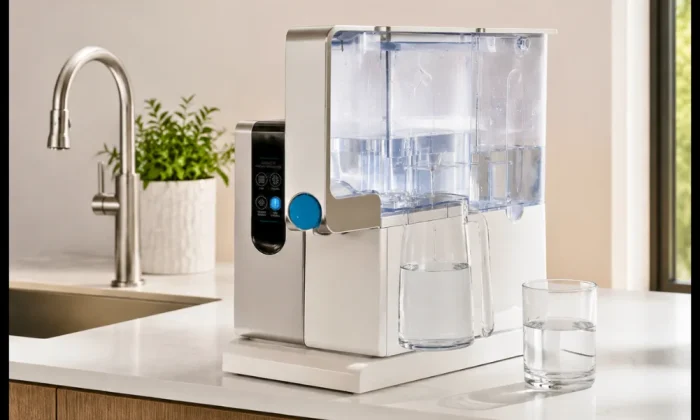
The AquaTru Classic is the best countertop RO system for renters, apartments, small kitchens, and users who want purified water without changing plumbing. Unlike under-sink reverse osmosis systems, it does not need a dedicated faucet, drain connection, feed water adapter, or storage tank under the cabinet.
AquaTru describes the Classic as a countertop reverse osmosis water filter with patented 4-stage Ultra Reverse Osmosis technology. Its filters are designed to last 600–1,200 gallons, depending on the filter type.
Key Specs Snapshot
| Spec | Detail |
|---|---|
| System Type | Countertop reverse osmosis system |
| Capacity | Refillable countertop design |
| Storage | Built-in purified water tank |
| Filtration | 4-stage RO |
| Power | Uses electricity |
| Noise | Not clearly specified |
| Warranty | 1-year limited warranty reported in product review documentation |
Key Insight:
AquaTru Classic is best understood as a countertop water purification appliance, not a whole house RO system. Its biggest strength is easy setup. Its biggest limitation is manual refilling.
Performance Analysis:
In typical household use, the AquaTru Classic works well for renters, apartments, offices, and people replacing bottled water. You fill the tap water tank, the system filters the feed water through the RO process, and the purified water collects in the clean water tank.
This makes the installation process much easier than an under-sink RO system. There is no cold water line connection, no dedicated faucet, and no drain saddle. That is a major benefit for renters who cannot modify plumbing.
The trade-off is water volume. A countertop system is not as seamless as an under-sink reverse osmosis water filter. If several people drink filtered water throughout the day, refilling the separate container can become annoying. It also takes counter space, so small kitchens should measure before buying.
This system does not provide instant hot water or hot and cold water dispensing. It is mainly for room-temperature reverse osmosis water.
Pros and Cons:
Pros:
- No under-sink installation required
- Good for renters and apartments
- Easy setup compared with plumbed RO systems
- Helps reduce bottled water use
- Long filter life compared with basic pitcher filters
Cons:
- Requires manual refilling
- Takes counter space
- Lower water volume than under-sink systems
- Uses electricity
- Not designed for entire home water filtration
Who it’s for: Renters, apartment users, small households, and people who want clean water without plumbing changes.
Who should skip: Large families, heavy water users, or anyone who wants filtered water directly from a dedicated faucet.
Verdict: The AquaTru Classic is the best countertop reverse osmosis system for renters and no-installation buyers who want purified drinking water without modifying the sink.
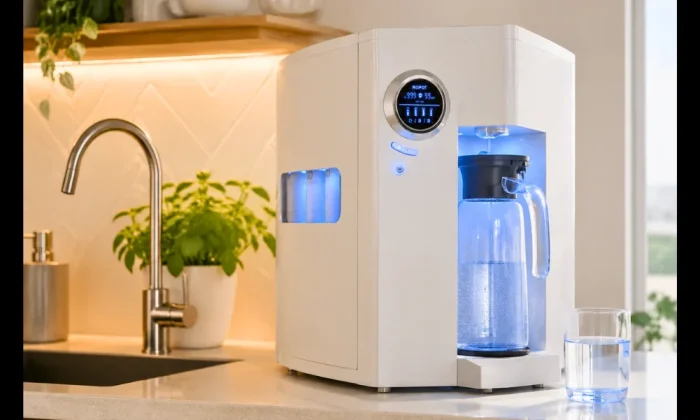
Bluevua ROPOT-UV
Why it’s a pick:
The Bluevua ROPOT-UV is the best no-installation countertop RO system for users who want easy setup, a modern appliance-style design, and no under-sink plumbing. It is a strong option for dorms, small apartments, renters, and kitchens where cabinet space is already limited.
Bluevua lists the ROPOT(UV) as a countertop reverse osmosis water system, and retail listings describe the RO100ROPOT-UV as a portable 6-stage RO system with UV and remineralization. Amazon’s listing also notes a filter life monitor that shows filter service life and water quality.
Key Specs Snapshot
| Spec | Detail |
|---|---|
| System Type | Countertop RO system |
| Capacity | Refillable reservoir |
| Storage | Separate clean water container/carafe style |
| Filtration | RO with UV and remineralization |
| Power | Requires electricity |
| Noise | Not clearly specified |
| Warranty | Verify current warranty before purchase |
Key Insight:
Bluevua is a good choice if you want a countertop system that feels more like a water purification appliance than a basic water filter. It is not a house RO system or whole house reverse osmosis system.
Performance Analysis:
In real-world use, the Bluevua ROPOT-UV is best for people who want clean water without a permanent installation process. You do not need to connect it to the water supply, cold water line, or drain. That makes it easier for renters and small-space users.
The RO membrane helps reduce dissolved solids and additional impurities from tap water. The remineralization stage can improve RO water taste, while the UV feature may support microbial control when used as designed. However, do not treat it as a guaranteed solution to kill bacteria in unsafe well water unless the specific contaminant claim is independently certified and matches your water test.
The main downside is convenience. Because it uses a refillable container, heavy water usage can become repetitive. It is better for drinking water than for high-volume cooking or large households.
Pros and Cons:
Pros:
- No plumbing or drilling required
- Good for renters, dorms, and small spaces
- UV and remineralization add useful features
- Filter life monitor helps with maintenance
- Easier setup than under-sink RO systems
Cons:
- Manual refilling required
- Limited water volume
- Takes counter space
- Requires electricity
- Not ideal for large families
Who it’s for: Renters, dorm users, apartment users, and buyers who want countertop reverse osmosis water with no permanent setup.
Who should skip: Large households, users wanting a dedicated faucet, or buyers who need hot and cold water or instant hot water features.
Verdict: The Bluevua ROPOT-UV is the best no-installation countertop RO system for small-space users who want purified water without plumbing changes.
Best Budget Reverse Osmosis System
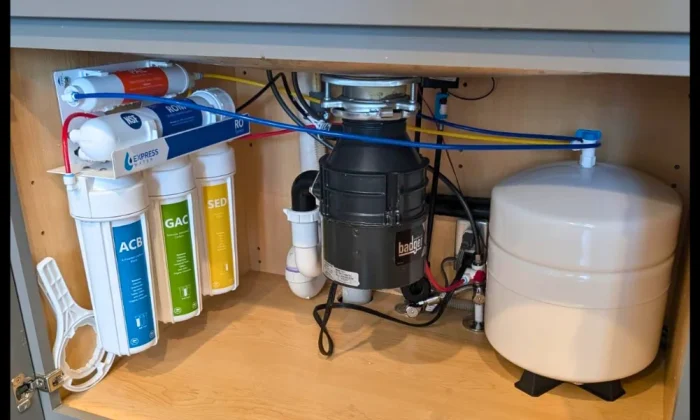
Express Water RO5DX
Why it’s a pick:
The Express Water RO5DX is the best budget reverse osmosis system for buyers who want basic under-sink RO filtration without paying for tankless design, digital display, remineralization, or smart filter change alerts. It is a practical entry-level choice for homeowners who want cleaner drinking water from a dedicated faucet at a lower upfront cost.
Home Depot lists the Express Water RO5DX as a 5-stage reverse osmosis water filtration system with faucet, tank, filters, and 50 GPD capacity. It is designed as a traditional under-sink system for drinking water, not a countertop system or whole house RO system.
Key Specs Snapshot
| Spec | Detail |
|---|---|
| System Type | Under-sink reverse osmosis system |
| Capacity | 50 GPD |
| Storage | Storage tank |
| Filtration | 5-stage RO |
| Power | No normal power outlet needed |
| Noise | Not clearly specified |
| Warranty | 1-year warranty commonly listed by retailer/manufacturer |
Key Insight:
This is the right kind of osmosis system for buyers who want the core benefits of reverse osmosis without paying for premium features. It filters tap water through all the essential stages: sediment filter, carbon filters, RO membrane, and post-filter.
Performance Analysis:
In typical household use, the Express Water RO5DX works best for simple city water or municipal water concerns. It can help produce filtered water for drinking, cooking, coffee, and reducing bottled water use.
The 50 GPD capacity is enough for many small to medium households, but it is lower than premium systems such as 600 GPD or 800 GPD tankless RO systems. If your water usage is heavy or you fill many bottles daily, a higher-capacity system may feel more convenient.
Because this is a traditional under-sink RO system, the installation process requires a cold water feed connection, drain line, dedicated faucet, and storage tank placement. It does not need a power outlet, which keeps the setup simpler than tankless systems.
The main limitation is long-term value. The lower upfront price is helpful, but replacement filters still matter. Buyers should check filter cartridge pricing and replacement schedules before choosing it.
Pros and Cons:
Pros:
- Budget-friendly entry-level RO system
- Good for basic drinking water filtration
- No normal power outlet needed
- Includes traditional faucet and storage tank setup
- Can reduce reliance on bottled water
Cons:
- Lower 50 GPD capacity than premium RO systems
- No tankless design
- No built in TDS meters or digital display
- No remineralization unless added separately
- Still requires installation and filter maintenance
Who it’s for: First-time RO buyers, budget-focused homeowners, and users who want a basic under-sink reverse osmosis water filter for drinking water.
Who should skip: Large households, renters, users who want easy setup, or buyers needing hot and cold water, instant hot water, tankless design, or smart filter change alerts.
Short Verdict: The Express Water RO5DX is the best budget RO system for homeowners who want basic purified water without paying for premium features.
Best Reverse Osmosis System for Well Water Support
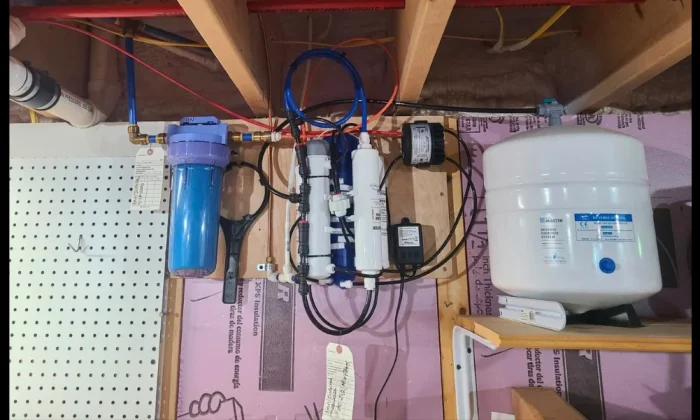
Home Master TMHP HydroPerfection
Why it’s a pick:
The Home Master TMHP HydroPerfection is the best reverse osmosis system for well water support because it is designed for more demanding drinking-water situations than a basic city-water RO system. It is a stronger fit for users who already tested their private well water and know they need RO plus added protection features.
Home Master describes the HydroPerfection as a 9-stage under-sink reverse osmosis water filtration system designed for homes and well water. Retail listings commonly highlight features such as remineralization, UV support, and a permeate pump.
Key Specs Snapshot
| Spec | Detail |
|---|---|
| System Type | Advanced under-sink reverse osmosis system |
| Capacity | Verify by current model/package |
| Storage | Storage tank |
| Filtration | Multi-stage RO with remineralization, UV support, and permeate pump |
| Power | UV-equipped versions require power outlet |
| Noise | Not clearly specified |
| Warranty | Verify current manufacturer warranty before purchase |
Key Insight:
This is not the system to buy by guesswork. A well-water RO system should be chosen after water quality testing. Well water can contain sediment, iron, hardness, bacteria, nitrates, sulfur, heavy metals, and other contaminants that may require pre treatment before the RO membrane.
Performance Analysis:
In real-world use, the Home Master TMHP HydroPerfection is best for private well users who need more than a standard reverse osmosis water filter. Its advanced design can support cleaner drinking water, but it does not replace proper water testing.
The system may help with dissolved solids and contaminant reduction at the point of use, while remineralization can improve RO water taste. UV support may help with microbial concerns when properly installed and maintained, but it should not be treated as a universal guarantee to kill bacteria in unsafe water.
The permeate pump can improve efficiency and help reduce water waste compared with some traditional RO systems, depending on conditions. However, feed pressure, water pressure, sediment load, and pre treatment all affect performance.
This is not a whole house reverse osmosis system. It treats drinking water at the sink. If your entire home has severe water quality problems, you may need a larger water filtration system before or alongside point-of-use RO.
Pros and Cons:
Pros:
- Stronger fit for tested well-water situations
- Remineralization improves treated water taste
- UV support can help in the right setup
- Permeate pump may improve efficiency
- More advanced than basic under-sink RO systems
Cons:
- More expensive than budget RO systems
- More complex installation process
- May still need pre treatment
- UV versions require power outlet
- Not necessary for simple municipal water taste issues
Who it’s for: Private well users, homes with water test results, and buyers who need drinking water RO plus added protection features.
Who should skip: City water users with simple taste issues, renters, and anyone who has not tested their well water.
Verdict: The Home Master TMHP HydroPerfection is the best RO system for well-water support, but only when chosen based on actual water quality results.
Best Reverse Osmosis System for PFAS, Lead, Fluoride, and Heavy Metals
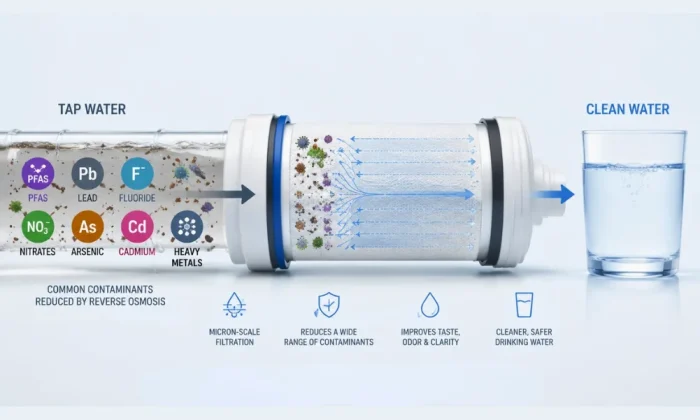
For PFAS, lead, fluoride, heavy metals, and other dissolved contaminants, choose a reverse osmosis system with independently certified contaminant reduction claims. Do not rely only on total dissolved solids or built in TDS meters.
Reverse osmosis can reduce many dissolved solids and harmful contaminants by pushing feed water through a semi permeable membrane. But the system must be properly installed, maintained, and matched to the contaminant concern.
Common contaminants that reverse osmosis systems may reduce include fluoride, nitrates, lead, arsenic, cadmium, chromium, and other heavy metals. Some independently certified RO systems may also reduce PFAS. However, contaminant reduction depends on the exact system, filter condition, certification, and maintenance schedule.
For this use case, look for:
- NSF/ANSI 58 certification where applicable
- Specific contaminant reduction documentation
- Clear replacement filter schedule
- Available RO membrane replacements
- Proper feed pressure and water pressure range
- Strong prefiltration with a sediment filter and carbon prefilter
If PFAS, lead, or arsenic is your main concern, test your tap water and verify the product’s specific reduction claims before buying.
Final Verdict: Which Reverse Osmosis System Should You Choose?
For most homeowners, the APEC ROES-PH75 is the best overall choice because it combines traditional under-sink reverse osmosis with remineralized drinking water.
- Value-focused families, choose the iSpring RCC7AK.
- Small cabinets and modern kitchens, choose the Waterdrop G3P800.
- Tankless RO with better taste, choose the Frizzlife PD600-TAM3.
- Renters and apartments, choose the AquaTru Classic or Bluevua ROPOT-UV.
- For budget buyers, choose the Express Water RO5DX.
For tested well water, consider the Home Master TMHP HydroPerfection, but only after confirming your water quality and pretreatment needs.
The best reverse osmosis system is not the one with the most features. It is the one that fits your water quality, installation space, daily water usage, and maintenance budget.
Compare the products
Choose the products you want to compare. Ratings retain each product’s original rubric.
| Product | APEC ROES-PH75 | iSpring RCC7AK | Waterdrop G3P800 | Frizzlife PD600-TAM3 | AquaTru Classic | Bluevua ROPOT-UV | Express Water RO5DX | Home Master TMHP HydroPerfection | Best Reverse Osmosis System for PFAS, Lead, Fluoride, and Heavy Metals |
|---|
Feature Comparison: Tank, Tankless, Countertop, and Well-Water RO Systems
| Product | Storage Tank | Tankless | Countertop | Remineralization | UV Support | Power Needed | Best Setup Type |
|---|---|---|---|---|---|---|---|
| APEC ROES-PH75 | Yes | No | No | Yes | No | No | Under-sink homeowner setup |
| iSpring RCC7AK | Yes | No | No | Yes | No | No | Under-sink family setup |
| Waterdrop G3P800 | No | Yes | No | No | No | Yes | Compact modern kitchen |
| Frizzlife PD600-TAM3 | No | Yes | No | Yes | No | Yes | Tankless with better taste |
| AquaTru Classic | No | No | Yes | No | No | Yes | Renter or apartment setup |
| Bluevua ROPOT-UV | No | No | Yes | Yes | Yes | Yes | No-install countertop setup |
| Express Water RO5DX | Yes | No | No | No | No | No | Budget under-sink setup |
| Home Master TMHP HydroPerfection | Yes | No | No | Yes | Yes | Yes* | Tested well-water support |
This feature table helps separate the systems by installation type and ownership needs. Storage tank systems are usually simpler and lower cost.
Tankless systems save cabinet space but need a power outlet. Countertop systems are best for easy setup. UV support is most useful when water testing shows a microbial concern, especially for private well water.
Storage Tank vs Tankless Reverse Osmosis

When a Storage Tank Makes Sense
A storage tank makes sense when you want a simpler and usually lower-cost reverse osmosis system that does not require electricity.
Before installing a traditional storage tank RO system, measure both the under-sink space and the cabinet door opening. The storage tank must fit through the door opening before installation, and there should still be enough room for tubing, filter cartridges, the drain connection, and future filter changes.
This is a common installation mistake. A tank may technically fit inside the cabinet but still be difficult to position, service, or remove later.
Choose a storage tank RO system if:
- You want lower upfront cost
- You do not have an under-sink power outlet
- You prefer simpler mechanical design
- Cabinet space is not a major problem
- You want treated water ready at the faucet
The downside is space. A storage tank can crowd the cabinet and make filter changes harder.
When Tankless Reverse Osmosis Is Better
Tankless reverse osmosis is better when cabinet space, flow rate, digital display, and modern setup matter more than the lowest upfront cost.
Choose tankless RO if:
- Your cabinet is small
- You dislike bulky tanks
- You want a modern digital display
- You want built in TDS meters or filter change alerts
- You are comfortable with electronics and a power outlet
The downside is cost and complexity. Tankless systems usually have more parts and may use proprietary replacement filters.
Easy Setup: Countertop RO vs Under-Sink Reverse Osmosis
Countertop Systems Are Better for Renters
A countertop RO system is usually better for renters because it does not require a dedicated faucet, drain connection, or permanent plumbing.
Most countertop systems use a separate container or refillable feed water tank. They are easy to set up and move, but they take counter space and need manual refilling.
Under-Sink Systems Are Better for Daily Family Use
Under-sink RO systems are better for families because they provide filtered water through a dedicated faucet.
They are more seamless for daily drinking water, cooking, coffee, and bottle filling. The trade-off is installation. You need cabinet space, feed water connection, drain connection, and filter access.
Whole House RO System vs Under-Sink Water Purification
Most U.S. homes do not need a whole house RO system. Most buyers only need purified water for drinking and cooking, so an under-sink or countertop reverse osmosis water filter is usually more practical.
Whole-house reverse osmosis systems are designed to filter water for the entire home, providing treated water at every tap and appliance. That can include sinks, showers, laundry, and kitchen appliances.
A whole house reverse osmosis system treats the entire home. That sounds appealing, but it is much more complex. It may require pre treatment, a storage tank, pumps, post-treatment, and professional installation.
A whole house RO system may make sense for severe water-quality problems, especially when water test results show a need. But for ordinary tap water taste issues, a point-of-use water filtration system is usually smarter.
If your problem is hard water scale, a water softener may be a better first step than RO. If your problem is sediment, a whole house sediment filter may be more appropriate.
Best Under-Sink Value
Best Tankless RO System
Best Tankless RO With Remineralization
Best Countertop RO System
Best No-Installation Countertop RO
Other RO Systems We Considered
We also considered a few other RO systems but did not include them in the final top list.
Cloud RO: A strong premium smart RO system with a modern ownership experience, but it was not included in the final list to keep the product lineup more brand-diverse and use-case focused.
Brondell Circle RO: A compact under-sink RO option with a different tank design, but Frizzlife and Waterdrop gave stronger tankless coverage for this article.
RKIN U1: A premium countertop RO option with hot and cold water features, but AquaTru and Bluevua better fit the main countertop and no-installation categories used in this guide.
How to Choose the Best Reverse Osmosis System for Your Home
The best reverse osmosis system is the one that matches your water quality, installation limits, water pressure, and maintenance budget.
Match the System to Your Water Quality
Start with your water quality, not the product page.
City water and municipal water users often care about chlorine taste, dissolved solids, lead concerns, PFAS concerns, and bottled water replacement. Well-water users need a different approach because private wells may contain sediment, iron, hardness, bacteria, nitrates, sulfur, or other impurities.
Tap water can taste fine and still contain harmful contaminants. A TDS meter can show total dissolved solids, but it cannot identify every contaminant. For serious concerns, use a water test or check certified contaminant reduction claims.
Choose Under-Sink, Tankless, Countertop, or Whole House RO
Most buyers need a drinking water RO system, not a whole house RO system.
An under-sink house RO system is usually best for daily drinking water and cooking. A countertop system is better for renters. A tankless RO system is better for compact cabinets. A whole house reverse osmosis system treats the entire home, but it is expensive, complex, and usually unnecessary for normal city water.
Check Storage Tank, Flow Rate, and Water Pressure
Storage tank systems hold treated water so filtered water is ready at the faucet.
Tankless systems filter on demand. Flow rate depends on water pressure, feed pressure, water temperature, filter condition, and RO membrane performance. If your water pressure is low, performance may drop.
Understand Hot and Cold Water Features
Most under-sink reverse osmosis systems connect to the cold water feed line only.
Do not connect an RO system to hot water unless the manufacturer specifically allows it. Standard RO systems are not instant hot water dispensers. Some countertop appliances offer hot and cold water or instant hot water features, but those are different from a standard reverse osmosis water filter.
Compare Pure to Drain Ratio and Water Waste
The pure to drain ratio shows how much purified water is produced compared with drain water.
For example, a 1:1 ratio means the system produces one gallon of purified water and sends about one gallon to drain. A 3:1 ratio means three gallons of purified water for one gallon of drain water under stated conditions.
Older standard RO systems may waste around 3 to 4 gallons of water for every 1 gallon of purified water produced, while some inefficient systems may waste even more. Newer tankless RO systems and systems with permeate pumps may advertise better pure to drain ratios, such as 2:1 or 3:1.
These numbers depend on feed pressure, water pressure, water temperature, filter condition, and system design. Do not assume every RO system has the same waste ratio.
Water waste matters more if your water usage is high, your water cost is high, or you are choosing between older tank systems and newer tankless RO systems.
Reverse Osmosis Filter Stages Explained
Sediment Filter
The sediment filter catches sand, rust, dirt, and particles before they reach the carbon prefilter and RO membrane.
This stage matters more if you have old plumbing, well water, or visible particles in the water supply.
Carbon Prefilter
The carbon prefilter helps reduce chlorine taste and odor. It also helps protect the RO membrane from chlorine damage in many systems.
This filter should be changed on schedule. Waiting too long can reduce system performance.
RO Membrane
The RO membrane is the main filtration barrier. It uses a semi permeable membrane to reduce dissolved solids and many additional impurities.
This is the core of reverse osmosis water purification.
Post-Carbon Filter
The post-carbon filter polishes the taste before treated water reaches the dedicated faucet or clean water tank.
This is often the final stage before drinking.
Remineralization Filter
A remineralization filter may add minerals such as calcium and magnesium back to RO water to improve taste and mouthfeel.
This can make the water feel less flat, especially for people using RO water for coffee, tea, and daily drinking.
UV Stage
UV may help reduce microorganisms in treated water when properly designed and maintained.
Do not assume every UV-equipped system will solve every bacteria problem. For well water, test first and follow the manufacturer’s instructions.
Replacement Filters and Ownership Cost Reality
Reverse osmosis systems are not one-time purchases. Replacement filters, RO membrane changes, remineralization cartridges, and UV lamps can affect the real cost more than the purchase price.
Typical Replacement Parts
| Part | Role | Ownership Note |
|---|---|---|
| Sediment filter | Protects the system from particles | Important for well water and older plumbing |
| Carbon prefilter | Protects the RO membrane and improves taste | Must be changed on schedule |
| RO membrane | Main reduction stage | Usually lasts longer but costs more |
| Post-filter | Improves final taste | Often replaced yearly |
| Remineralization cartridge | Improves RO water taste | Adds recurring cost |
| UV lamp | Microbial support | Requires power and replacement |
How Long Do RO Systems Last?
A well-maintained reverse osmosis system can last many years, but lifespan depends on water quality, installation quality, feed pressure, filter changes, replacement part availability, and whether the system is exposed to hard water, sediment, or high total dissolved solids.
Regular maintenance usually includes changing pre-filters, replacing the RO membrane when needed, checking tubing and fittings for leaks, and replacing any remineralization cartridges or UV lamps on schedule.
Annual upkeep is often lower than buying bottled water, but it is not zero. The real cost depends on replacement filters, membrane life, water usage, and whether the system uses proprietary filter cartridges.
What Raises Long-Term Cost
- Proprietary filter cartridges
- Hard water
- High total dissolved solids
- Heavy water usage
- Poor pre treatment
- Well-water sediment
- Delayed filter changes
- Expensive filter bundles
- UV lamp replacement
What Lowers Long-Term Cost
- Widely available replacement filters
- Clear maintenance schedule
- Easy filter access
- Correct pre treatment
- Stable water pressure
- Choosing the right system size for your water volume
This is where many buyers make a mistake. A low-cost RO system can become expensive if the replacement filters are costly, hard to find, or need frequent changes.
Common Buyer Mistakes With RO Systems
Buying Based Only on Number of Stages
More stages do not automatically mean better water filtration.
A well-designed 5-stage system with verified contaminant reduction can be better than a poorly documented 10-stage system.
Ignoring Water Quality
The best reverse osmosis system for city water may not be the best system for well water.
City water users often need taste and contaminant reduction. Well-water users may need sediment control, hardness treatment, iron treatment, UV support, or other pre treatment before RO.
Trusting TDS Alone
Built in TDS meters are useful, but TDS does not identify every harmful contaminant.
A low TDS reading does not prove the water is free from lead, PFAS, VOCs, bacteria, pesticides, or other contaminants.
Forgetting Water Pressure
Low water pressure can reduce flow rate and water volume.
Some systems work best within a specific pressure range. If your feed pressure is too low, you may need a booster pump or a different system.
Assuming RO Is Whole-House Treatment
Most RO systems are point-of-use drinking water systems, not whole house filtration systems.
An under-sink RO system will not treat shower water, laundry water, or every faucet in the home.
Ignoring Replacement Filters
Replacement filters are part of the real cost of ownership.
Before buying, check the price and availability of all the filters contained in the system, including sediment filter, carbon prefilter, RO membrane, post-filter, remineralization cartridge, and UV lamp if included.
Where Reverse Osmosis Systems Disappoint
Reverse osmosis systems are useful, but they are not perfect.
They may disappoint buyers who expect:
- Instant unlimited water
- No maintenance
- No water waste
- Whole house treatment from an under-sink system
- Hot water compatibility
- Zero filter replacement cost
- No installation work
- A fix for every well-water problem
RO is best understood as a drinking-water purification system. It can produce clean water for drinking and cooking, but it still has limits.
Who Should Buy a Reverse Osmosis System?
A reverse osmosis system is a good fit if you want:
- Better drinking water
- Reduced dissolved solids
- Filtered water for cooking
- Cleaner-tasting tap water
- Less reliance on bottled water
- A water purification system for a dedicated faucet
- Help reducing contaminants with verified claims
- A practical point-of-use system for municipal water or tested well water
Who May Not Need Reverse Osmosis?
RO water can also improve the flavor of coffee, tea, ice, and other beverages because it reduces dissolved solids and taste-causing impurities from tap water. It may also help reduce scale buildup in point-of-use appliances such as coffee makers, kettles, and ice makers when those appliances are filled with RO water.
An under-sink RO system will not protect every appliance in the entire home. For whole-home scale or appliance protection, you may need a separate whole house filtration system or water softener, depending on the water-quality problem.
You may not need RO if:
- Only issue is mild chlorine taste
- Need whole house sediment filtration
- Need a softener for hard water
- Want instant hot water
- Want hot and cold water dispensing from a standard under-sink RO system
- Cannot maintain replacement filters
- Need an entire home system instead of drinking water treatment
Simple taste and odor issues, a certified carbon water filter may be enough. For hard water scale, a softener is usually more appropriate. For bacteria in well water, disinfection and testing should come first.
This section is ready for your content in the CMS.
Engr. Hm Jamal
Founder & Lead Technical EditorFounder of Wits Engineer, with a practical background in electrical and water systems. His product reviews focus on setup, performance, maintenance and the trade-offs that affect everyday ownership.