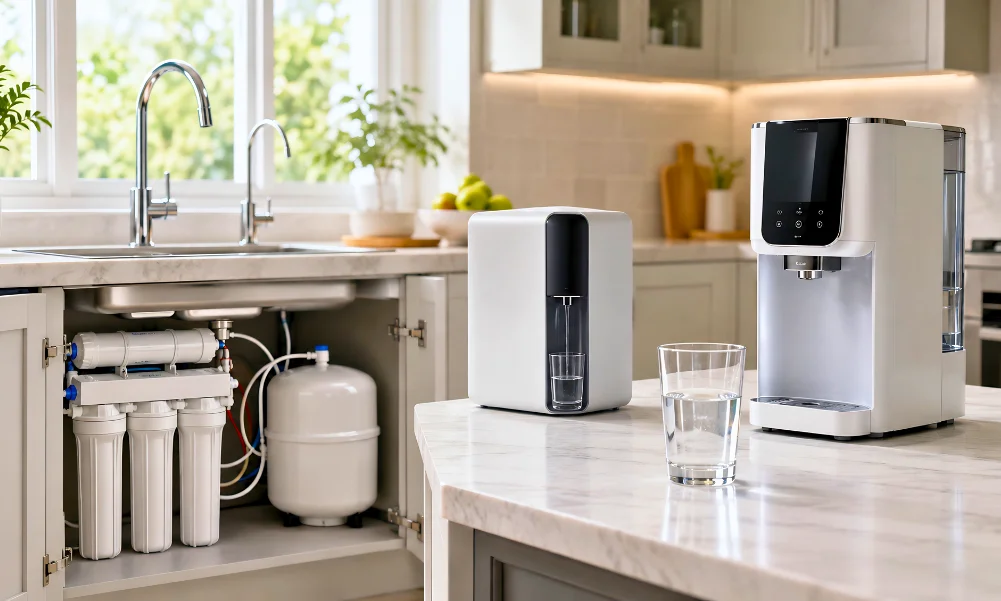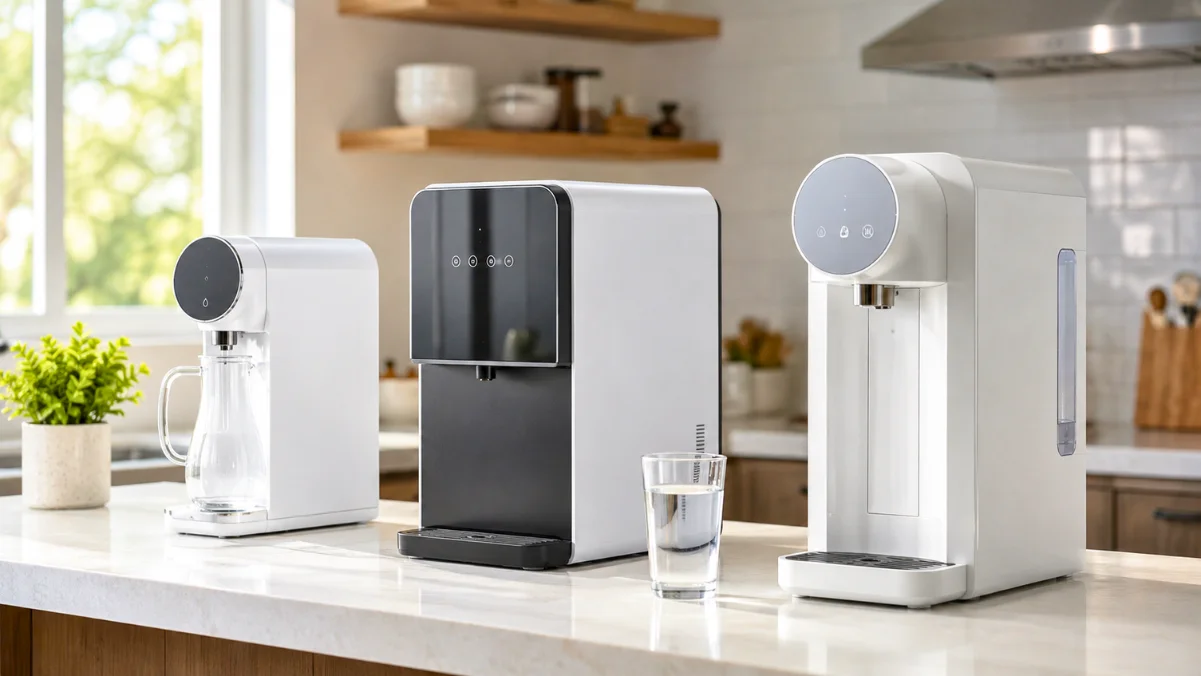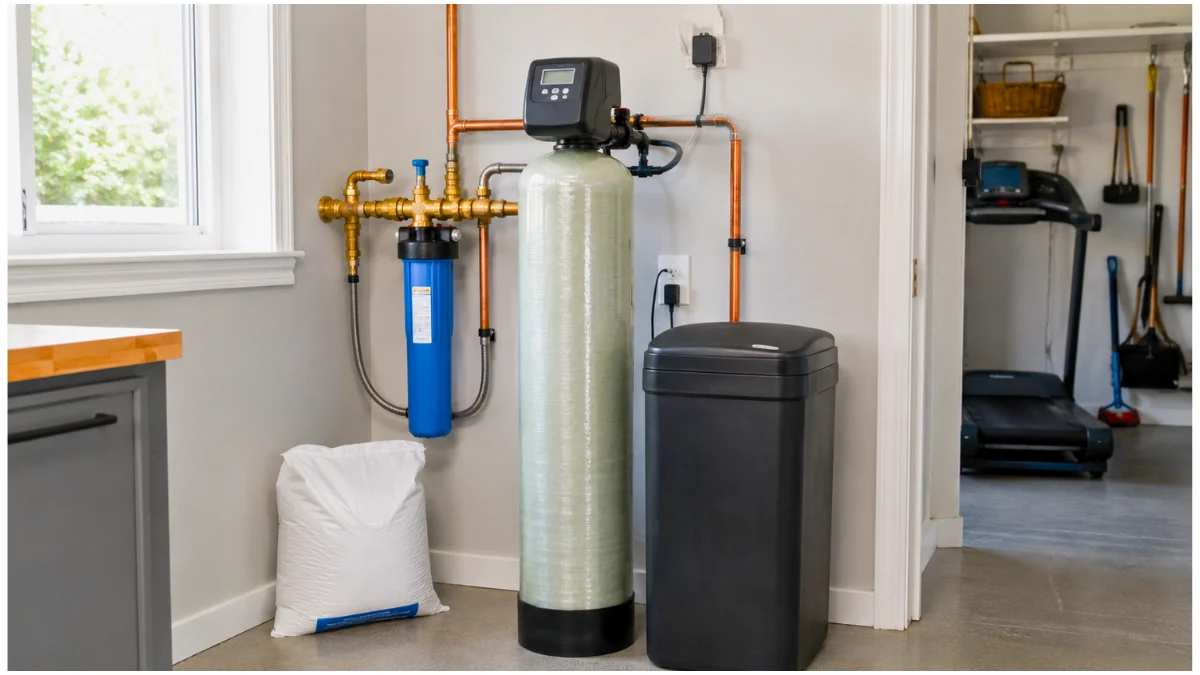
Best Tankless Reverse Osmosis Systems: High-Flow, Space-Saving RO Picks
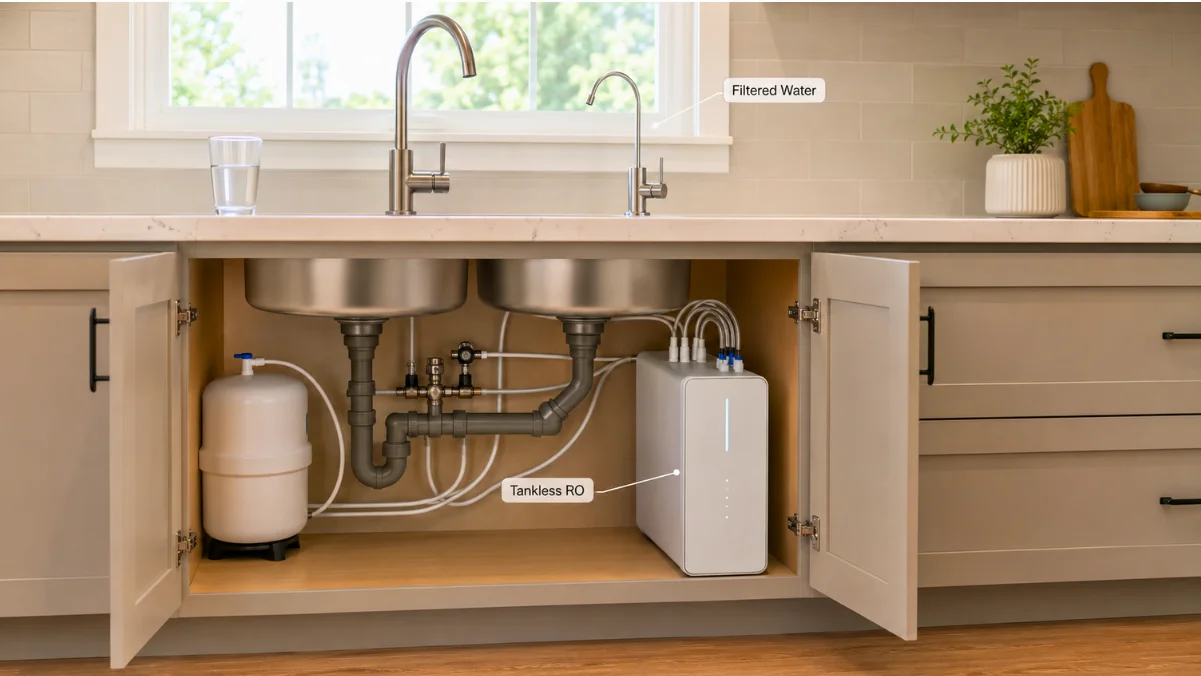

Tankless reverse osmosis systems save under-sink space and deliver purified water without waiting for a storage tank to refill. However, the highest GPD (gallons per day) rating is not always the best choice.
For most homes, the iSpring RO500AK-BN is the top pick. It produces 500 GPD and adds minerals back into the water after RO filtration. It has a 2:1 pure-to-drain ratio, and replacement filters are easy to identify. The exact model also has a documented NSF/ANSI 58 listing for TDS reduction.
The Frizzlife PD600-TAM3 is a strong value option. It provides remineralized water and keeps annual filter costs relatively low. For higher demand, the APEC ROTL-A1000 increases rated output to 1,000 GPD.
Tankless systems still have practical drawbacks. Most need an electrical outlet under the sink and use proprietary filters. Without a storage tank, there is no large reserve of purified water during a power outage. Feedwater pressure, temperature, hardness, and plumbing layout can also affect actual performance.
Still deciding? Our broader reverse osmosis guide compares tankless models with other RO system types.
Tankless RO Systems Compared
| Model | Rated Capacity | Listed Flow Rate | Pure-to-Drain | Width | Remineralization | Est. Annual Filter Cost |
|---|---|---|---|---|---|---|
| iSpring RO500AK-BN | 500 GPD | Up to 0.40 GPM | 2:1 | 5.2 in | Yes (Integrated) | ~$133 |
| APEC ROTL-A1000 | 1,000 GPD | ~0.68 GPM (2.6 L/min) | 2:1 | 10.0 in | No (Separate ALK model) | Not disclosed in manual |
| Frizzlife PD600-TAM3 | 600 GPD | Up to 0.41 GPM | 2:1 | 5.3 in + TAM3 | Yes (External housing) | ~$107 |
| Philips AUT9360/37 | 600 GPD | Not disclosed | 2.3:1 (70% recovery) | Compact | Yes (Composite) | Not disclosed in manual |
| Electrolux EWP800A0W | 800 GPD | Up to 0.58 GPM | 3:1 | 5.2 in | No | Varies by retailer |
| VIOMI Vortex V8 Pro | 800 GPD | Up to 0.55 GPM | 3:1 | 5.0 in | No | Varies by retailer |
| Ecoviva E8 WP-RO-E8 | 800 GPD | Not disclosed | 2.5:1 | 5.0 in | No | Not disclosed in manual |
Best Overall: iSpring RO500AK-BN

The iSpring RO500AK-BN is our top overall pick for households wanting high-capacity, remineralized drinking water without sacrificing half their under-sink storage to a bulky holding tank.
Overview & Key Specifications
- Capacity & Flow: Rated at 500 GPD with an actual output of ~0.4 GPM, filling an 8 oz glass in about 10 seconds.
- Footprint: Measures 16.13" L x 5.13" W x 16.25" H, reclaiming up to 70% of under-sink space.
- Efficiency: Operates at an efficient 2:1 pure-to-waste ratio.
- Certifications: Holds complete-system NSF/ANSI Standard 58 certification for TDS reduction.
3-Stage Filtration Architecture
- FCF500 Pre-Filter: Composite polypropylene and carbon block stage capturing sediment, rust, and chlorine (6–12 month lifespan).
- MRO500 RO Membrane: 0.0001-micron high-efficiency membrane filtering up to 99% of contaminants like lead, PFAS, and arsenic (up to 24-month lifespan).
- FCA500 Post-Filter: Alkaline remineralization carbon cartridge that restores minerals to balance pH and enhance flavor (12-month lifespan).
Real-World Performance & Testing Metrics
- TDS Reduction: Lowers raw municipal tap water TDS from 330–350 PPM down to ~20 PPM (~94% real-world efficiency).
- Alkaline pH Curve: Dispenses water at pH 8.2–8.5 for the first 30–45 days, stabilizing to a steady 7.3–7.6 range for the remainder of its lifecycle.
- TDS Creep: Static water across the membrane causes an initial 3–4 oz morning draw spike of 50–70 PPM before returning to a 15–20 PPM baseline within 4–6 seconds.
- Smart Features: Front 3-LED panel tracks filter life, supported by an automated 20-second high-pressure auto-flush after 24 hours of inactivity.
The Verdict: An exceptional mid-range balance of space-saving design, rapid flow, and crisp alkaline taste—provided you have an under-sink power outlet ready.
- Pros: Reclaims ~70% cabinet space; low 2:1 wastewater ratio; balanced, non-acidic alkaline taste; complete-system NSF/ANSI 58 certified.
- Cons: Requires a continuous under-sink electrical outlet; minor initial TDS creep; flow rate drops if incoming water pressure falls below 45–48 PSI or during cold temperatures.
🔗** Check Price on Amazon.**
Our Top Picks
Detailed product reviews
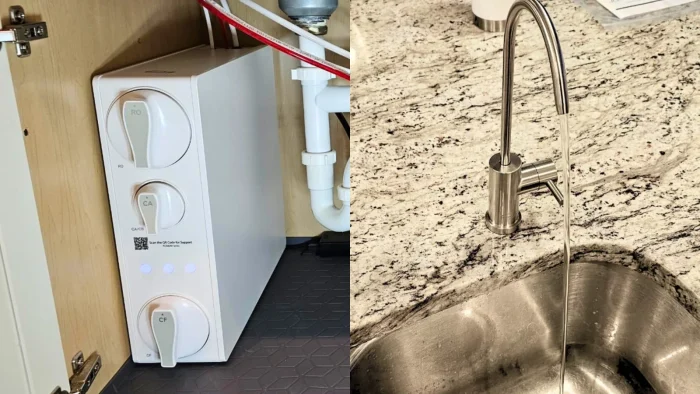
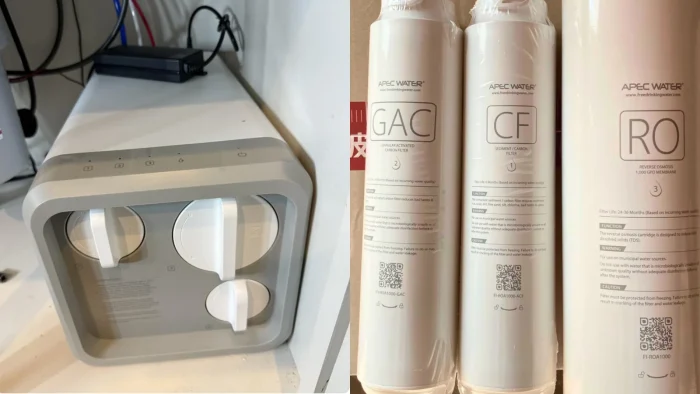
Best High-Capacity Pick: APEC ROTL-A1000

APEC ROTL-A1000 tankless reverse osmosis system
The APEC ROTL-A1000 suits households that need frequent, high-volume purified water production.
APEC rates it at 1,000 GPD, while the manual lists dispensing flow at about 2.6 L/min. The 2:1 pure-to-drain ratio makes its wastewater figure competitive, even with the higher capacity.
The higher output supports frequent cooking, filling large containers, or serving multiple users from a single faucet. Smaller households are unlikely to benefit from 1,000 GPD capacity and may find a 500–600 GPD system more practical.
The standard ROTL-A1000 does not include the alkaline stage found on the separate ROTL-A1000ALK, so don’t confuse the two models.
APEC specifies municipal tap water, a 15–58 psi inlet range, and 41–100°F feed-water temperature. At 18 × 10 × 10 inches, it also takes more cabinet width than the narrowest systems here.
APEC says the model is certified through IAPMO under NSF/ANSI 58 and NSF/ANSI 372. Specific contaminant claims must match the exact certification record.
Availability is a concern. The manufacturer’s site listed the unit as out of stock during the research period. Confirm current U.S. inventory before purchase.
**Pros: **Highest rated capacity in the lineup and well suited to households with frequent high-volume water use.
Cons: Larger footprint and higher capacity than many homes need; check current availability before purchase.
Features: 1,000 GPD | 2.6 L/min listed flow | 2:1 ratio | IAPMO documentation | Municipal water
| Check Price.
Best Value Pick: Frizzlife PD600-TAM3

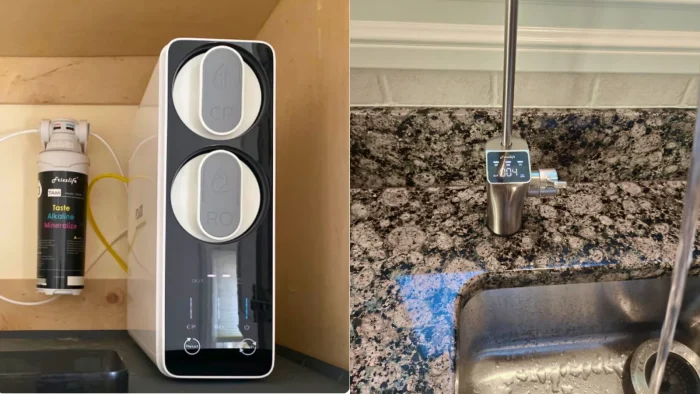
Frizzlife PD600-TAM3 tankless reverse osmosis system with alkaline remineralization
The Frizzlife PD600-TAM3 balances output, remineralization, monitoring features, and filter cost for typical residential use.
Frizzlife rates the system at 600 GPD with published flow around 0.41 GPM and a 2:1 pure-to-drain ratio. That gives most small and medium households plenty of capacity without moving into an 800–1,000 GPD system.
The PD600 does the main filtration. Then, the separate TAM3 housing adds minerals after RO. That can improve taste, but you must include the extra housing when measuring cabinet space.
Its display shows TDS and estimated filter life. Frizzlife also notes that the TAM3 stage can add roughly 10–30 ppm of dissolved solids. A higher first-draw TDS reading can come from both remineralization and normal TDS creep after stagnation. TDS remains a trend indicator, not a test for individual contaminants.
The filter economics are another strength. Based on the supplied research prices, annualized cartridge cost was about $107 before shipping and tax.
Frizzlife describes SGS testing according to NSF/ANSI 42, 53, and 58. Don't shorten that wording to “NSF certified” unless an accredited listing supports it.
**Pros: **Strong balance of remineralization, useful monitoring, everyday flow, and relatively manageable filter cost.
Cons: Separate TAM3 housing uses more cabinet space, and its certification wording needs more care than iSpring’s.
Features: 600 GPD | 0.41 GPM | 2:1 ratio | TAM3 remineralization | TDS display
| Check Price.
Best Compact Pick: Philips AUT9360/37

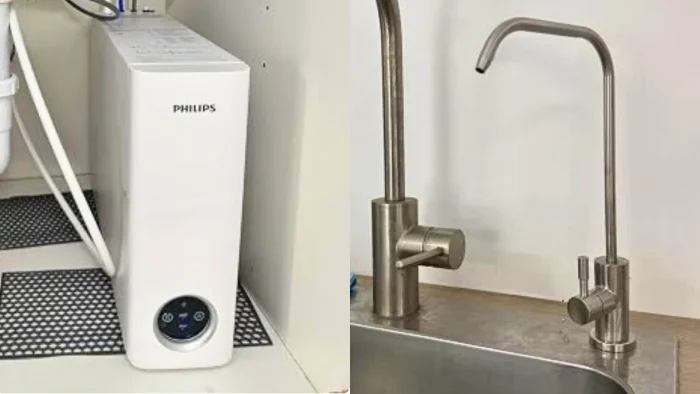
Philips AUT9360 tankless reverse osmosis system
The Philips AUT9360/37 is a compact 600 GPD option for buyers who prefer a familiar consumer brand.
Philips reports a 70% recovery rate and calls this model its most compact RO purifier. Its capacity suits normal drinking, cooking, coffee, and bottle filling without moving into the 800–1,000 GPD class.
The official product material describes five-stage filtration and mineral-enriched output. Philips also promotes reduced PFAS, chlorine, pharmaceuticals, particulates, odor, and TDS. However, these claims should be distinguished from what the certification record actually confirms.
The NSF directory evidence currently available for the AUT9360 family supports NSF/ANSI/CAN 372 lead-content compliance. That standard addresses lead content in product materials. It does not certify the system to reduce lead or PFAS from incoming water.
Philips promotes a two-year warranty and identifies the AUT854R600 replacement RO cartridge. The main weakness is ownership transparency. The research lacked key details. It didn’t list exact dimensions, faucet flow, feed-water limits, power needs, refrigerator support, or total annual filter costs.
The Philips is a reasonable choice for those prioritizing compact size and brand familiarity, but it isn't the best option for buyers who need detailed technical documentation.
Pros: Familiar brand, useful 600 GPD capacity, and a compact design aimed at space-conscious under-sink installations.
**Cons: **Published ownership details and certification scope are less complete than those for the strongest picks here.
**Features: **600 GPD | 70% claimed recovery | Mineral-enriched output | Five-stage filtration | Two-year warranty
| Check Price.
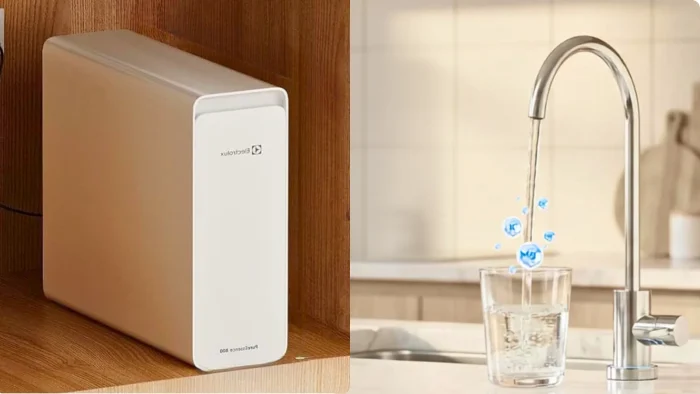
Best Wi-Fi Monitoring: Electrolux PureEssence EWP800A0W

Electrolux WiFi 800GPD RO
The Electrolux PureEssence EWP800A0W suits users who need app-based monitoring and higher-rated output.
It produces 800 GPD with published flow up to 0.58 GPM. Electrolux also advertises a 3:1 pure-to-drain ratio. The LetSmart app tracks TDS, water use, and filter life, giving owners more system information than a basic RO faucet provides.
Electrolux also publishes unusually detailed feedwater limits. The system is designed for municipal water. It works best with hardness under 170 mg/L, iron below 0.2 ppm, TDS under 1,800 ppm, and pressure between 15 and 100 psi.
That information is useful because hard water, iron, sediment, and high dissolved-solids levels can increase scaling or membrane loading.
The unit is about 5.2 inches wide and requires electricity. Electrolux says that refrigerator connections need a mini pressure tank. This adds another component.
Certification and warranty wording are less clear. Retail material references CSA and various NSF/ANSI standards. Warranty sources vary, offering one to two years. Use the exact accredited record for contaminant claims. Plan around the shorter warranty unless updated terms are confirmed.
Pros: Strong smart monitoring, high output, and unusually clear operating limits for pressure and feed-water quality.
Cons: Certification and warranty wording conflict, while refrigerator use requires an additional mini pressure tank.
Features: 800 GPD | Up to 0.58 GPM | 3:1 ratio | LetSmart app | Detailed feed-water limits
| Check Price.
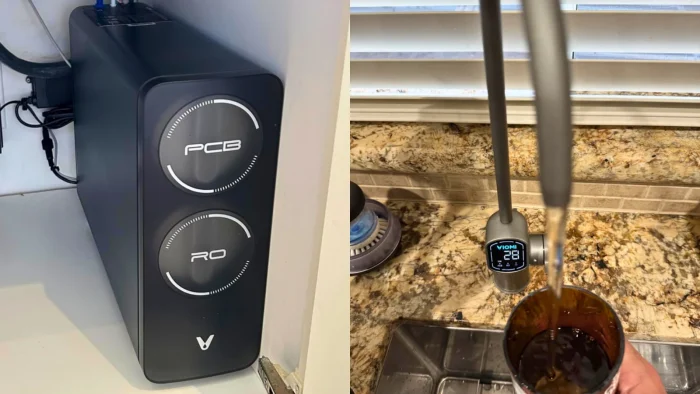
Best for Refrigerator Connection: VIOMI Vortex V8 Pro
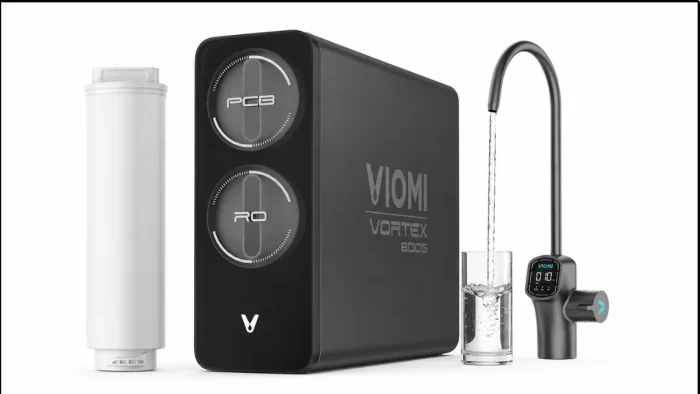
VIOMI V8 Pro 800GPD
The VIOMI Vortex V8 Pro is notable for its explicit support of refrigerator and ice maker connections, as documented by the manufacturer.
It is rated at 800 GPD with published flow around 71 ounces per minute, or roughly 0.55 GPM. Its listed 3:1 pure-to-drain ratio equals about 75% recovery under the stated conditions.
At roughly 5 inches wide, it also fits relatively narrow cabinets. The system features an LCD faucet, a TDS display, and filter-life tracking. It also supports an app and has automatic flushing.
Refrigerator support is more than just assuming a high-GPD system will work with an ice maker. Tubing length, elevation, inlet pressure, and refrigerator design can impact performance. Also, VIOMI does not include the extra refrigerator tubing.
The system requires a continuously powered outlet. Do not connect it to the switched side of a garbage-disposal receptacle.
VIOMI says SGS evaluated the model against NSF/ANSI 42, 53, 58, and 372. Review the exact report first. Then, you can describe the product as certified under each standard or make specific claims about contaminant reduction.
Warranty sources also differ between one and two years.
Pros: Clear refrigerator-use guidance, high-rated output, narrow cabinet width, and useful smart monitoring features.
Cons: Verify the certification scope and warranty duration, and you must buy refrigerator tubing separately.
**Features: **800 GPD | 0.55 GPM | 3:1 ratio | Refrigerator support | Smart faucet/app
| Check Price.
Best Budget 800 GPD: Ecoviva E8 WP-RO-E8
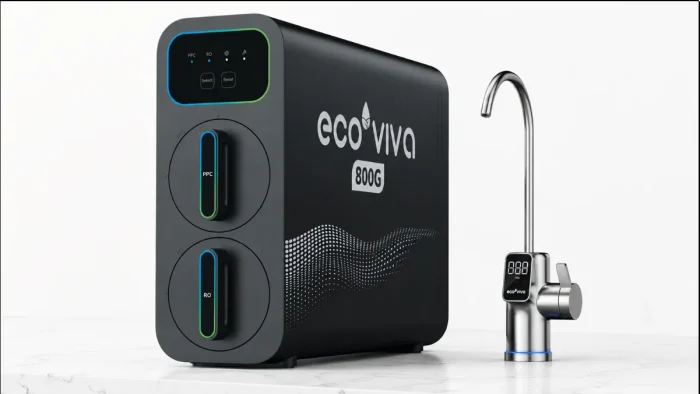
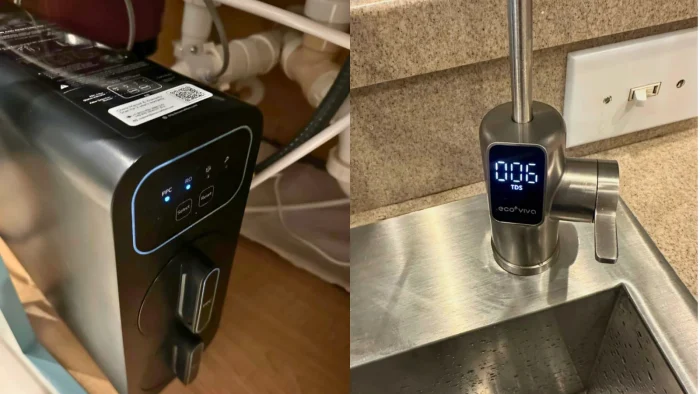
ecoviva E8 800GPD compact
The Ecoviva E8 WP-RO-E8 is the budget 800 GPD option, with a narrow body that can help in crowded sink cabinets.
Ecoviva rates it at 800 GPD with a 2.5:1 pure-to-drain ratio. At about 5 × 16.54 × 12.2 inches, it is one of the slimmer high-output systems in this lineup.
Its direct price was around $300 during the supplied research check. That makes the E8 attractive on upfront cost, but purchase price is only part of the ownership picture.
The official E8 page lists NSF/ANSI 42. That shouldn't be extended to NSF/ANSI 58 certification or treated as proof of RO membrane performance.
Model identity also matters. Ecoviva sells several similar 800 GPD systems with different filtration layouts and ratios. Don’t transfer specifications from the RO800G or another model to the WP-RO-E8.
The biggest uncertainty is replacement-filter support. These brands don't clearly document exact cartridge codes, current prices, or long-term availability. iSpring and Frizzlife have better information.
The E8 is most appropriate for users seeking a lower upfront cost and a narrow cabinet footprint. Confirm replacement filter availability before purchasing.
Pros: Highly rated output and a narrow cabinet footprint at a lower initial price than most competing tankless systems.
Cons: Certification depth and replacement-filter support are less clearly documented than with the leading picks.
Features: 800 GPD | 2.5:1 ratio | 5-inch width | Smart display | Low upfront price
| Check Price.
The Final Verdict
The iSpring RO500AK-BN is the best tankless reverse osmosis system for most households in this group.
Its 500 GPD capacity is already substantial for normal residential use. The alkaline stage has a clear role. Its replacement cartridges are easy to spot. The model also has a specific NSF/ANSI 58 TDS-reduction claim.
If maintenance cost matters more, the Frizzlife PD600-TAM3 is the stronger value choice. You still get 600 GPD and remineralization, with relatively manageable annual cartridge costs.
For homes that often need more water than a 500–600 GPD system can provide, the APEC ROTL-A1000 delivers the best capacity. Confirm current stock and exact certification records before buying.
A higher GPD rating can't fix a poor installation match. Think about your feed water, pressure, cabinet space, electrical setup, filtration goals, and maintenance budget.
A traditional tank RO system may still be better if you want stored water during outages, simpler components, or lower upfront cost.
Compare the products
Choose the products you want to compare. Ratings retain each product’s original rubric.
| Product | Best High-Capacity Pick: APEC ROTL-A1000 | Best Value Pick: Frizzlife PD600-TAM3 | Best Compact Pick: Philips AUT9360/37 | Best Wi-Fi Monitoring: Electrolux PureEssence EWP800A0W | Best for Refrigerator Connection: VIOMI Vortex V8 Pro | Best Budget 800 GPD: Ecoviva E8 WP-RO-E8 |
|---|---|---|---|---|---|---|
| Check current price | Check price on Amazon ↗ | Check price on Amazon ↗ | Check price on Amazon ↗ | Check price on Amazon ↗ | Check price on Amazon ↗ | Check price on Amazon ↗ |
Tankless vs. Tank Reverse Osmosis Systems
Tankless RO is often the best choice for limited cabinet space, steady water production, and modern monitoring.
A tank-based system can still be the better choice if you want stored water during an outage, lower initial cost, or simpler replacement parts.
Renters or homeowners who want to avoid under-sink plumbing may prefer a countertop RO system.
Who Should Not Buy a Tankless RO System
- Homes without accessible under-sink electrical outlets: Adding a dedicated outlet or converting a switched disposal line adds professional electrician costs to your purchase price.
- Regions with frequent power outages: Without an unpressurized rubber bladder tank, a tankless RO system cannot dispense a single drop of purified water when the power grid fails.
- Homes with hard feedwater exceeding 10 GPG (170 ppm): High calcium and magnesium levels rapidly scale high-recovery tankless membranes. Without an upstream whole-house water softener, you will experience premature membrane fouling within months.
- Households requiring commercial-volume water draws: If you routinely fill 5-gallon carboys or brew high-volume batches, waiting on a 0.40–0.55 GPM direct-flow stream is far slower than pulling from a pressurized 3-to-5-gallon storage tank.
How to Choose a Tankless Reverse Osmosis System
Start With Your Water, Not the Product
Don’t choose an RO system before you understand your source water.
For municipal water, start with your utility’s Consumer Confidence Report. Additional testing can help when plumbing-specific contamination or other local concerns matter.
Private wells need more care. Iron, manganese, hardness, sediment, nitrate, arsenic, microorganisms, and other factors can alter the treatment plan.
Some tankless systems in this roundup are intended only for municipal tap water.
RO alone is not universal well-water treatment.
Verify the Exact Certification Claim
A certification logo is not enough.
Check:
- exact model number;
- certifying body;
- applicable standard;
- exact reduction claim.
NSF/ANSI 58 covers reverse osmosis drinking-water systems. However, you should check optional contaminant claims separately.
NSF/ANSI/CAN 372 deals with lead content in materials. It does not mean a system is certified to remove lead.
NSF/ANSI 42 also does not establish full RO membrane performance.
If PFAS is your main concern, check the exact certified PFAS claim. Do not assume every NSF/ANSI 58 system covers it.
Compare GPD With Faucet Flow
GPD and GPM answer different questions.
GPD is rated daily production capacity.
GPM or ounces per minute tells you more about how quickly water reaches the glass.
A 1,000 GPD membrane isn’t automatically twice as fast at the faucet as a 500 GPD system.
Feed-water pressure, temperature, TDS, filter condition, membrane condition, tubing, and flush cycles all impact flow.
Account for Seasonal Temperature Drops: Standard GPD ratings assume incoming water at 77°F (25°C). As water cools, its viscosity increases, reducing membrane permeability by approximately 1.5% to 2% for every 1°F drop below that standard.
In winter, when municipal tap water can drop into the 40°F–50°F range, a rated 600 GPD system will routinely produce closer to 300–350 GPD at the faucet, noticeably slowing dispensing times.
Read Pure-to-Drain Ratios in the Same Direction
Keep ratios in the pure-to-drain direction.
For example:
2:1 pure-to-drain
means approximately:
- 2 gallons purified
- 1 gallon sent to drain
That equals about 66.7% recovery under the claimed operating conditions.
A 3:1 ratio is about 75% recovery.
Don’t compare a 2:1 pure-to-drain claim with a 1:2 product-to-waste claim from another manufacturer without converting them first.
Check Hardness and Pretreatment
RO removes dissolved material, but hard water can scale the membrane.
A tankless RO system is not a substitute for a water softener.
Check the manual for:
- hardness limit
- iron limit
- turbidity
- TDS range
- pressure
- temperature
- approved source water.
Pretreatment may be needed when feed water falls outside those limits.
Budget for Filters
Tankless systems often use proprietary cartridges.
Before buying, check:
- exact cartridge codes
- replacement interval
- current price
- current availability
- whether the manufacturer sells them directly
- warranty requirements.
A $300 RO system with costly or rare filters might end up costing more than a $500 system with reliable cartridge options.
Environmental and Disposal Impact: Unlike traditional RO systems that use standardized 10-inch drop-in cartridges inside reusable housings, tankless systems use proprietary, self-contained twist-lock cartridges.
These multi-material plastic shells cannot be disassembled or recycled curbside, generating 3 to 6 pounds of solid plastic landfill waste per household each year.
Plan the Outlet, Faucet, and Drain
Most direct-flow tankless systems use an electric booster pump.
Check whether the cabinet has a continuously powered receptacle.
A wall switch may control a garbage-disposal receptacle. If the RO is plugged into the switched side, the system loses power when that outlet is off.
Also check:
- GFCI Protection: Because tankless RO systems pair a continuous 110V/240V booster pump with pressurized water lines under a sink, they must be plugged into a Ground Fault Circuit Interrupter (GFCI) outlet. If a fitting weeps or a tubing seam leaks, standard ungrounded outlets present a serious electrical hazard.
- Plumbing Code and Air Gaps: Many local plumbing codes (UPC/IPC) require a physical air gap on the drain line to eliminate the risk of sink backup siphoning into your drinking water lines. Smart tankless faucets universally use direct-connect drain saddles without an integrated air gap. Check your municipal building code before installation to ensure a non-air-gap setup will pass inspection.
- Countertop Core Drilling: The proprietary LED monitoring faucets included with these systems require a dedicated 1-inch to 1-3/8-inch mounting hole. If you do not have an existing accessory hole (such as an unused soap dispenser cutout), you will need specialized diamond-core hole saws to drill through quartz, granite, or porcelain sinks.
If the installation needs more than a standard filter setup, hire a qualified plumber or electrician.
Decide Whether Remineralization Matters
RO removes most dissolved minerals along with unwanted dissolved material.
A remineralization stage adds selected minerals after the membrane. That can change taste and raise TDS or pH.
Do not treat remineralization as a universal health benefit.
Choose it mainly if you prefer the taste or water character it produces.
Treat TDS as a Trend, Not a Safety Result
A TDS meter estimates total dissolved solids from electrical conductivity.
It does not identify which dissolved substances are present.
A low TDS reading does not prove the absence of:
- lead
- PFAS
- arsenic
- nitrate
- microbes.
Use a TDS display to monitor overall membrane performance.
Use certified contaminant claims and appropriate water testing for specific safety questions.
Check Refrigerator Compatibility Before Adding a Tee
High GPD does not automatically guarantee good refrigerator performance.
Ice makers and refrigerator dispensers may need specific inlet pressure.
Long tubing runs and elevation changes can reduce pressure.
Use the manufacturer’s supported configuration. The VIOMI V8 Pro publishes a direct refrigerator connection. Electrolux says its EWP800 requires a mini pressure tank.
Common Tankless RO Problems to Expect
Higher TDS After the System Sits
Tankless RO membranes can show TDS creep after stagnation.
Dissolved ions can move across the membrane while no water is flowing. The first small draw may therefore show higher TDS than water produced after the system runs briefly.
Frizzlife also notes that its mineral stage can raise post-RO TDS.
One high first-glass reading does not prove membrane failure.
Pump or Auto-Flush Noise
Tankless systems commonly use booster pumps and automatic flush cycles.
Some operating sound is normal.
New vibration, water hammer, loud drain gurgling, or a large change in pump sound deserves attention.
Check the tubing, cabinet contact points, drain installation, and water pressure. Review the manual before replacing parts.
Unlike traditional tank systems that operate silently on household line pressure, direct-flow tankless units rely on high-rpm electric booster pumps to force water through the membrane. These pumps generate 45 to 55 dB of operational noise.
When placed on bare wooden cabinet floors, pump vibration can resonate through the surrounding cabinetry. Placing a 1/2-inch thick dense rubber anti-vibration mat or silicone isolation pads beneath the unit drastically cuts operating noise.
Slow Flow Despite a High GPD Rating
A high GPD rating does not prevent low flow when operating conditions are poor.
Check:
- feed pressure
- cold feed-water temperature
- clogged prefilters
- membrane age
- kinked tubing
- partially closed valves
- flush cycles.
Do not assume the membrane has failed until you rule out basic installation and maintenance issues.
Filter Alerts or Leaks
After changing a filter, make sure each cartridge is fully seated. Complete any required reset procedure.
For push-fit tubing, insert the tube fully into the connector.
If water reaches electrical parts, shut off the feed water and stop using the system until you fix the leak.
Why You Can Trust Wits Engineer
I am Engr. Hm Jamal, and I have more than 13 years of experience with electrical and water systems. For this roundup, I looked at exact-model manuals, certification records, and operating limits. I also checked replacement filters, warranty info, and maintenance needs.
This analysis is strictly research-based. Manufacturer specifications remain specifications, not independent test results. I do not imply hands-on measurements that were not supplied.
Our Selection Criteria
To receive a recommendation, every system had to meet these basic requirements:
- It must use a true reverse osmosis membrane.
- It must operate without a standard purified-water storage tank.
- It must be built for residential under-sink use.
- The exact U.S. model must have usable documentation.
- Replacement filters must be identifiable.
- Certification claims must match their verified scope.
- It must solve a distinct buyer need.
We excluded carbon-only filters, whole-house systems, tank-based RO units, and commercial machines.
This section is ready for your content in the CMS.
Engr. Hm Jamal
Founder & Lead Technical EditorFounder of Wits Engineer, with a practical background in electrical and water systems. His product reviews focus on setup, performance, maintenance and the trade-offs that affect everyday ownership.