Best Countertop Reverse Osmosis Systems of 2026: Picks for Apartments, PFAS & Daily Use
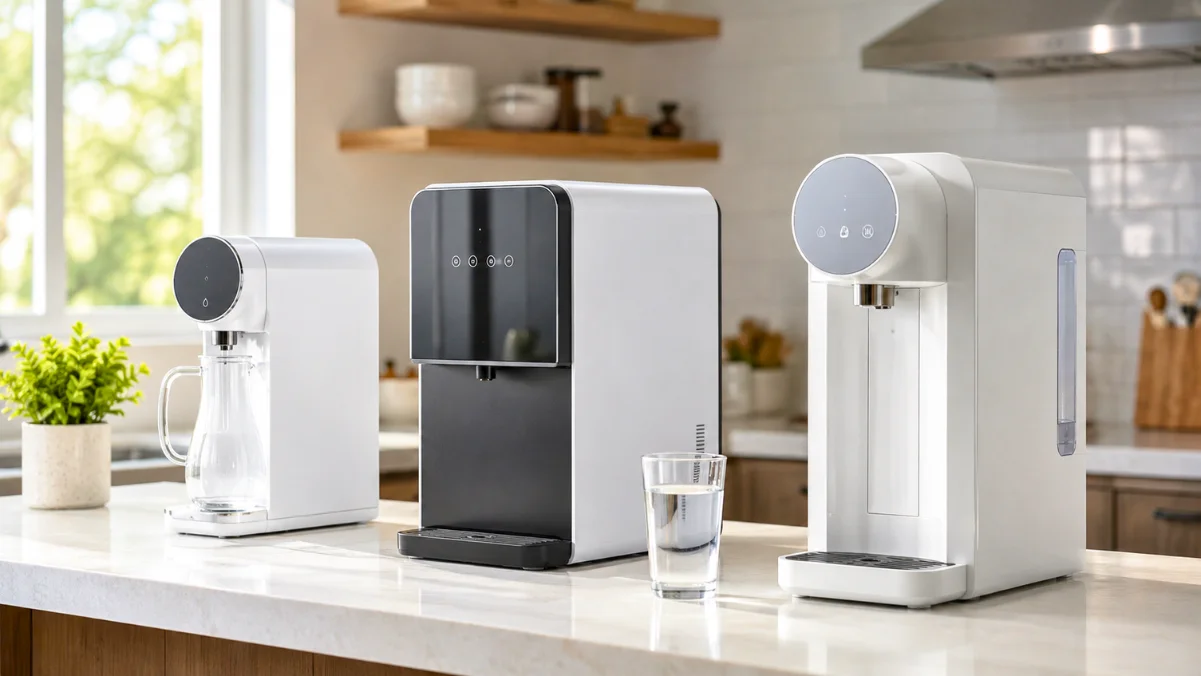

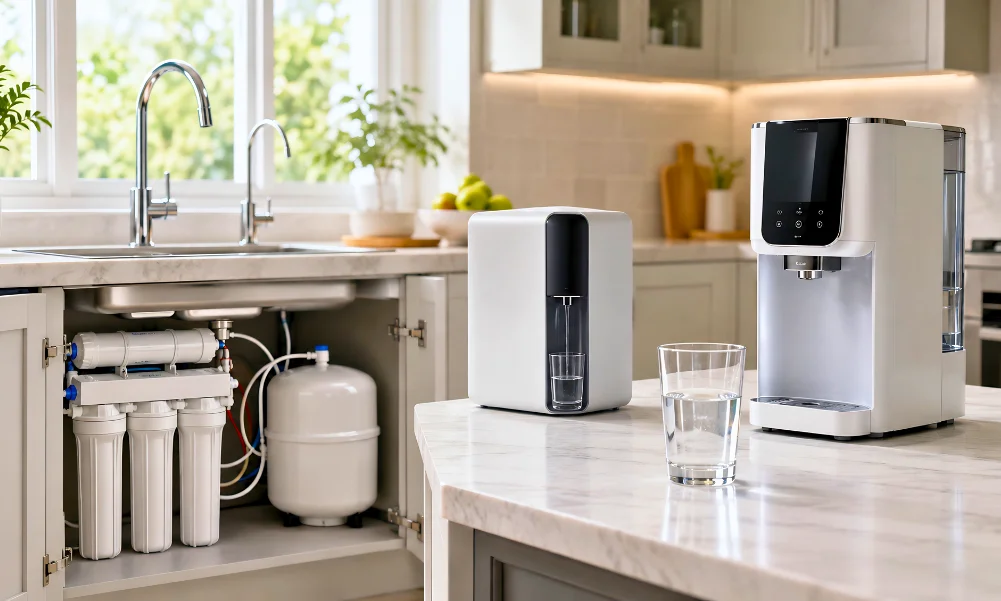
Choosing the best countertop reverse osmosis system is not only about filtration strength. It is about fit. Your water quality, counter space, refill habits, budget, and maintenance tolerance all matter.
A good countertop reverse osmosis system can filter tap water without under sink installation, making it useful for renters, apartments, offices, small kitchens, and people who want purified water without modifying plumbing.
But countertop RO units also have trade-offs. They need manual refilling, they produce waste water, and not all filters have the same certification depth.
This guide compares the best countertop reverse osmosis systems by real buyer fit: best overall, glass carafe, hot water, premium smart features, compact use, cold water, portable design, and budget value.
We do not claim hands-on testing unless real test data is available. Product notes below are based on verified specifications, certification claims, manufacturer documentation, third-party testing references, and practical ownership expectations.
Quick Picks: Best Countertop Reverse Osmosis Systems
- Best Overall: AquaTru Carafe
- Carafe with Remineralization: Bluevua RO100ROPOT-UV
- Best Hot Water Countertop RO: Waterdrop M6H
- Best Premium: RKIN U1-W
- Best Compact: PHILIPS Countertop RO
- Best Chilled: APEC Chilled RO with UV
- Best Portable Pitcher-Style: Dreo WF511
- Best Budget: SimPure Y7P
Quick answer: For most readers, AquaTru Carafe is the safest first pick because it balances countertop reverse osmosis, glass storage, compact size, and stronger certification support.
If taste and mineral balance matter more, Bluevua RO100ROPOT(UV) is a strong glass-carafe alternative. If you want purified hot water for tea or coffee, Waterdrop M6H is the better feature-driven choice.
What Is a Countertop Reverse Osmosis System for Filtered Water?
A countertop reverse osmosis system is a plug-and-play water filtration system that filters tap water through multiple filters and an RO membrane without permanent plumbing.
Most countertop RO systems use:
- A sediment or carbon filter
- An activated carbon filter
- A semi permeable membrane
- A post carbon filter
- Sometimes UV, remineralization, hot water, cold water, or a glass carafe
The filtration process uses pressure from an electric pump or faucet pressure to force unfiltered tap water through reverse osmosis filters. The RO membrane is often around 0.0001 microns, which allows these systems to reduce dissolved solids and many contaminants that standard water filter pitcher designs may miss.
Philips, for example, describes its countertop RO system as using reverse osmosis filtration down to 0.0001 microns with plug-and-play operation.
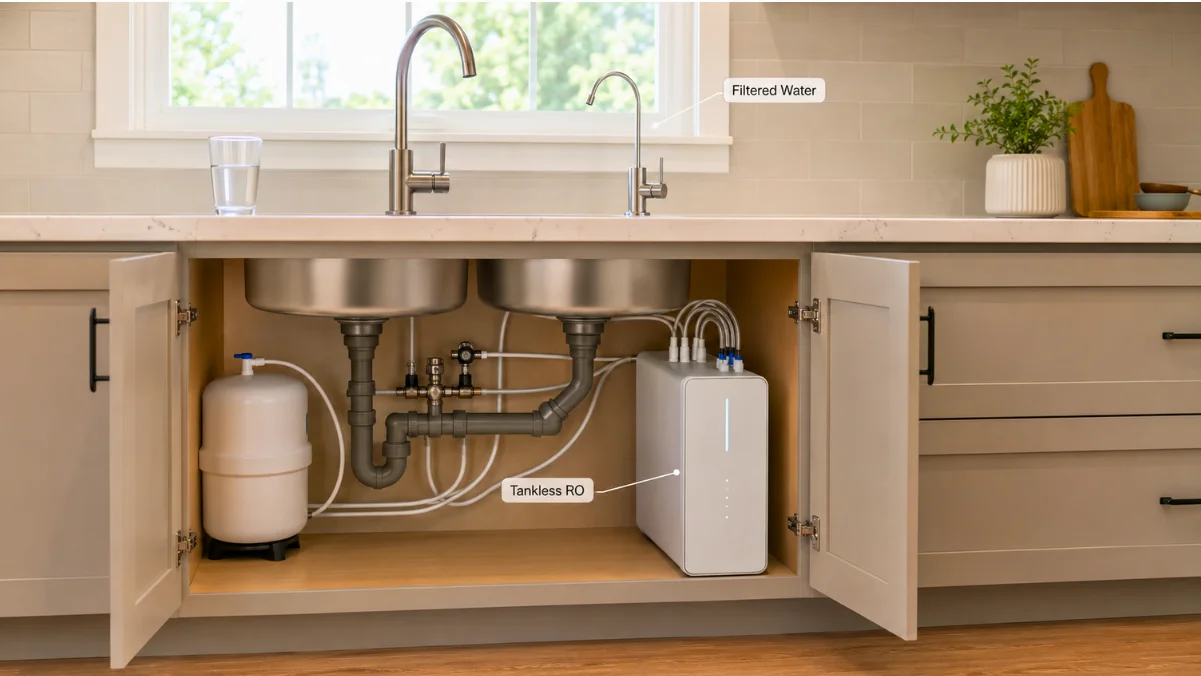
Countertop RO systems can dispense purified water directly into a glass, pitcher, or carafe without under sink installation. That makes them very different from an under sink system with a storage tank and dedicated faucet.
Countertop Reverse Osmosis Systems Compared
| Product | Best For | Filtration Style | Water Temperature | Main Strength | Main Limitation |
|---|---|---|---|---|---|
| AquaTru Carafe | Best overall | 4-stage countertop RO | Room temperature | Strong trust and glass carafe | Smaller capacity |
| Bluevua RO100ROPOT(UV) | Glass + remineralization | RO + UV + remineralization | Room temperature | Great tasting water angle | Certification depth needs checking |
| Waterdrop M6H | Hot water | 7-stage RO | Hot / room temperature | Instant hot water | More electronics |
| RKIN U1-W | Premium smart RO | Multi-stage RO | Hot and cold water | Premium all-in-one design | Expensive |
| PHILIPS Countertop RO | Compact office/home | 5-stage RO | Room temperature | Plug and play system | NSF/ANSI 372 is limited |
| APEC Chilled Countertop RO | Chilled water | RO + UV | Cold water | Saves fridge space | Newer, more complex system |
| Dreo WF511 | Portable pitcher-style | 7-stage RO + carbon | Room temperature | Two pitchers and TDS display | Not for large families |
| SimPure Y7P | Budget | Countertop RO | Room temperature | Lower upfront cost | Weaker certification confidence |
The real-world difference is not just contaminant removal; it is how the machine fits into your daily routine. For fewer refills, a larger-capacity countertop RO system will usually feel easier to live with.
If cold drinking water matters, APEC’s chilled model is more practical than a basic room-temperature unit. Tea and coffee drinkers may get more value from Waterdrop M6H, while buyers who care most about certification confidence should keep AquaTru Carafe at the top of the list.
Our Top Picks
Detailed product reviews
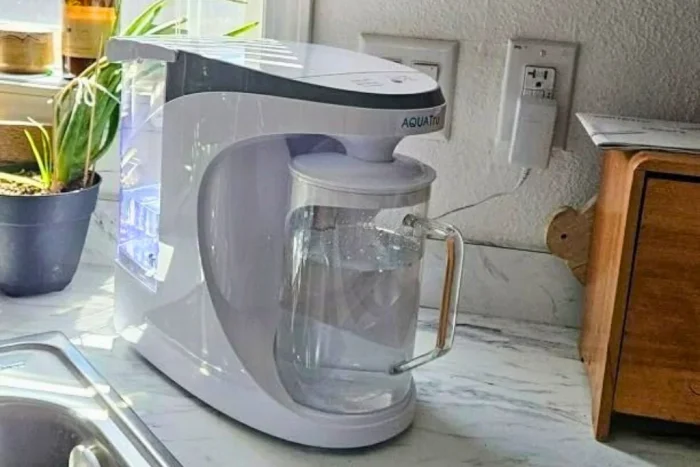
Best Overall: AquaTru Carafe
Why it’s a pick:
AquaTru Carafe is the most balanced choice for people who want a compact countertop reverse osmosis system with stronger certification support and a glass carafe. It makes the most sense for renters, apartments, small households, and users who want serious tap water filtration without permanent installation.
AquaTru says its countertop RO technology is certified to reduce contaminants including lead, chlorine, fluoride, nitrates, and more, and the Carafe model is marketed as a compact 4-stage reverse osmosis system.
Key Specs Snapshot
| Spec | Detail |
|---|---|
| Filtration type | 4-stage reverse osmosis |
| Capacity | Glass carafe design; smaller than full-size countertop RO systems |
| Noise | Not clearly specified |
| Energy estimate | Uses electricity for pump-driven filtration; expected energy use is low compared with heated/chilled dispensers |
| Filter lifespan | AquaTru filters are marketed with long filter life; exact lifespan depends on filter type and use |
| Warranty | Verify current warranty at purchase |
| Certification notes | AquaTru has one of the stronger certification stories in this category |
Key Insight: AquaTru Carafe is not the biggest countertop RO system, but that is part of its appeal. It trades high water volume for a smaller footprint, glass storage, and a cleaner fit for apartment kitchens.
Performance Analysis
In typical household use, AquaTru Carafe should work best as a drinking water and coffee/tea water system for one to three people. It is not designed to deliver whole-house water filtration, and it is not the best choice if you need gallons of purified water quickly.
Its biggest advantage is trust. Among countertop RO units, AquaTru has stronger third-party certification visibility than many newer Amazon-style brands.
WaterFilterGuru reported an overall performance score of 9.57 for AquaTru Carafe and a contaminant reduction score of 9.91, including strong reductions in health-related contaminants in their testing.
In some third-party test conditions, countertop RO systems can achieve up to 100% reduction for certain detected contaminants, but those results should always be tied to the exact water sample, test method, filter condition, and product model.
Treat that as third-party test context, not WitsEngineer hands-on testing.
Who it’s for: Choose AquaTru Carafe if you want the safest all-around countertop RO pick for filtered water, especially if you care about certifications, smaller counter space needs, and a glass carafe.
Who should skip: Skip it if you need fewer refills, cold water storage, hot water dispensing, or enough purified water for a larger household.
Verdict: AquaTru Carafe is the best overall countertop reverse osmosis system for most readers because it combines serious filtration, compact design, and stronger trust signals.
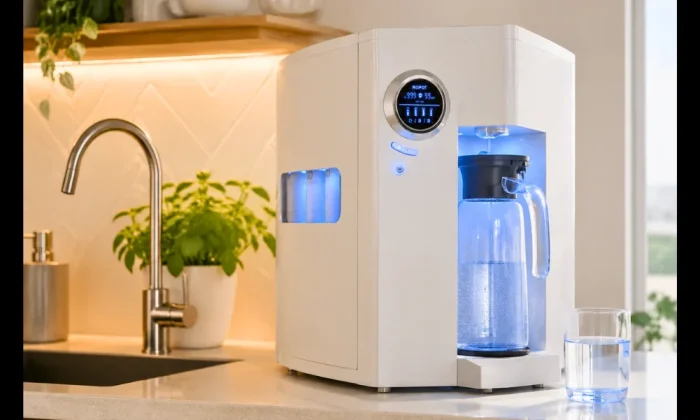
Best Glass Carafe with Remineralization: Bluevua RO100ROPOT(UV)
Why it’s a pick:
Bluevua RO100ROPOT(UV) is a strong pick for people who want a glass carafe, UV, and remineralization in one countertop RO system. It is especially appealing for buyers who care about taste and dislike storing purified water in plastic.
Bluevua describes the RO100ROPOT(UV) as a 6-stage system with a 0.0001μm RO membrane, UV light, and remineralization. Also says it is certified by WQA against NSF/ANSI/CAN 372 for lead-free compliance while being SGS-tested for reducing contaminants such as TDS, PFOA, PFOS, chlorine, fluoride, arsenic, and lead.
Key Specs Snapshot
| Spec | Detail |
|---|---|
| Filtration type | Multi-stage RO with UV and remineralization |
| Capacity | Glass carafe system |
| Noise | Not clearly specified |
| Energy estimate | Uses electricity for filtration and UV; no hot/cold compressor burden |
| Filter lifespan | Bluevua lists filter life monitoring and auto-rinse features; exact life depends on model and use |
| Warranty | Verify current warranty at purchase |
| Certification notes | WQA NSF/ANSI/CAN 372 and third-party testing claims; verify exact contaminant certifications |
Key Insight: Bluevua is one of the best countertop reverse options for taste-focused buyers because it combines RO filtration with a remineralization filter and glass storage.
Performance Analysis
Bluevua should perform well for people who want purified water that does not taste overly flat. The remineralization filter is useful if you are replacing bottled water or using RO water for coffee and tea.
The main caution is certification language. NSF/ANSI 372 is useful for lead-free material compliance, but it is not the same as a full NSF/ANSI 58 certification for reverse osmosis contaminant reduction. Buyers should check the current model’s performance data sheet before relying on specific contaminant removal claims.
**Who it’s for: **Choose Bluevua if you want countertop reverse osmosis with better tasting water, a glass carafe, and remineralization.
Who should skip: Skip it if your top priority is the strongest independently certified contaminant removal record rather than taste, glass design, and convenience.
Verdict: Bluevua RO100ROPOT(UV) is the best glass-carafe countertop RO choice for people who want purified water with a better taste profile.
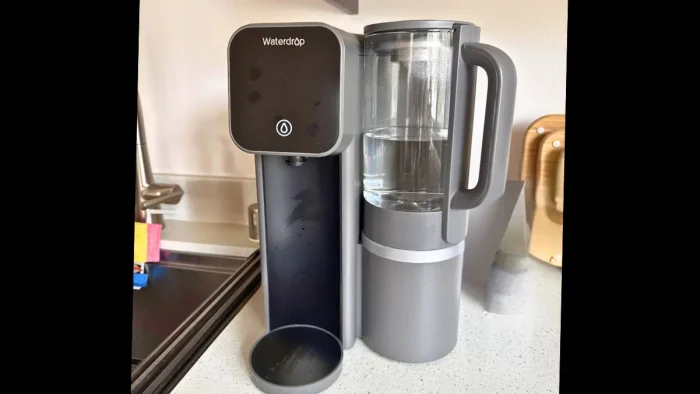
Best Hot Water Countertop RO: Waterdrop M6H
Why it’s a pick:
Waterdrop M6H is the best fit if you want a countertop RO system that also dispenses hot water. It is designed for people who make tea, coffee, instant drinks, or want dispensing hot purified water without a separate kettle.
The Waterdrop M6H listing describes a 7-stage RO system with instant hot water, a glass pitcher, 5 temperature options, 5 volume options, 185 oz total tank capacity, a 3:1 pure-to-drain ratio, and NSF/ANSI 372 certification.
Key Specs Snapshot
| Spec | Detail |
|---|---|
| Filtration type | 7-stage reverse osmosis |
| Capacity | 185 oz total tank capacity listed; 135 oz tap water / 50 oz wastewater |
| Noise | Not clearly specified |
| Energy estimate | Higher than non-heated countertop filters because it heats water |
| Filter lifespan | Verify replacement filter schedule before purchase |
| Warranty | Verify current warranty at purchase |
| Certification notes | NSF/ANSI 372 listed; verify contaminant-reduction certification separately |
Key Insight: Waterdrop M6H is less about minimum-cost filtration and more about replacing multiple kitchen devices: countertop RO, kettle, hot water dispenser, and filtered water pitcher.
Performance Analysis
For daily use, the biggest benefit is convenience. You can filter tap water and dispense hot water from the same countertop unit. That is useful for tea, coffee, oatmeal, and quick warm water needs.
The trade-off is complexity. Hot water systems have more electronics, more controls, and more parts than basic countertop filters. That can improve convenience, but it may also increase long-term repair and reliability concerns.
Who it’s for: Choose Waterdrop M6H if you want hot water and purified water from one countertop RO system.
Who should skip: Skip it if you only want basic room-temperature RO water and prefer fewer electronics.
Verdict: Waterdrop M6H is the best countertop RO for hot water convenience, but it is not the simplest or lowest-maintenance choice.
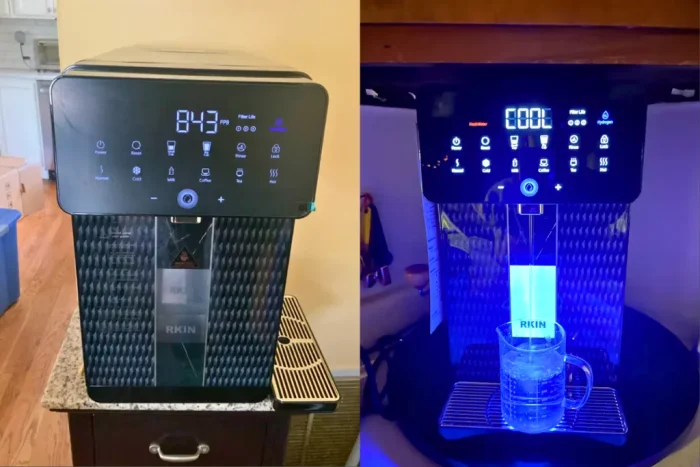
Best Premium Smart Countertop RO: RKIN U1-W
Why it’s a pick:
RKIN U1-W belongs in this article because it targets the premium buyer who wants more than standard filtered water. It combines countertop reverse osmosis with hot and cold water features, smart controls, and a high-convenience design.
RKIN describes the U1-W as a space-saving 4-in-1 water filter system, and its product information references annual replacement filter kits, hydrogen PEM modules, and an RO membrane in its bundle structure.
Key Specs Snapshot
| Spec | Detail |
|---|---|
| Filtration type | Multi-stage countertop RO system |
| Capacity | Built-in reservoir design; verify exact tank capacity |
| Noise | Not clearly specified |
| Energy estimate | Higher than basic RO systems because hot/cold features require energy |
| Filter lifespan | Annual replacement kits are referenced by RKIN |
| Warranty | RKIN references a 1-year satisfaction guarantee on the U1 product page |
| Certification notes | Verify exact U1-W certification documents by model |
Key Insight: RKIN U1-W is for people who want a countertop appliance, not just a filter. That makes it attractive but also more expensive and more complex.
Performance Analysis
In typical use, RKIN U1-W should be strongest for households that want a single device for purified water, hot water, cold water, and smart monitoring. It can reduce the need for a kettle, bottled water, and a separate countertop dispenser.
The drawback is ownership cost and complexity. Replacement filters, specialty modules, and electronics can make long-term maintenance more expensive than with simpler countertop filters.
Who it’s for: Choose RKIN U1-W if you want a premium countertop RO unit with convenience features and are comfortable paying more for them.
Who should skip: Skip it if you are budget-focused, short on counter space, or want the fewest parts possible.
Verdict: RKIN U1-W is the premium smart countertop RO pick, but it only makes sense if you will actually use its extra features.
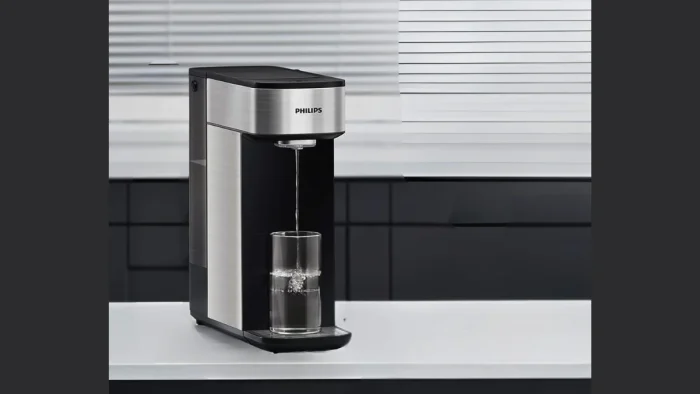
Best Compact Office/Home RO: PHILIPS Countertop RO
Why it’s a pick:
The PHILIPS Countertop RO system is a good fit for people who want a compact, familiar-brand water filtration unit for home or office use. Its strongest angle is simple plug-and-play operation with Aquaporin Inside technology.
Philips describes the ADD5930 as using deep reverse osmosis filtration down to 0.0001 microns, reducing total dissolved solids, chlorine, particulates, and impurities that affect taste and odor. It also states that the dispenser is plug and play with no plumbing required.
Key Specs Snapshot
| Spec | Detail |
|---|---|
| Filtration type | 5-stage RO with Aquaporin technology |
| Capacity | Countertop dispenser format; verify exact tank size by seller listing |
| Noise | Not clearly specified |
| Energy estimate | Uses electricity for pump-driven filtration; no hot/cold load unless model includes temperature features |
| Filter lifespan | Replacement filter life varies by filter and usage |
| Warranty | Verify current warranty at purchase |
| Certification notes | NSF/ANSI 372 listed in U.S. retail listings; verify contaminant reduction separately |
Key Insight: PHILIPS is a good “safe brand” pick for readers who feel nervous about lesser-known countertop RO brands, but the certification story must be explained carefully.
Performance Analysis
This system makes sense for office desks, compact kitchens, and light household use. It is not the best pick for buyers who want a glass carafe, hot and cold water, or the strongest documented contaminant removal certification.
The important editorial warning: NSF/ANSI 372 is not the same as NSF/ANSI 58. Do not treat the PHILIPS system as fully certified for every contaminant unless the exact model has supporting certification documentation.
Who it’s for: Choose PHILIPS if you want a compact countertop RO system from a recognizable brand for light daily use.
Who should skip: Skip it if you want stronger certification documentation, hot and cold water, or a larger family-capacity system.
Verdict: PHILIPS is a practical compact pick, but it should be positioned carefully because NSF/ANSI 372 does not equal full contaminant-removal certification.
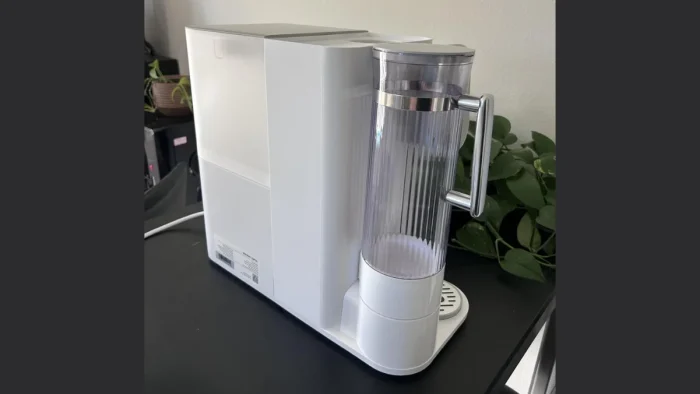
Best Chilled Countertop RO: APEC Chilled Countertop RO with UV
Why it’s a pick:
This APEC chilled countertop RO system is one of the more interesting newer options because it combines reverse osmosis, UV, a removable pitcher, and chilled purified water.
The product listing describes a no-plumbing countertop water filter with a built-in refrigerator-style compressor that keeps a 27 oz cold water reservoir around 40°F.
Key Specs Snapshot
| Spec | Detail |
|---|---|
| Filtration type | Countertop reverse osmosis with UV |
| Capacity | 27 oz cold water reservoir listed |
| Noise | Not clearly specified; compressor-based cooling may create some operating noise |
| Energy estimate | Higher than non-chilled systems because it uses cooling |
| Filter lifespan | Verify current filter capacity and replacement cost |
| Warranty | Verify current warranty at purchase |
| Certification notes | Listing references NSF 372 and 58; verify official documentation by exact model |
Key Insight: The cold water feature solves a real problem: fridge space. If you usually keep a water filter pitcher in the refrigerator, a chilled countertop RO system can reduce the need for bottled water and refrigerator storage.
Performance Analysis
This system is best for people who want cold purified water without waiting. It is especially useful in warm climates, offices, dorms, and kitchens where bottled water takes up too much fridge space.
The trade-off is that cooling adds complexity. A compressor, UV system, and RO filtration process create more maintenance and reliability variables than a basic countertop RO unit.
Who it’s for: Choose APEC chilled countertop RO if you want cold water without taking up fridge space.
**Who should skip: **Skip it if you want the simplest, lowest-energy, lowest-maintenance countertop RO system.
Verdict: APEC’s chilled countertop RO is a strong convenience pick, but buyers should verify certification documents and replacement filter availability before purchase.
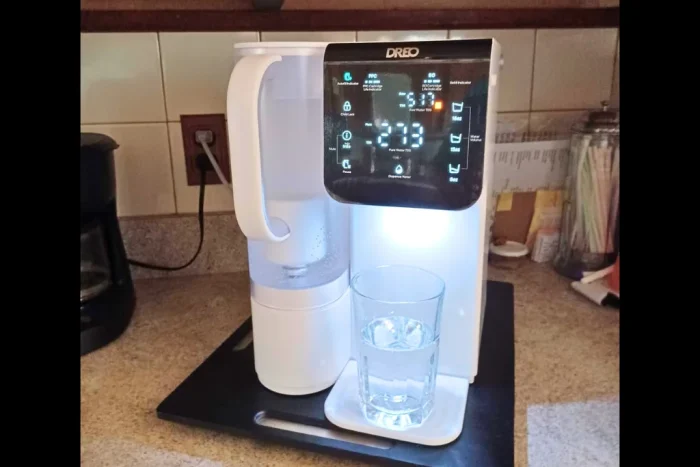
Best Portable Pitcher-Style RO: Dreo WF511
Why it’s a pick:
Dreo WF511 is a good fit for users who want a more portable countertop RO system with pitcher-style convenience. It is especially useful for dorms, small apartments, and people who want purified water without a bulky dispenser.
The Dreo WF511 listing describes a 7-stage reverse osmosis countertop system with a built-in TDS meter, filter-change indicator, child lock, two pitchers, 5-liter capacity, activated carbon and reverse osmosis purification, and corded electric operation.
Key Specs Snapshot
| Spec | Detail |
|---|---|
| Filtration type | 7-stage RO with activated carbon |
| Capacity | 5 liters listed |
| Noise | Not clearly specified |
| Energy estimate | Uses electricity for pump-driven filtration |
| Filter lifespan | Verify replacement filter schedule and cost |
| Warranty | Dreo manual references 12-month warranty coverage for its countertop water filter line |
| Certification notes | Dreo references SGS/NSF-related testing claims; verify exact model documentation |
Key Insight: Dreo WF511 stands out because it gives you two pitchers. That can mean fewer refills and easier fridge storage compared with single-carafe countertop filters.
Performance Analysis
This system should work best for light to moderate drinking water use. The built-in TDS meter and change filter indicator make it more user-friendly than basic countertop filters.
The concern is long-term filter availability and certification clarity. Before publishing final affiliate copy, verify the exact WF511 filter model, replacement filter cost, and whether certification language is from independent testing or full certification.
Who it’s for: Choose Dreo WF511 if you want a small-space countertop RO system with pitcher convenience.
Who should skip: Skip it if you need high daily capacity or the strongest certification story.
Verdict: Dreo WF511 is the best portable pitcher-style RO pick, especially for small kitchens and low-to-moderate use.
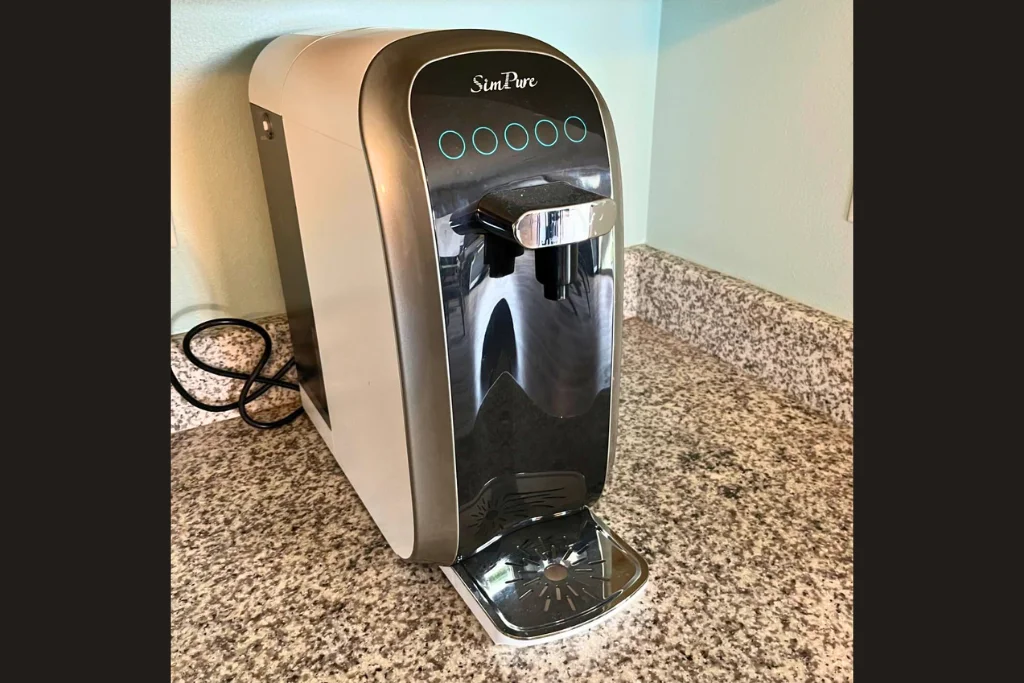
Best Budget Countertop RO: SimPure Y7P
Why it’s a pick:
SimPure Y7P is the budget pick for readers who want countertop reverse osmosis without paying for premium smart controls, hot water, cold water, or glass-carafe design.
SimPure’s Y7P listing describes a countertop RO system designed to convert tap water or well water with TDS under 500 ppm into drinking water, and the listing references NSF and SGS testing language.
Key Specs Snapshot
| Spec | Detail |
|---|---|
| Filtration type | Countertop reverse osmosis |
| Capacity | Countertop tank format; verify exact capacity by model |
| Noise | Not clearly specified |
| Energy estimate | Uses electricity for RO pump operation |
| Filter lifespan | Verify replacement filter schedule |
| Warranty | Verify current warranty at purchase |
| Certification notes | Check exact NSF/SGS documentation before making contaminant-specific claims |
Key Insight: SimPure Y7P is not the strongest trust pick, but it gives budget buyers a way to enter the countertop RO category.
Performance Analysis
In typical household use, SimPure Y7P should be best for budget-conscious users who want better filtered water than basic pitcher filters can provide. It is a practical option if you care more about affordability than premium design or certification depth.
It should not be positioned as the safest pick for serious contamination concerns unless the exact certification documents support the claim.
Who it’s for: Choose SimPure Y7P if you want a budget countertop RO system and understand the trade-offs.
Who should skip: Skip it if you need the strongest third-party certification support, glass carafe, hot water, or premium build.
Verdict: SimPure Y7P is the best budget countertop reverse osmosis option, but it should not be oversold as equal to higher-trust systems.
Final Verdict: Which Countertop Reverse Osmosis System Should You Buy?
The best countertop reverse osmosis system for most people is AquaTru Carafe because it gives the strongest mix of filtration confidence, compact design, glass storage, and no-install convenience.
For glass-carafe storage and remineralization, Bluevua RO100ROPOT(UV) is the better fit. Waterdrop M6H makes more sense if hot water matters for tea, coffee, or instant drinks. If you want a premium countertop RO appliance with more features, RKIN U1-W is the strongest upgrade pick.
For more specific needs, PHILIPS works well for compact office or home use, while APEC Chilled Countertop RO is the better choice if cold water is a priority.
Dreo WF511 fits portable pitcher-style use, and SimPure Y7P is the best option if budget is the top concern.
For most U.S. households, countertop reverse osmosis makes the most sense when you want drinking water purification without plumbing changes. It is not a whole-house solution, and it is not maintenance-free.
But if the system matches your water supply, refill habits, and counter space, it can be a practical alternative to bottled water and basic pitcher filters.
Compare the products
Choose the products you want to compare. Ratings retain each product’s original rubric.
| Product | Best Overall: AquaTru Carafe | Best Glass Carafe with Remineralization: Bluevua RO100ROPOT(UV) | Best Hot Water Countertop RO: Waterdrop M6H | Best Premium Smart Countertop RO: RKIN U1-W | Best Compact Office/Home RO: PHILIPS Countertop RO | Best Chilled Countertop RO: APEC Chilled Countertop RO with UV | Best Portable Pitcher-Style RO: Dreo WF511 | Best Budget Countertop RO: SimPure Y7P |
|---|
This section is ready for your content in the CMS.
How We Chose the Best Countertop RO Systems and Countertop Water Filters
The best countertop water filters are not always the best reverse osmosis systems. A carbon filtration unit can improve taste, but a true countertop RO system is built for deeper contaminant removal, dissolved solids reduction, and more complete drinking water purification.
Filtration Performance and Contaminant Removal
We prioritized systems that use true reverse osmosis, not only carbon filtration.
Reverse osmosis water filters are usually chosen for concerns such as:
- Fluoride
- Lead
- Heavy metals
- Arsenic
- Nitrates
- Chlorine
- Volatile organic compounds
- PFAS and other industrial chemicals
- Dissolved solids
- Other contaminants that basic filter pitchers may not handle well
Some countertop RO systems are marketed as reducing up to 99% of certain contaminants, including heavy metals, fluoride, chlorine, nitrates, and dissolved solids. Treat that as a model-specific claim, not a category-wide guarantee.
The exact result depends on the RO membrane, filter condition, water pressure, water chemistry, and whether the system is independently tested or certified.
EPA says point-of-use reverse osmosis systems studied can greatly reduce PFAS, but filters only work properly when maintained according to manufacturer instructions.
Certifications and Performance Data Sheets
Certification matters because not all filters are independently tested for the same contaminant removal claims.
Common certifications for reverse osmosis systems include:
- NSF/ANSI 42 — chlorine taste, odor, and aesthetic effects
- NSF/ANSI 53 — health-related contaminants such as lead
- NSF/ANSI 58 — reverse osmosis systems
- NSF/ANSI 401 — emerging contaminants
- NSF/ANSI 372 — lead-free material compliance
NSF explains that standards 42 and 53 cover adsorption/filtration, including carbon filters, while NSF/ANSI 58 is the key standard for reverse osmosis systems.
Important: NSF/ANSI 372 alone does not prove a filter removes lead from water. It mainly relates to lead-free materials in contact with drinking water. For contaminant removal, look for the exact NSF ANSI standard and the specific contaminant claim.
Setup, Refilling, and Daily Use
Most countertop reverse osmosis systems are easy to set up, but “easy” does not mean zero work.
Typical setup may include:
- Removing packaging
- Installing filter cartridge parts
- Filling the unfiltered tap water tank
- Flushing filters before drinking
- Running one or more cleaning cycles
- Emptying waste water
- Checking filter life indicators
Many countertop RO systems require filter flushing before use. Depending on the model, this can take roughly 10 to 46 minutes. Some systems are ready quickly, while others require more flushing cycles before the water tastes normal.
Filter Life and Maintenance Cost
Filter lifespan matters because the purchase price is only the beginning.
Most countertop reverse osmosis filters require replacement every 6 to 24 months, depending on filter cartridge design, tap water quality, usage volume, and filter capacity.
The average maintenance cost for countertop reverse osmosis systems often falls around $0.10 to $0.25 per gallon, although this varies by model and filter lifespan.
WaterFilterGuru calculated AquaTru Carafe filter maintenance at about $0.19 per gallon, while noting that the full-size AquaTru countertop system can be cheaper to maintain per gallon.
Taste, Remineralization, and Great Tasting Water
RO water can taste very clean, but some users find it flat because reverse osmosis also removes minerals.
A remineralization filter can add back minerals for better tasting water. This is not automatically necessary for everyone, but it can matter if you are replacing bottled water, making coffee, or want great tasting water without the flat feel of highly purified water.
Engr. Hm Jamal
Founder & Lead Technical EditorFounder of Wits Engineer, with a practical background in electrical and water systems. His product reviews focus on setup, performance, maintenance and the trade-offs that affect everyday ownership.