Best Water Filtration Systems for Homes: Under-Sink, Whole-House, Countertop, RO & Pitcher Picks
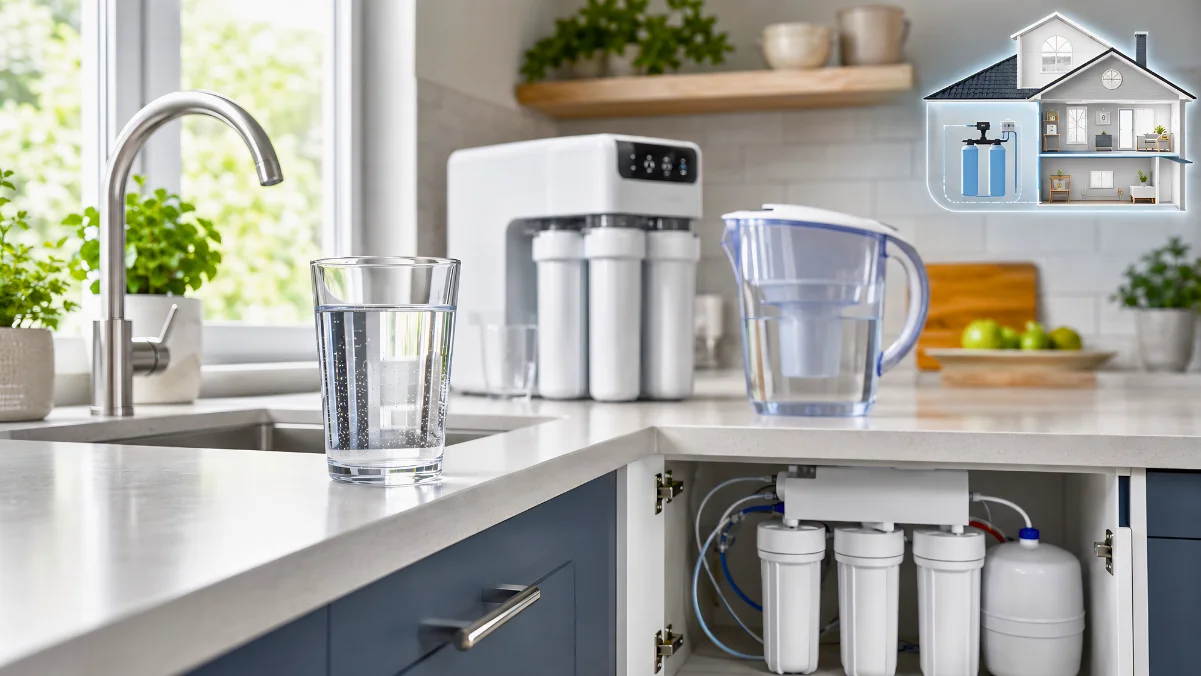

Choosing the best water filtration systems is not about buying the most expensive filter. It is about matching the right water filter to your actual water problem.
This guide is designed for homeowners, renters, and anyone seeking to improve tap water or well water quality. We cover the top water filtration systems for different needs, explain how to match a filter system to your water issues, and help you avoid common mistakes when choosing a water filter.
For most homes, the right choice depends on your water source, target contaminants, daily water usage, installation space, filter life, replacement filters, flow rate, and maintenance budget. A water filter pitcher may improve chlorine taste.
An under sink system is usually better for daily drinking and cooking water. A reverse osmosis system makes more sense for dissolved solids, fluoride, nitrates, arsenic, heavy metals, and PFAS concerns. A whole house setup only makes sense when the issue affects more than one tap.
Quick Picks: Best Water Filtration Systems by Home Situation
| Best For | Product | System Type | Main Strength | Main Limitation |
|---|---|---|---|---|
| Best overall under-sink filter | Aquasana 3-Stage Max Flow Claryum | Carbon under sink system | Strong daily tap filtration | Does not reduce TDS |
| Best traditional RO system | APEC ROES-50 | Under sink RO | Broad contaminant reduction | Needs tank space |
| Best tankless RO system | Waterdrop G3P600 | Tankless reverse osmosis system | Fast flow and efficient drain ratio | Needs electricity |
| Best countertop RO system | AquaTru Classic | Countertop RO | No plumbing required | Takes counter space |
| Best whole-house system | SpringWell Whole House Cartridge System | Whole-house carbon + sediment | Treats incoming home water | Higher setup cost |
| Best under-sink ultrafiltration | iSpring CU-A4 | Ultrafiltration under sink system | No RO wastewater | No TDS reduction |
| Best advanced pitcher | Clearly Filtered Water Pitcher | Pitcher filter | Broad contaminant claims | Higher filter costs |
| Best glass pitcher | LifeStraw Home Glass Pitcher | Glass pitcher | Glass carafe | Smaller capacity |
| Best budget pitcher | PUR Plus 11-Cup Pitcher | Water filter pitcher | Low upfront cost | Frequent refilling |
| Best faucet filter | PUR Plus Horizontal Faucet Mount | Faucet filter | Easy tap filtration | Faucet compatibility limits |
| Best gravity filter | Purewell 2.25G Gravity Filter | Gravity countertop filter | No power or plumbing | Slower flow |
| Best refrigerator filter | everydrop Whirlpool Filter A | Fridge filter | Water and ice convenience | Must match fridge model |
Choose an under sink water filter for daily kitchen use, reverse osmosis for dissolved solids, a countertop water filter for renters, whole house filtration for home-wide issues, and filter pitchers when budget and no-install convenience matter most.
Water Filtration Systems Compared
| Product | Best For | Main Strength | Main Limitation | Maintenance Level | Best-Fit Buyer |
|---|---|---|---|---|---|
| Aquasana Claryum | City water kitchens | Taste and certified contaminant claims | No TDS reduction | Medium | Homeowners wanting daily tap water filtration |
| APEC ROES-50 | Traditional reverse osmosis | Strong dissolved solids reduction | Tank takes space | Higher | Buyers with cabinet room |
| Waterdrop G3P600 | Tankless RO | Higher output and efficient drain ratio | Requires power | Higher | Modern kitchens |
| AquaTru Classic | Countertop RO | No plumbing | Manual filling | Medium | Renters and apartments |
| SpringWell Whole House | Home-wide filtration | Treats water before fixtures | Higher install cost | Medium | Homeowners with whole-home complaints |
| iSpring CU-A4 | Non-RO kitchen filtration | No tank or RO drain | No TDS reduction | Medium | Buyers avoiding wastewater |
| Clearly Filtered | Advanced pitcher | Broad contaminant focus | Costlier filters | Frequent | Small households |
| LifeStraw Glass | Glass pitcher | Plastic-free carafe preference | Smaller capacity | Frequent | Light daily use |
| PUR Plus Pitcher | Budget pitcher | Low cost | Refilling required | Frequent | Dorms and renters |
| PUR Faucet Mount | Faucet filtration | No pitcher refills | Not all faucets fit | Medium | Standard-faucet users |
| Purewell Gravity | Backup countertop use | No electricity | Slow gravity flow | Medium | Emergency or off-grid style use |
| everydrop Filter A | Fridge water and ice | Convenient replacement | Model-specific | Model-specific | Whirlpool-family fridges |
This table is a starting point, not a final answer. Filter performance depends on your source water, contaminant reduction needs, NSF ANSI certification scope, filter cartridges, flow rate, and how consistently you handle filter changes.
Which Water Filtration System Should You Choose?
An under-sink water filter is the best fit when your main goal is better tasting tap water at the kitchen sink.
A reverse osmosis system makes more sense if your water test shows high total dissolved solids, fluoride, nitrates, arsenic, lead, PFAS, heavy metals, or other harmful contaminants.
For renters, apartments, or no-drill kitchens, countertop water filters are usually the easiest option because they do not require plumbing changes.
Whole house filtration is better when chlorine taste, sediment, odor, or general water quality problems affect showers, laundry, appliances, and more than one fixture.
For a lower-cost no-install option, filter pitchers or faucet filters can improve tap water taste without a larger system.
The most effective water filtration technology depends on the contaminant. Reverse osmosis is usually the strongest choice for dissolved solids, fluoride, heavy metals, nitrates, arsenic, and many PFAS concerns. Carbon filters are better for chlorine taste, odor, and many chlorine and chemical notes.
UV or certified microbiological systems are better for bacteria such as E. coli, especially in well water. For a whole home, point-of-entry filtration can reduce chlorine and sediment before water reaches fixtures and appliances.
Our Top Picks
Detailed product reviews
Aquasana 3-Stage Max Flow Claryum — Best Overall Under-Sink Water Filter
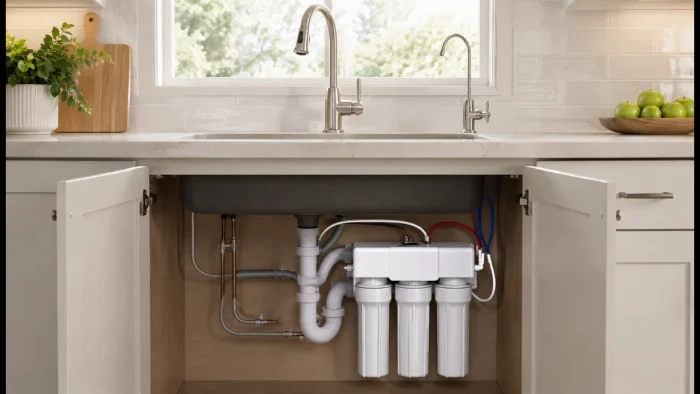
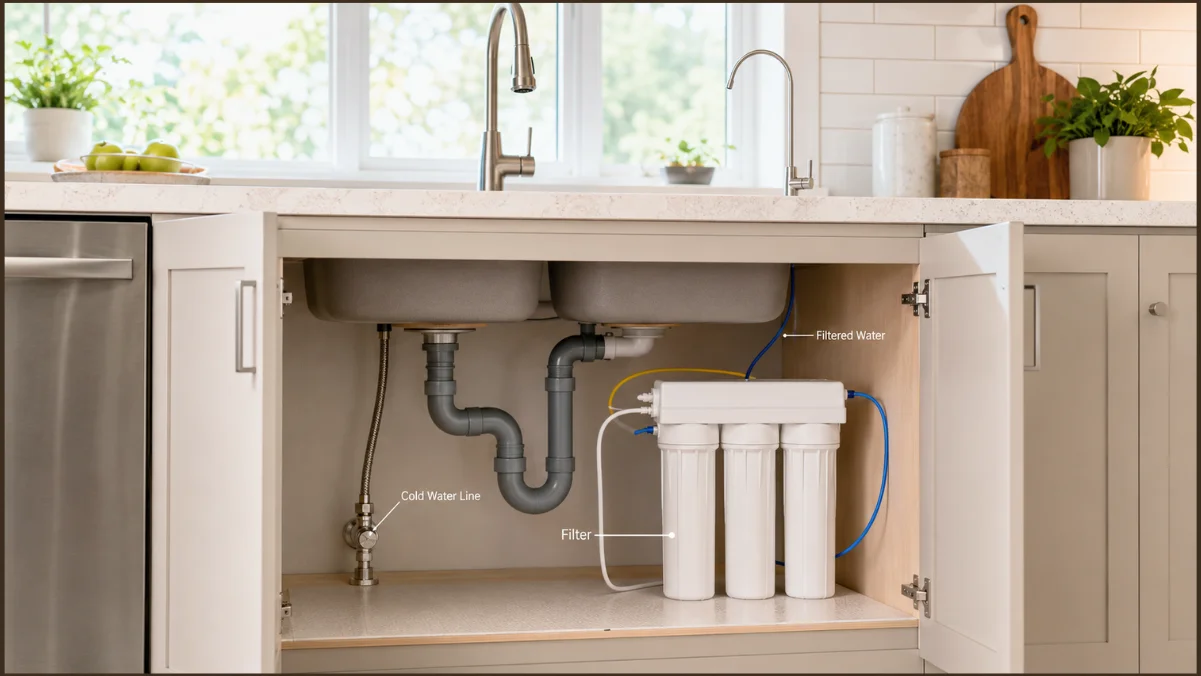
The Aquasana 3-Stage Max Flow Claryum makes the most sense for city water homes that want cleaner kitchen water without moving to a reverse osmosis system. The manufacturer positions this under sink system around NSF ANSI 42, 53, and 401 reduction claims, including chlorine, lead, PFAS, microplastics, cysts, and chloramines.
The key thing to understand is that this is a carbon-based water filter, not an RO system. It can improve chlorine taste, odor, and everyday filtered water quality, but it does not reduce total dissolved solids the way reverse osmosis does.
For most users, the main strength is convenience. You get treated water from a dedicated faucet without filling filter pitchers every day. The practical concern is installation and ongoing replacement filters. Buyers should check filter life, annual costs, and whether the sink system fits the cabinet space.
This model is a strong first step for many homes because it targets common city water complaints without adding RO wastewater, electricity, or a storage tank. For more options, compare our guide to the best under-sink water filters.
Pros:
- Strong chlorine taste reduction
- Convenient daily kitchen use
- Keeps beneficial minerals
- No electricity required
Cons:
- No TDS reduction
- Requires cabinet installation
- Treats one location only
Who it’s for: Choose this if you mainly want better tasting water for cooking water, coffee, bottles, and daily kitchen use. It fits homeowners who want a practical under sink filter without reverse osmosis complexity.
Who should skip: Skip it if your water test shows fluoride, nitrates, arsenic, high TDS, or dissolved contaminants that call for under sink RO systems.
**Verdict: **Choose Aquasana if city water taste and everyday kitchen convenience matter more than TDS reduction.
APEC ROES-50 — Best Traditional Reverse Osmosis System for TDS Reduction
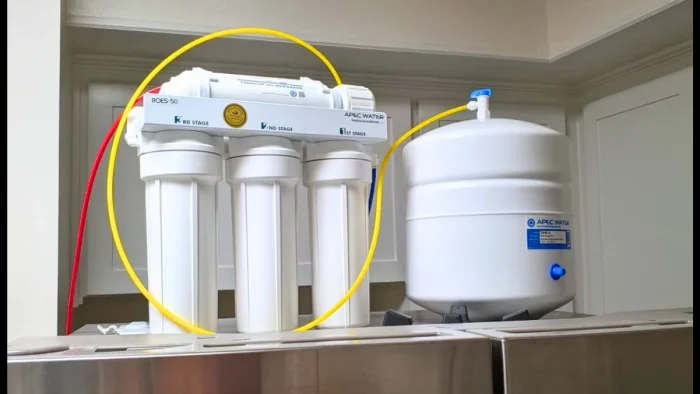
The APEC ROES-50 is a traditional under sink RO system for buyers who want strong purification without electronics. The manufacturer lists it as a 5-stage, 50 GPD reverse osmosis system with a storage tank.
This model makes sense when carbon filters are not enough. Reverse osmosis is better suited for total dissolved solids, fluoride, nitrates, arsenic, lead, PFAS, heavy metals, and many dissolved contaminants when the system’s certification or test data supports those claims.
The main trade-off is ownership. A tank-based sink reverse osmosis system needs cabinet room, a drain connection, prefilter changes, membrane replacement, and post-filter service. It also creates wastewater. Older RO systems can waste more water than newer tankless reverse osmosis units, although real performance depends on water pressure, membrane condition, filter cartridges, and regular maintenance.
This is not the sleekest filter unit, but it has a clear role. It is for homeowners who want broad contaminant reduction and do not mind a tank under the sink. For more RO options, see our full guide to the best reverse osmosis systems.
Pros:
- Strong TDS reduction ability
- No electricity required
- Proven traditional RO layout
- Useful broad contaminant coverage
Cons:
- Storage tank needs space
- Produces RO wastewater
- Removes beneficial minerals
Who it’s for: Choose this if you want a traditional reverse osmosis system for daily kitchen water and have enough cabinet space. It fits buyers who care more about purification than minimal maintenance.
**Who should skip: **Skip it if your only complaint is chlorine taste or if you cannot install a drain line.
Verdict: Choose APEC ROES-50 if you want dependable under sink RO without paying for a powered tankless design.
Waterdrop G3P600 — Best Tankless RO System

The Waterdrop G3P600 is a tankless reverse osmosis system for buyers who want RO performance with less cabinet clutter. The manufacturer lists 600 GPD capacity, a 2:1 pure-to-drain ratio, and certification claims including NSF ANSI 42, 58, and 372.
The main strength is output and space efficiency. A 2:1 ratio means the filter system is designed to produce two cups of filtered water for every one cup sent to drain under stated conditions. Tankless reverse osmosis systems can also maintain stronger flow rate than many older tank units when water pressure and filter condition are right.
The practical concern is complexity. This is not a simple countertop water filter or carbon block cartridge. It needs electricity, electronics, filter monitoring, proper feed pressure, and ongoing replacement filters. Filtration performance can drop if cartridges or the membrane are not replaced on schedule.
Other RO systems may cost less, but the Waterdrop design fits modern kitchens where space, flow rate, and cabinet organization matter.
Waterdrop also sells higher-output models, including systems with an 800 GPD filtration rate, so buyers should compare capacity before choosing.
Buyers should also compare replacement filter cost because tankless RO systems can have higher annual ownership costs than simple carbon filters.
Pros:
- Space-saving tankless design
- Higher daily RO output
- Better drain efficiency
- Smart faucet monitoring
Cons:
- Requires electrical outlet
- Higher upfront cost
- More complex ownership
Who it’s for: Choose this if you want strong reverse osmosis filtration in a cleaner cabinet-mounted setup with faster flow than many older tank systems.
Who should skip: Skip it if you want a low-cost, non-electric water filter or only need basic taste improvement.
**Verdict: **Choose Waterdrop G3P600 if you want modern tankless RO and accept the higher cost and power requirement.
For more options, see our guide to the best tankless RO systems.
AquaTru Classic — Best Countertop System for Filtered Water Without Plumbing
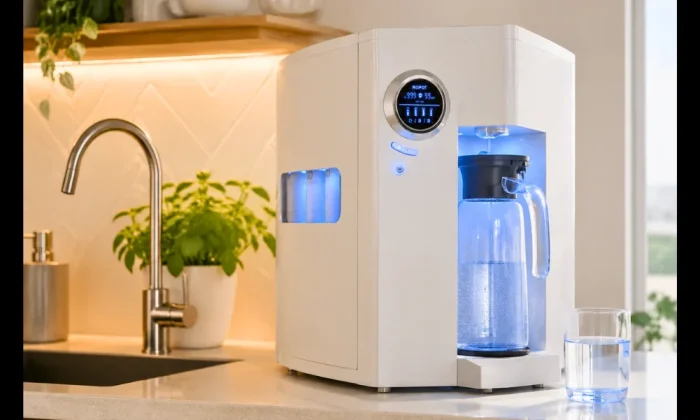
The AquaTru Classic is a countertop reverse osmosis system for renters, apartments, and homes where plumbing changes are not practical. The manufacturer lists a 4-stage RO design and contaminant reduction claims for lead, chlorine, fluoride, nitrates, and other harmful contaminants.
This countertop system solves the no-plumbing problem. You place it on the counter, fill the tank, and let the filter system process unfiltered water through its stages. It produces room temperature water unless you chill it afterward, so buyers should not expect refrigerator-style cold water.
The main strength is access to reverse osmosis without drilling. The main limitation is daily handling. You need counter space, manual filling, and wastewater management. It is plug-and-play, but it is not invisible in a small kitchen.
AquaTru systems often appear in third-party testing discussions, including AquaTru Carafe results reported by outside reviewers. Treat those outside test results as external data points, not Wits Engineer hands-on testing. Always check the test method, contaminants tested, and certification scope before relying on a “100% removed” claim.
Countertop RO also works best for moderate daily use; large families may prefer an installed under sink RO system with higher capacity.
Pros:
- No plumbing changes
- Useful for apartments
- RO-level filtration format
- Easier setup than installed RO
Cons:
- Uses counter space
- Needs manual filling
- Wastewater requires handling
**Who it’s for: **Choose this if you rent, cannot drill a sink, or want countertop RO without permanent installation.
Who should skip: Skip it if you want treated water directly from the faucet or have very limited counter space.
**Verdict: **Choose AquaTru Classic if you need reverse osmosis without modifying plumbing.
For more renter-friendly options, compare our guide to the best countertop reverse osmosis systems.
SpringWell Whole House Cartridge System — Best Whole House Water Filtration System
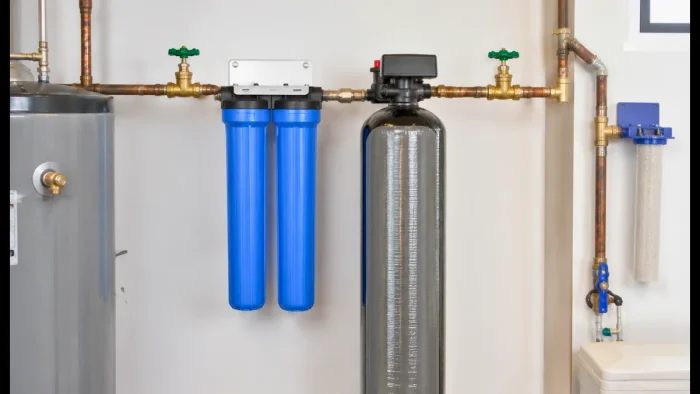
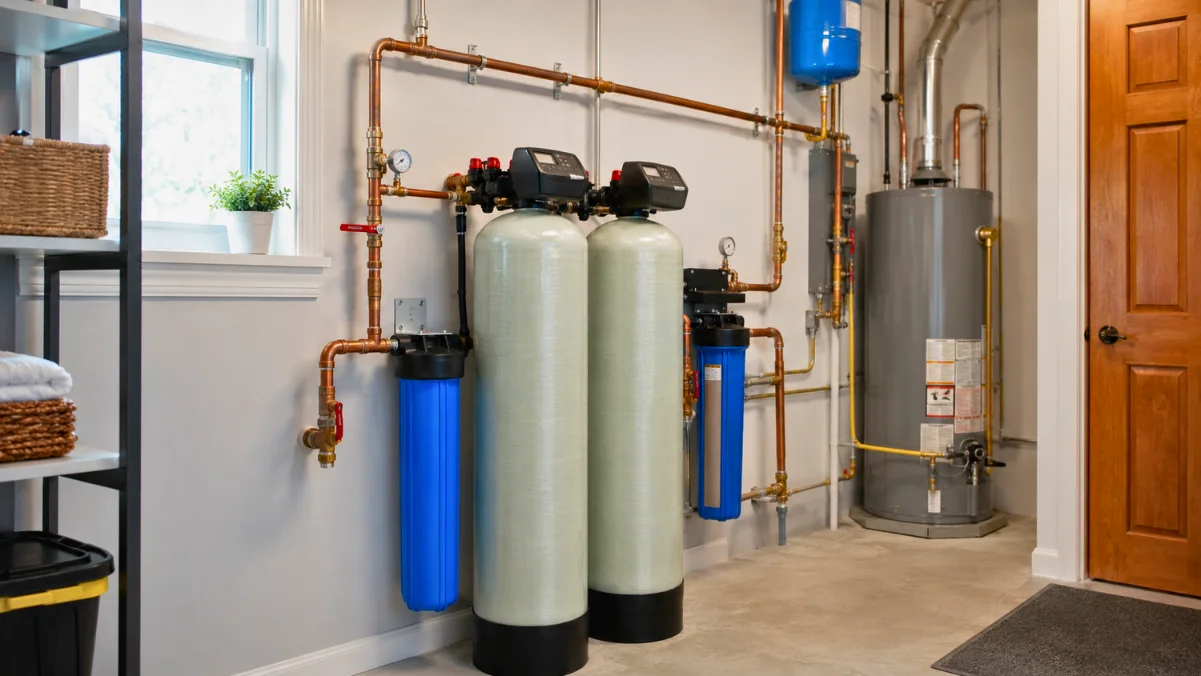
The SpringWell Whole House Cartridge System is best suited for homeowners who want cleaner water throughout the home, not just at one faucet. A whole house water filtration system treats source water as it enters the home before it reaches showers, laundry, appliances, and the water heater.
This type of filter system is most useful for chlorine taste, sediment, odor, and general water quality complaints that affect multiple fixtures. Whole house systems can also help protect plumbing and appliances from sediment and incoming water contaminants.
The important limitation is that whole house filtration is not automatically better for every drinking water concern. Many systems do not reduce fluoride, nitrates, arsenic, PFAS, or high total dissolved solids unless they include the right technology and verified contaminant reduction claims. Some homes still need a point-of-use reverse osmosis system for cooking and drinking water.
This matters because whole-house carbon and sediment filtration usually improves incoming water quality, but it is not the same as whole-house reverse osmosis or well-water disinfection.
SpringWell also sells larger media-style systems, and some SpringWell CF models are listed for very high gallon capacity. That does not mean every SpringWell product removes every contaminant. Buyers should verify the specific model, filter life, NSF ANSI claim, and installation needs.
Pros:
- Treats incoming home water
- Useful for sediment issues
- Helps showers and laundry
- Reduces fixture-level complaints
Cons:
- Higher setup cost
- More involved installation
- Not a universal purifier
**Who it’s for: **Choose this if chlorine, sediment, odor, or general water quality problems affect the whole house.
**Who should skip: **Skip it if only one sink needs treatment or if you have untested well water with bacteria, iron, sulfur, arsenic, or nitrates.
**Verdict: **Choose SpringWell when the problem is home-wide, not just a kitchen water issue.
For more home-wide options, see our guide to the best whole-house water filtration systems.
iSpring CU-A4 — Best Under-Sink Ultrafiltration System
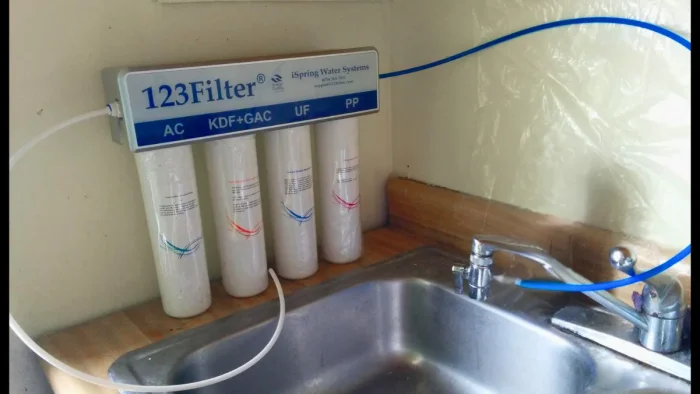
The iSpring CU-A4 is a non-RO under sink system for buyers who want cleaner kitchen water without a storage tank, electricity, or RO wastewater. Retailer and manufacturer information commonly describes this unit as an ultrafiltration setup using sediment, carbon, KDF, and a 0.01-micron UF membrane.
The key thing to understand is that ultrafiltration is not the same as reverse osmosis. UF can help with particles, turbidity, and some biological concerns depending on system design, but it does not reduce total dissolved solids the way a reverse osmosis system does.
This makes it a practical middle ground. It offers more filtration structure than a water filter pitcher but avoids the drain line and mineral removal of reverse osmosis units. Filter performance still depends on water quality, flow rate, pressure, filter cartridges, and replacement timing.
The CU-A4 is best viewed as an under sink filter for taste, particles, and daily kitchen use, not a full dissolved-contaminant solution. If your water test shows fluoride, nitrates, arsenic, or high dissolved solids, compare RO systems instead.
Pros:
- No RO wastewater
- No storage tank
- Keeps dissolved minerals
- Practical kitchen alternative
Cons:
- No TDS reduction
- Not full RO replacement
- Requires installation work
Who it’s for: Choose this if you want a lower-maintenance installed water filter for taste, particles, and everyday tap water use without RO wastewater.
**Who should skip: **Skip it if your test water shows dissolved contaminants that need reverse osmosis.
**Verdict: **Choose iSpring CU-A4 if you want an under sink alternative to RO and understand its contaminant limits.
Clearly Filtered Water Pitcher — Best Advanced Pitcher Filter
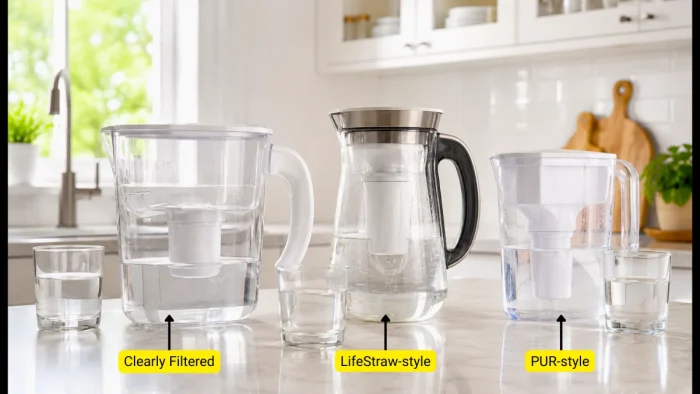
The Clearly Filtered Water Pitcher is for buyers who want a pitcher filter with stronger contaminant-focused claims than basic taste-only filter pitchers. The manufacturer says the pitcher targets many contaminants and lists NSF ANSI 42 and 372 certification claims while retaining minerals.
This type of water filter works best for renters, dorms, small households, and people who cannot install a filter system. It is also useful when you want a no-plumbing option for tap water improvement.
The main trade-off is capacity and cost. Portable filtration pitchers are lightweight and require no installation, but they can feel slow if several people fill bottles every day. Water filter pitchers often cost less upfront, but replacement filters can raise annual costs, especially when the cartridge targets more contaminants.
Do not treat broad contaminant reduction claims as proof for every water problem. Match the listed claims to your water test result, especially for PFAS, fluoride, arsenic, lead, forever chemicals, heavy metals, and disinfection byproducts.
Pros:
- No installation required
- Broad contaminant focus
- Useful for renters
- Keeps dissolved minerals
Cons:
- Higher filter costs
- Slower than faucet systems
- Limited family capacity
Who it’s for: Choose this if you want a no-install water filter pitcher with stronger contaminant claims than budget models.
Who should skip: Skip it if your household needs gallons of filtered water every day or wants faucet-level convenience.
Verdict: Choose Clearly Filtered if you want an advanced pitcher and accept slower flow and higher filter cost.
PUR Plus Horizontal Faucet Mount — Best Faucet-Mounted Water Filter
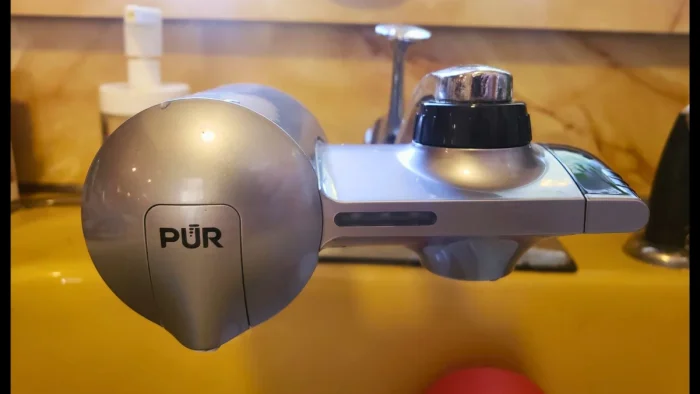
The PUR Plus Horizontal Faucet Mount gives you filtered water without a pitcher, separate faucet, or cabinet installation. PUR says this faucet filter is certified to reduce many contaminants, including lead, and filters up to 100 gallons or around 3 months.
This is the middle ground between a pitcher and an installed kitchen filter. You get treated water directly from the faucet, which helps with cooking, bottles, and daily use. It also avoids constant refilling.
The biggest issue is compatibility. Many faucet filters do not work with pull-down sprayers, designer faucets, or unusual aerator threads. They can also reduce sink clearance and look bulky.
Faucet-mounted filters are often priced lower than under sink filters and reverse osmosis systems, but they usually have lower capacity. This choice is best when your faucet fits and your goal is basic tap water improvement. It is not a full replacement for under sink RO, whole house treatment, or well-water disinfection.
Pros:
- No pitcher refilling
- Simple faucet installation
- Lower upfront cost
- Useful renter option
Cons:
- Faucet compatibility limits
- Can reduce sink clearance
- Lower capacity than installed filters
Who it’s for: Choose this if you have a standard faucet and want a simple way to improve chlorine taste without refilling a pitcher.
Who should skip: Skip it if your faucet has a pull-down sprayer or you want a cleaner hidden installation.
Verdict: Choose PUR Faucet Mount only if your faucet is compatible and convenience matters most.
Purewell 2.25G Gravity Water Filter — Best Gravity Filter
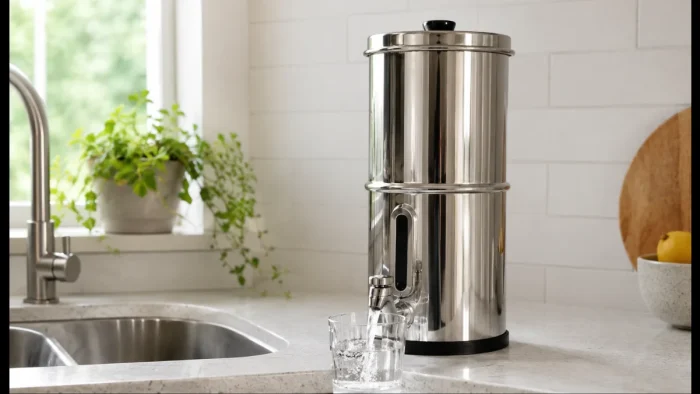
The Purewell 2.25G Gravity Filter is a countertop gravity filter for buyers who want a no-electricity, no-plumbing water filter. Purewell says its replacement filters are tested and certified to NSF ANSI 42 and 372.
Gravity filters are useful for backup water, cabins, light off-grid use, and kitchens where installation is not possible. They can hold more than most pitcher filters and do not need power, pressure, or a faucet connection.
The important warning is certification scope. NSF ANSI 42 is commonly tied to taste, odor, and aesthetic effects. NSF ANSI 372 relates to lead-free material compliance, not lead removal. Do not assume broad contaminant removal unless the product has testing for the exact contaminants.
Some gravity systems use stainless steel housings, while some ceramic-style filters use a ceramic outer shell around the filtration media. The housing design is less important than filter quality, certified contaminant reduction, filter life, and replacement filter availability.
Pros:
- No electricity required
- No plumbing required
- Larger than pitchers
- Useful backup option
Cons:
- Slower gravity flow
- Takes counter space
- Claims need checking
**Who it’s for: **Choose this if you want a countertop filter for backup use, simple daily water, or non-electric operation.
Who should skip: Skip it if you need verified reduction for fluoride, nitrates, arsenic, high TDS, or bacteria.
Verdict: Choose Purewell for no-power countertop filtration, not as a universal purifier.
For more options, compare our guide to the best gravity water filters and Purewell gravity water filter systems.
Everydrop by Whirlpool Filter A — Best Refrigerator Filter
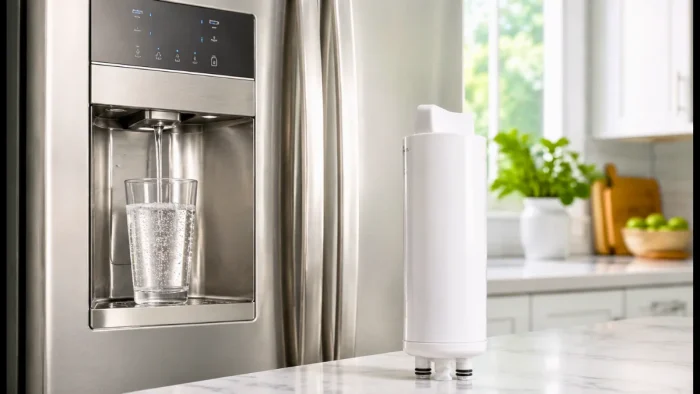
The everydrop Whirlpool Filter A is worth considering if your refrigerator already uses this compatible replacement filter. Whirlpool says everydrop filters are approved for Whirlpool, Maytag, Amana, KitchenAid, and JennAir refrigerators and are independently tested and certified to reduce selected contaminants.
The main benefit is convenience. Many homes already use refrigerator water and ice every day. Replacing the correct fridge filter can improve taste and help maintain certified performance.
The key problem is compatibility. Refrigerator filters are model-specific. Buying the wrong filter can lead to poor fit, leaks, weak flow, or no installation at all. Counterfeit fridge filters are also a real concern because materials safety and certified performance may not match the label.
This is not a whole house water filter or a serious TDS reduction system. It is a replacement cartridge for fridge water and ice. Buyers should check the refrigerator model number, cartridge code, NSF ANSI claims, and replacement schedule before ordering.
Pros:
- Convenient fridge water use
- Supports ice filtration
- Easy replacement process
- No counter space needed
Cons:
- Must match model
- Counterfeit filter risk
- Not for high TDS
Who it’s for: Choose this if your compatible Whirlpool-family fridge uses Filter A and you want convenient water and ice filtration.
**Who should skip: **Skip it if you need a dedicated kitchen water filter for specific contaminants or broader household treatment.
Verdict: Choose everydrop Filter A only when it matches your refrigerator model.
Compare the products
Choose the products you want to compare. Ratings retain each product’s original rubric.
| Product | Aquasana 3-Stage Max Flow Claryum — Best Overall Under-Sink Water Filter | APEC ROES-50 — Best Traditional Reverse Osmosis System for TDS Reduction | Waterdrop G3P600 — Best Tankless RO System | AquaTru Classic — Best Countertop System for Filtered Water Without Plumbing | SpringWell Whole House Cartridge System — Best Whole House Water Filtration System | iSpring CU-A4 — Best Under-Sink Ultrafiltration System | Clearly Filtered Water Pitcher — Best Advanced Pitcher Filter | PUR Plus Horizontal Faucet Mount — Best Faucet-Mounted Water Filter | Purewell 2.25G Gravity Water Filter — Best Gravity Filter | Everydrop by Whirlpool Filter A — Best Refrigerator Filter |
|---|---|---|---|---|---|---|---|---|---|---|
| Check current price | Check price on Amazon ↗ | Check price on Amazon ↗ | Check price on Amazon ↗ | Check price on Amazon ↗ | Check price on Amazon ↗ | Check price on Amazon ↗ | Check price on Amazon ↗ | Check price on Amazon ↗ | Check price on Amazon ↗ | Check price on Amazon ↗ |
Point-of-Use vs Point-of-Entry Water Filtration
Point-of-use systems treat water at one location, such as a kitchen sink, countertop dispenser, refrigerator, faucet mount, or pitcher. These are best for drinking water, cooking, coffee, and bottles because they focus filtration where you consume water most often.
Point-of-entry systems treat water as it enters the home. A whole house setup can improve water at showers, laundry, fixtures, appliances, and the water heater. It usually costs more and may still need a point-of-use reverse osmosis system for specific drinking water contaminants.
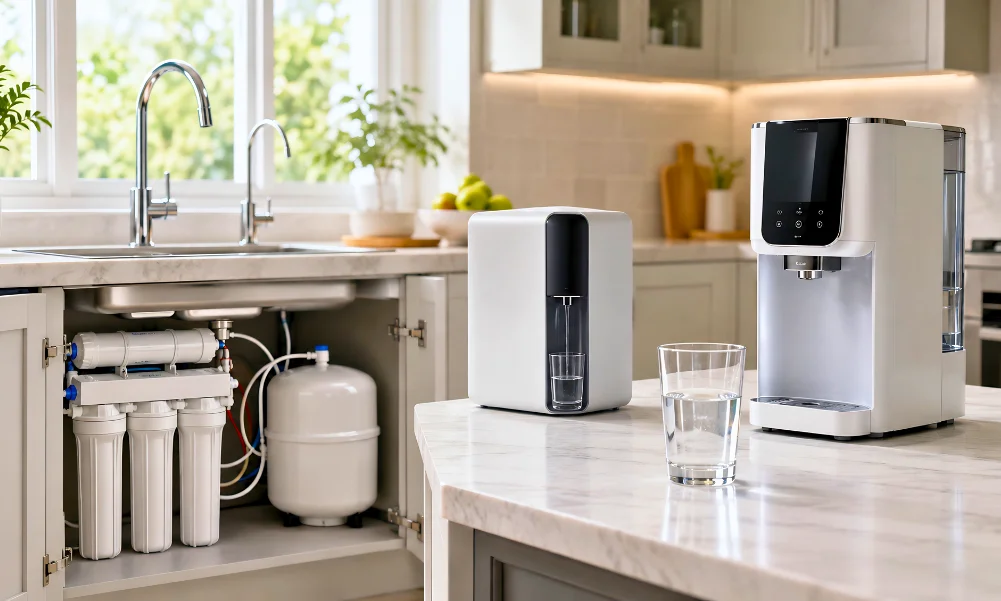
Countertop water filters are usually better than filter pitchers when you want fewer refills, more capacity, or a plug-and-play setup. The best countertop water filters may include carbon filters, gravity filters, countertop RO units, or water distillers.
Cost is another difference. Basic water filter pitchers often cost around $20 to $40, faucet filters are commonly under $40, simple countertop filters may start around $80 to $100, and under-sink filters or reverse osmosis units can range much higher depending on filter quality, installation, and replacement filters.
Water Filter vs Water Softener
A water filter reduces contaminants. A water softener reduces hardness minerals.
A softener can help with scale on fixtures, appliances, and the water heater. It does not make unsafe water safe.
A filter can help with chlorine, lead, PFAS, sediment, bad taste, odor, and other contaminants depending on technology and certification. It does not always fix hardness.
LifeStraw Home Glass Pitcher — Best Glass Water Filter Pitcher
The LifeStraw Home Glass Pitcher is best for buyers who prefer a glass carafe instead of a plastic pitcher body. LifeStraw positions its filter around reducing bacteria, parasites, microplastics, chlorine, and other contaminants depending on the filter version and claim scope.
This is not the highest-capacity choice. A 7-cup pitcher fits small kitchens, one-person households, couples, or light daily use. It can work well for fridge storage, bedside use, and simple tap water improvement.
The practical concern is breakability and capacity. Glass feels better to many buyers, but it is heavier and less forgiving than plastic. Larger households may find the refill cycle annoying.
As with any water filter pitcher, check the exact contaminant list. NSF certified claims, third-party lab testing, replacement filters, and materials safety matter more than general marketing language. A glass pitcher body may improve material preference, but it does not automatically mean stronger contaminant removal.
Pros:
- Glass carafe design
- No install needed
- Compact fridge storage
- Useful microplastic focus
Cons:
- Smaller pitcher capacity
- Heavier than plastic
- Breakable if dropped
**Who it’s for: **Choose this if you prefer glass, have a small household, and want a simple pitcher for daily tap water use.
**Who should skip: **Skip it if you need large-volume water filtration for a family or heavy bottle filling.
Verdict: Choose LifeStraw Glass if material preference and compact use matter more than capacity.
PUR Plus 11-Cup Water Pitcher — Best Budget Pitcher Filter
The PUR Plus 11-Cup Pitcher is the budget-friendly choice for basic filtered water. PUR lists an 11-cup capacity, slim design, dishwasher-safe pitcher body, and filter change light.
This is the kind of water filter that makes sense when the goal is simple taste improvement, not whole house treatment or advanced contaminant removal. It is easy to buy, easy to store, and easy to use in apartments, dorms, and small kitchens.
The main limitation is daily volume. A pitcher can work for one or two people, but refilling gets old fast in larger homes. Filter lifespan also depends on usage and source water quality. If the water tastes bad again, flow slows down, or the indicator changes, replace the cartridge.
Pitcher filters are ideal for small households or basic taste improvement. They are not a substitute for reverse osmosis, UV, a certified microbiological purifier, or a well-water treatment train. Use this for low-cost convenience, not serious water safety concerns.
Pros:
- Low upfront cost
- Simple no-install use
- Slim fridge-friendly design
- Filter indicator included
Cons:
- Frequent refilling needed
- Limited daily capacity
- Not for serious contaminants
Who it’s for: Choose this if you want a cheap, simple pitcher for taste improvement in a small home, dorm, or rental.
**Who should skip: **Skip it if you need high-volume filtration or verified reduction for health-related contaminants.
**Verdict: **Choose PUR Plus if budget matters more than advanced contaminant coverage.
Explore more water-filter reviews and buying guides.
How Wits Engineer Chose These Filtration Systems
This article is a research-based product review, not a hands-on lab test. We evaluated each water filter using published specifications, manufacturer documentation, certification claims, third-party lab testing where available, replacement filter cost, filter lifespan, flow rate, installation difficulty, annual costs, maintenance expectations, and real-world household fit.
We do not treat manufacturer claims as proof. Certification scope, contaminant-specific test data, filter quality, replacement availability, materials safety, and ownership cost matter more than broad marketing language.
We also reviewed owner feedback to identify common complaints such as slow flow, leaking fittings, difficult installation, expensive replacement filters, taste changes, poor faucet compatibility, and confusing maintenance schedules. Online review data was used only as a support signal, not as proof of contaminant removal.
We also considered external filters tested in public product roundups, but we did not present those results as our own. Some third-party reviews report strong performance from products such as AquaTru Carafe, Cloud RO, Culligan ZeroWater, SpringWell CF, Waterdrop G3 P800, and Clearly Filtered Under Sink. Treat those as outside data points only, and always check the test method, contaminant list, NSF ANSI certification scope, and whether the result applies to your source water.
We only use those external results as context because testing conditions, influent water, filter age, and contaminant lists can vary.
Key review factors included water source fit, NSF certified claims, flow rate, filter life, replacement filters, contaminant reduction, installation difficulty, daily water usage, and long-term ownership cost.
Start With a Water Test Before Buying Water Filters

A water test helps identify source water problems before you buy. For city water, check your local Consumer Confidence Report first. For private wells, test water at least once per year for bacteria, nitrates, total dissolved solids, and pH.
A home water quality test, Tap Score test, Tap Score lab report, or another certified lab test can give a clearer view of common contaminants such as lead, arsenic, nitrates, PFAS, disinfection byproducts, heavy metals, and forever chemicals.
Tap Score lab testing is useful when you want more than a basic strip test. It can help compare unfiltered water against likely treatment needs before you spend money on a countertop filter, under sink system, reverse osmosis system, or whole house setup.
Basic strips can help with quick screening, but lab testing is better when health-related contaminant removal matters.
The practical rule is simple: match the filter type to the test result. Carbon is usually better for chlorine taste and odor. Reverse osmosis is stronger for total dissolved solids, fluoride, nitrates, arsenic, and many dissolved contaminants. Ion exchange may help with hardness, metals, or specific contaminant groups depending on the resin and certification.
Why Certifications and Water Testing Matter
Many water filters are certified to reduce specific contaminants, but certification does not mean everything is removed.
A filter may be certified for chlorine taste and odor, while another may be certified for lead, PFAS, cysts, VOCs, fluoride, or other harmful contaminants. The strongest buying decision compares certified performance against your water test.
NSF ANSI standards matter because they connect filter performance to specific contaminant reduction claims. If a product is only certified for taste and odor, do not assume it removes heavy metals or bacteria.
Water quality changes by location, plumbing age, source water, and household usage. That is why a water test and the product’s certified claim should work together.
Best Water Filters for Tap Water: Better Taste, Improving Taste, TDS Reduction, and Cleaner Water
If your goal is better taste, start with activated carbon or carbon block filtration.
Activated carbon is a filtration medium that removes contaminants and impurities, primarily through chemical adsorption. Carbon is strong for chlorine taste, odor, and many taste-related complaints. Carbon block filters are often denser than loose carbon media and may improve contact time depending on the design.
If your goal is TDS reduction, choose reverse osmosis. Carbon filters and most filter pitchers do not reduce total dissolved solids in the same way.
If your goal is bacteria control, consider UV, ultrafiltration, reverse osmosis, or a certified microbiological purifier based on water test results. For UV-specific options, see our guide to the best UV water purifiers.
Which Water Filtration Systems Reduce Specific Contaminants?
Reverse osmosis (RO) is a water purification process that uses a semipermeable membrane to remove ions, molecules, and larger particles, making it effective at removing heavy metals and total dissolved solids (TDS).
| Water Issue | Best Technology to Consider | Notes |
|---|---|---|
| Chlorine taste and odor | Activated carbon / carbon block | Best for taste improvement |
| Lead | NSF ANSI 53 filter or RO | Check exact certified claim |
| PFAS / forever chemicals | Certified carbon or RO | Look for PFAS, PFOA, PFOS claims |
| Fluoride | Reverse osmosis or fluoride filters | Carbon alone usually is not enough |
| High TDS | Reverse osmosis | RO is designed for TDS reduction |
| Bacteria | UV, UF, RO, microbiological purifier | Important for well water |
| Sediment | Sediment filter | Common first stage |
| Hardness | Water softener | Not solved by most filters |
| Microplastics | Certified filter, UF, or RO | Check pore size and lab data |
| Total THMs | Activated carbon or certified systems | Certification matters |
Different systems treat different contaminants effectively. Do not assume any water filter removes every contaminant unless the certified data supports that exact claim.
NSF Certified Water Filters: How to Read NSF/ANSI Standards
An NSF certified water filter should be judged by its exact claim, not the logo alone.
NSF stands for the National Sanitation Foundation, and ANSI stands for the American National Standards Institute. In water filtration, NSF ANSI standards help verify that a filter unit was tested for specific contaminant reduction claims under defined conditions.
| Standard | What It Usually Means | Important Warning |
|---|---|---|
| NSF ANSI 42 | Taste, odor, chlorine | Not broad health protection |
| NSF ANSI 53 | Health-related contaminants | Check exact contaminant list |
| NSF ANSI 58 | Reverse osmosis performance | Important for RO systems |
| NSF ANSI 401 | Emerging contaminants | Product-specific claims matter |
| NSF ANSI 372 | Lead-free materials | Not lead removal |
The practical rule is simple: a water filter reduces the contaminants it is tested and certified to reduce. Nothing more should be assumed.
Ownership Cost Reality: Filter Life, Maintenance, and Water Usage
The cheapest water filter is not always the cheapest to own.
Before buying, check replacement filter cost, filter lifespan in gallons or months, number of filter cartridges, RO membrane replacement cost, proprietary filter requirements, annual costs, flow rate, water pressure needs, RO wastewater ratio, and replacement filter availability.
As a rough ownership guide, under-sink carbon cartridges often need swapping filters every 6 to 12 months. Some whole-house media systems can last several years, while pitcher filters and fridge filters usually need more frequent replacement. Always follow the product schedule because filter life changes with water quality, usage, and flow rate.
A low cost per gallon only matters if the filter is maintained properly. A neglected cartridge can reduce flow, hurt taste, and weaken filtration performance.
Pitchers cost less upfront but need frequent refilling. Under sink filters cost more at first but are easier to live with every day. Reverse osmosis gives stronger purification but needs more service. Whole house systems cost more to install but treat the entire home.
Where Water Filtration Systems Usually Disappoint
Most water filters disappoint when buyers expect one filter system to solve every problem.
Filter pitchers disappoint when a family needs several gallons per day.
Faucet filters disappoint when they do not fit pull-down faucets.
Carbon filters disappoint when buyers expect TDS reduction.
Reverse osmosis systems disappoint when buyers are not ready for wastewater, mineral removal, slower flow, or filter changes. Some RO systems add a remineralization stage to improve taste after filtration, but that does not remove the need for maintenance.
Whole house systems disappoint when buyers expect them to remove every drinking water contaminant. Many improve chlorine, sediment, taste, and odor, but may still need point-of-use RO.
Bottled water may seem easier, but it does not solve water quality at the sink, shower, appliances, or cooking point. A matched water filter is usually more practical for daily home use.
What About Well Water Filtration?
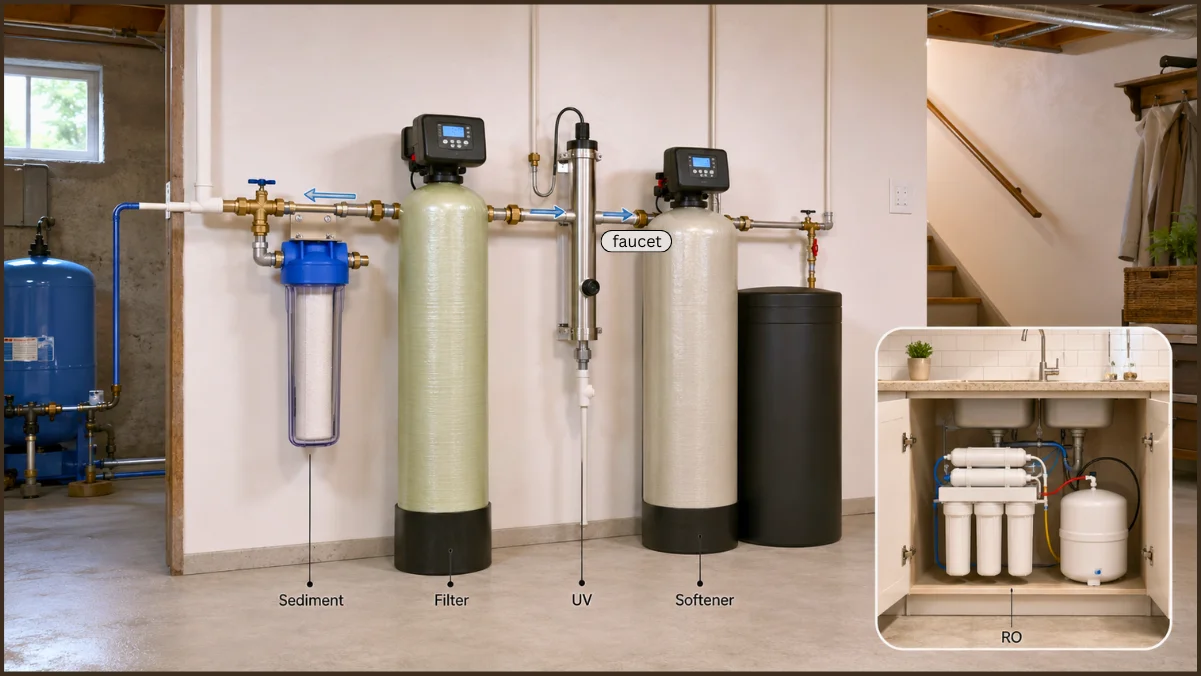
The best water filtration system for well water is usually a treatment train, not one cartridge.
Well water can vary by well depth, soil chemistry, plumbing materials, nearby agriculture, flooding history, and local geology. Common problems include sediment, iron, manganese, sulfur smell, bacteria, nitrates, arsenic, hardness, heavy metals, and pH issues.
A common well-water setup may include sediment filtration, iron treatment, activated carbon, a water softener, UV sterilization, and under sink RO for kitchen use.
Common Buyer Mistakes to Avoid
Avoid these common mistakes:
- Buying RO for a simple taste issue
- Buying whole-house filtration for one sink
- Confusing NSF ANSI 372 with lead removal
- Ignoring replacement filters and annual costs
- Buying a pitcher for high-volume family use
- Assuming “removes 99%” applies to everything
- Ignoring water pressure and flow rate
- Skipping well-water testing
- Forgetting filter replacement schedules
- Trusting claims without certified data
If you are choosing only one system, start with the water problem, not the product category. Taste and odor usually point to carbon. Dissolved solids and fluoride usually point to reverse osmosis. Whole-home sediment, chlorine, or odor usually points to point-of-entry filtration. Hardness points to a softener, not a standard water filter.
Final Recommendation
For most city water homes, start with an under-sink carbon filter like Aquasana if the main goal is better taste, chlorine reduction, and daily kitchen convenience.
**| **Choose APEC ROES-50 or Waterdrop G3P600 if your water test shows dissolved contaminants or you need TDS reduction.
**| **Choose AquaTru Classic if you rent or cannot modify plumbing.
Choose SpringWell if the issue affects the whole house.
Choose Clearly Filtered, LifeStraw, PUR, or Purewell if you need no-install filtration.
The best system is the one that matches your source water, target contaminants, space, water usage, and maintenance tolerance.
This section is ready for your content in the CMS.
Engr. Hm Jamal
Founder & Lead Technical EditorFounder of Wits Engineer, with a practical background in electrical and water systems. His product reviews focus on setup, performance, maintenance and the trade-offs that affect everyday ownership.