Best Water Filtration Systems for Well Water: Iron, Sulfur, Sediment & UV Picks
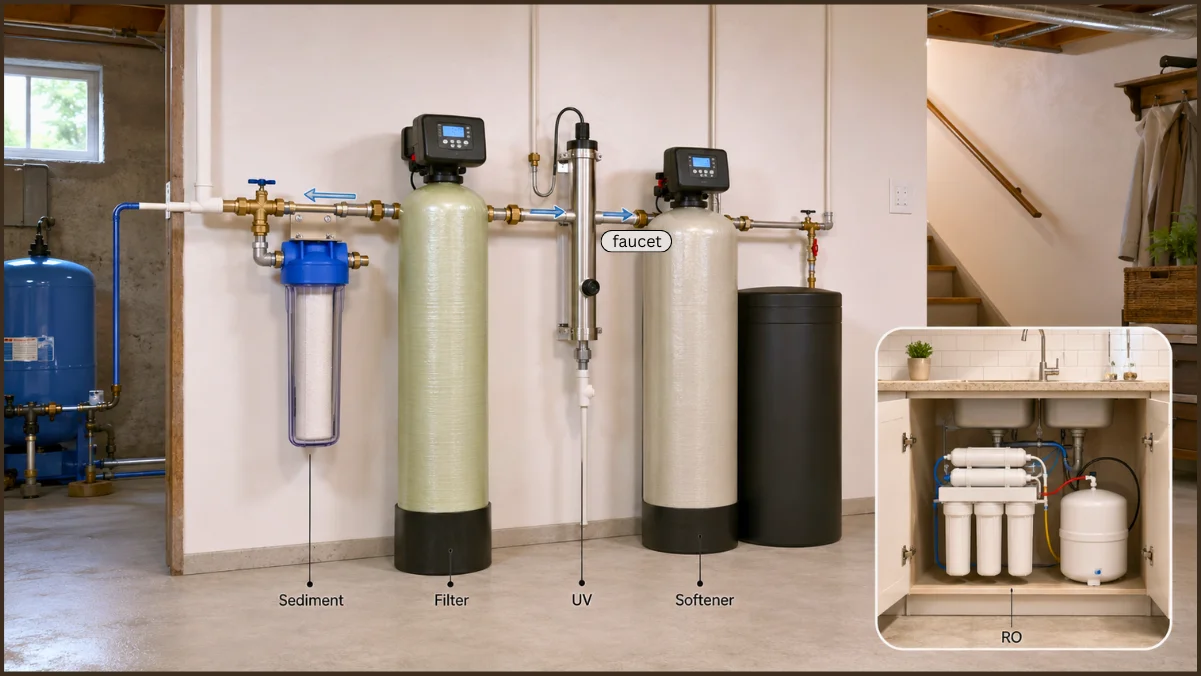

This guide covers the best water filtration systems for well water, including options for iron, sulfur odor, sediment, bacteria, hard water, low pH, and drinking-water treatment.
It is written for well owners and homeowners with private wells who need to improve water quality, protect plumbing and appliances, or address a specific contaminant found during testing.
Choosing the right system matters because private well water can contain several different contaminants, and each problem requires a suitable treatment method. A sediment filter cannot disinfect water, a water softener will not remove bacteria, and a reverse osmosis system should not be expected to treat difficult raw well water without proper pretreatment.
The water filtration system for well water depends on what your water test finds. Iron, hydrogen sulfide, sediment, bacteria, hardness, low pH, and dissolved contaminants require different treatment methods, so no single filter is right for every private well.
For broad whole-house treatment, the Aquasana Rhino WH-WELL-CT-UV is the most complete packaged option in this lineup. I would choose the DuraWater Iron Eater instead when iron staining or rotten-egg odor is the main concern. The iSpring WSP50ARB makes sense as a first-stage sediment filter, while the VIQUA VH200 is the better fit when laboratory testing confirms a microbiological problem.
A complete well-water setup may use several of these systems together. Test the water first, identify the contaminants, and build the treatment system around the results.
Best Well Water Filtration Systems at a Glance
| Award | Product | Best for | Main trade-off |
|---|---|---|---|
| Best Packaged System | Aquasana Rhino WH-WELL-CT-UV | Broad whole-house treatment | Not designed for severe iron or true softening |
| Best for Iron and Sulfur | DuraWater Air Injection Iron Eater | Iron, manganese, and hydrogen sulfide | Requires adequate backwash flow |
| Best Sediment Pre-Filter | iSpring WSP50ARB | Sand, grit, rust flakes, and coarse sediment | Does not treat dissolved contaminants |
| Best UV System | VIQUA VH200 | Lab-confirmed coliform or E. coli risk | Requires clear, prefiltered water |
| Best Water Softener | SoftPro Elite HE 64,000 Grain | Hard well water and scale | Does not disinfect or remove most contaminants |
| Best Drinking Water RO Add-On | Waterdrop T4-A Alkaline pH+ | Point-of-use drinking and cooking water | Incoming well water must be pretreated |
| Best Cartridge Alternative | Express Water 3-Stage Whole House System | Cartridge-based whole-house treatment | Cartridge choice must match the contaminant |
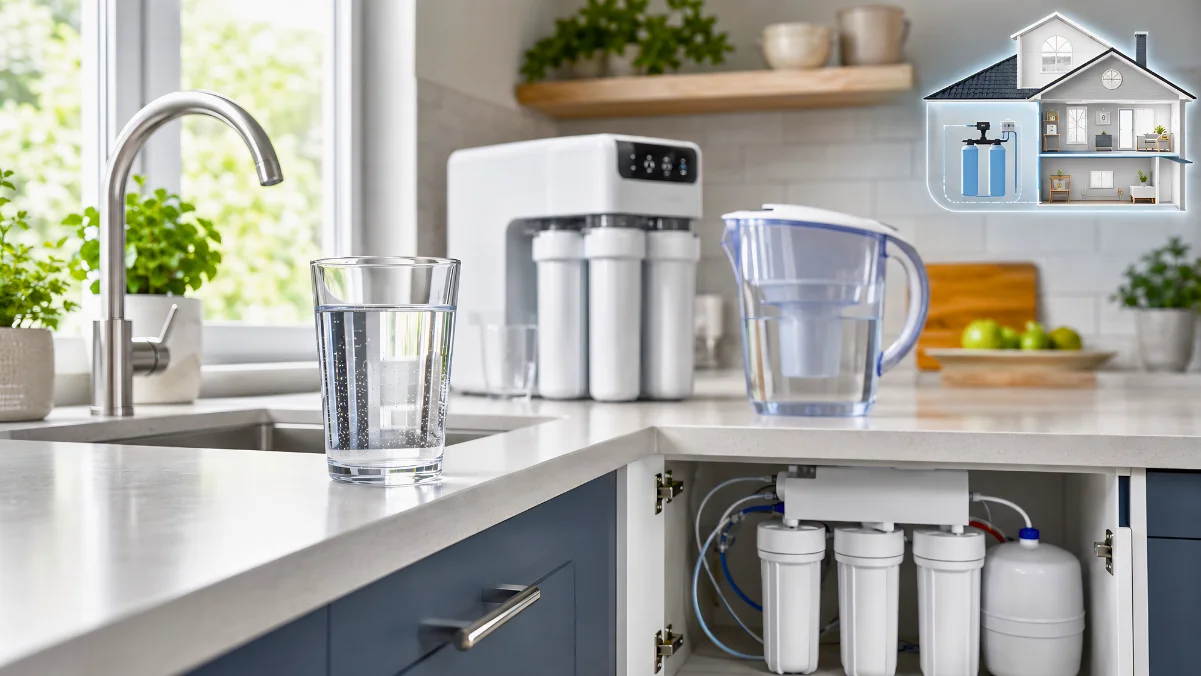
These products do not perform the same job. A sediment filter cannot disinfect water, a water softener is not a complete filtration system, and an under-sink RO system should not be the first treatment stage for raw well water containing heavy sediment, iron, sulfur, or bacteria.
Test Your Well Water Before Choosing a System
Smell, taste, staining, and visible particles can suggest a water problem, but they cannot confirm everything that may be present in a private well.
A comprehensive test should normally include:
- Total coliform and E. coli
- Nitrates
- pH
- Iron
- Manganese
- Hardness
- Total dissolved solids
- Hydrogen sulfide where odor is present
Depending on local geology and nearby land use, testing may also need to cover arsenic, lead, copper, pesticides, volatile organic compounds, radium, uranium, or other regional contaminants.
The test result matters because treatment technologies are highly specific. Sediment requires physical filtration. Dissolved iron and hydrogen sulfide commonly need oxidation and filtration. Hardness requires ion exchange. Microorganisms require disinfection. Low-pH water may need neutralization. Arsenic, nitrates, and other dissolved contaminants may require reverse osmosis or specialized media.
I would not buy a system based only on the number of filtration stages. A five-stage unit that uses the wrong treatment type may be less useful than one correctly selected tank or cartridge.
Water quality can also change after flooding, well repairs, nearby construction, agricultural activity, septic problems, or changes in groundwater. Retest the well regularly and whenever the water suddenly changes in appearance, taste, or odor.
Match the Treatment to the Problem
| Test result or symptom | Likely concern | Appropriate treatment |
|---|---|---|
| Orange-brown staining | Iron | Oxidation or air-injection iron filter |
| Black staining | Manganese | Iron and manganese treatment sized to the test |
| Rotten-egg odor | Hydrogen sulfide or sulfur-related activity | Oxidation, air injection, or suitable catalytic carbon |
| Sand, grit, or rust flakes | Coarse sediment | Spin-down or sediment pre-filter |
| Positive total coliform or E. coli result | Microbiological contamination | Immediate safe-water action, source correction, disinfection, and possibly UV |
| Scale and soap scum | Hard water | Salt-based ion-exchange water softener |
| Low pH or blue-green staining | Acidic water and possible pipe corrosion | Neutralizing media or controlled pH correction |
| Arsenic, nitrates, or selected dissolved contaminants | Dissolved contamination | Certified reverse osmosis or specialty treatment |
| Chemical or heavy-metal concern | Contaminant-specific issue | Correctly certified cartridge, media, or point-of-use system |
Visible rust particles and dissolved iron are not the same problem. A sediment filter may catch flakes already present in the water, but dissolved iron can pass through and later produce staining. That is why a basic house filter should not be treated as a replacement for dedicated iron treatment.
How We Evaluated These Systems
I compared these products according to the specific contaminants and water concerns each one is designed to address rather than treating them as direct substitutes.
The main evaluation criteria were:
- Suitability for common private-well contaminants
- Treatment method
- Whole-house or point-of-use coverage
- Flow-rate and installation requirements
- Potential for pressure drops
- Maintenance demands
- Filter replacements and operating costs
- Protection for downstream equipment
- Main ownership limitations
- Buyer suitability
- Need for supporting treatment stages
Specifications help explain capacity and configuration, but filter performance still depends on the water test, incoming water quality, proper sizing, installation, contact time, and maintenance.
| For Transparency Matters Check** How We Pick Products and Services**.
Our Top Picks
Detailed product reviews
Aquasana Rhino WH-WELL-CT-UV — Best Packaged Whole-House System
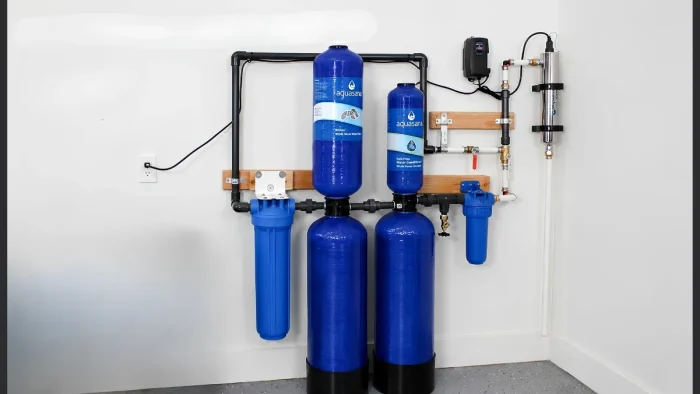
The Aquasana Rhino WH-WELL-CT-UV is the option I would consider first when a homeowner wants a packaged house water filtration system for broad, relatively manageable well-water concerns.
It combines several components in one setup, including sediment filtration, carbon and KDF media, UV treatment, and a salt-free conditioning stage. That makes it more convenient than designing a complete water treatment system from separate components.
The main practical advantage is coverage. It treats water at the point of entry, so showers, laundry, fixtures, appliances, and household taps receive treated whole-house water. The UV component also gives it a capability that a basic whole-house carbon filter does not have.
Aquasana lists a 500,000-gallon capacity for the main filtration system. As with any capacity rating, actual service life depends on incoming water quality, flow rate, filter change intervals, and household use.
The important limitation is that this is not a severe-iron system or a true salt-based water softener. A salt-free conditioner may help manage scale buildup, but it does not remove calcium and magnesium through ion exchange. Homes with confirmed hard water may still need a separate softener.
I would also choose a dedicated air-injection or oxidation system when the main problem is heavy iron staining, significant manganese, or strong sulfur odor. A broad packaged system is useful only when its treatment stages match the lab results.
Pros
- Broad point-of-entry treatment
- Includes a UV stage
- Combines several treatment components
- Treats water throughout the house
Cons
- Not intended for severe iron or sulfur problems
- Not a true ion-exchange softener
- Requires considerable installation space
Homeowners comparing other point-of-entry options can also review our guide to the best whole-house water filtration systems.
DuraWater Air Injection Iron Eater — Best for Iron and Rotten-Egg Odor
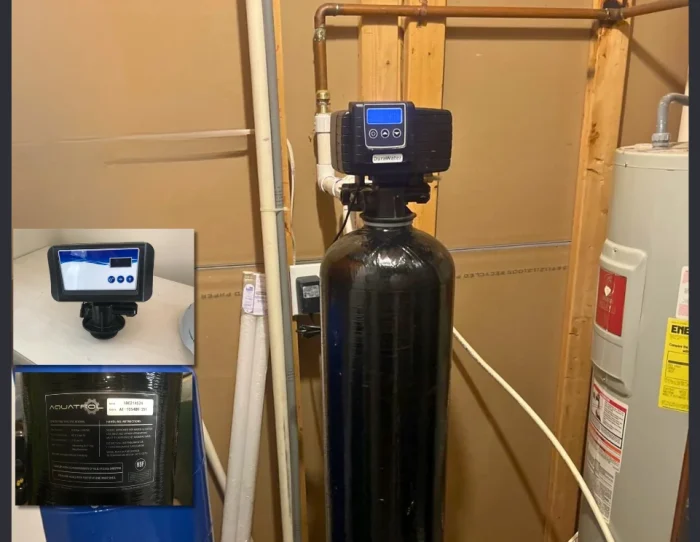
When orange staining and sulfur odor are the main complaints, I would choose a dedicated iron and sulfur system over a general cartridge filter.
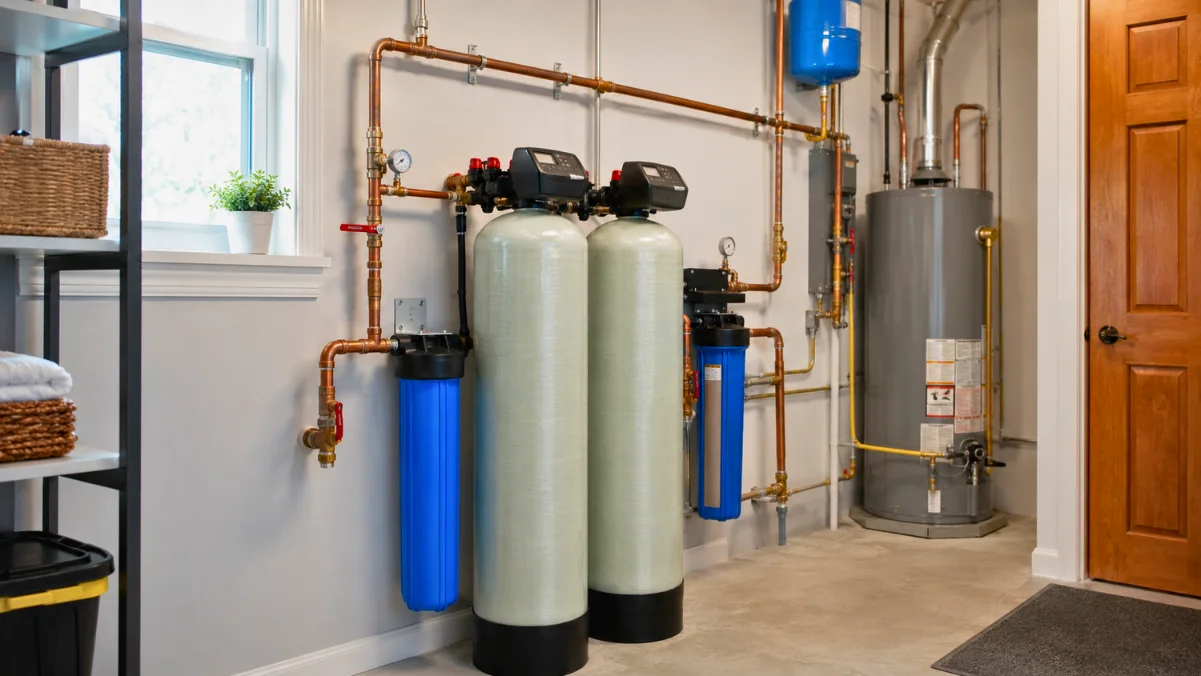
The DuraWater Iron Eater uses air injection to oxidize iron, manganese, and hydrogen sulfide before the media tank captures or reduces them. This treatment method is more appropriate for dissolved iron and sulfur gas than a basic sediment cartridge.
The practical benefit is easy to understand. Iron can stain sinks, tubs, toilets, fixtures, and laundry, while hydrogen sulfide can spread an unpleasant rotten-egg smell through tap water and shower water. Capturing visible rust particles alone will not reliably solve either problem.
This type of system normally backwashes to clean the media bed. That means the well pump and plumbing must provide enough flow for proper regeneration. Before buying, confirm the selected model’s treatment limits, service flow, backwash requirement, drain needs, and compatibility with your water chemistry.
Adequate contact time also matters. Water must remain within the system’s rated operating conditions so oxidation and media filtration can work as intended.
The DuraWater does not disinfect water, soften hardness, or address contaminants such as nitrates or arsenic. It is a specialist rather than an all-purpose purifier.
Pros
- Designed for iron and manganese removal
- Helps address hydrogen sulfide odor
- Better suited to dissolved iron than a sediment cartridge
- Provides whole-house treatment
Cons
- Requires adequate backwash flow
- Does not treat bacteria
- Does not replace a water softener
Best for: Wells with confirmed iron, manganese, or hydrogen sulfide.
Consider another system if: Bacteria, hardness, arsenic, nitrates, or drinking-water treatment is the primary concern.
iSpring WSP50ARB — Best Sediment Pre-Filter
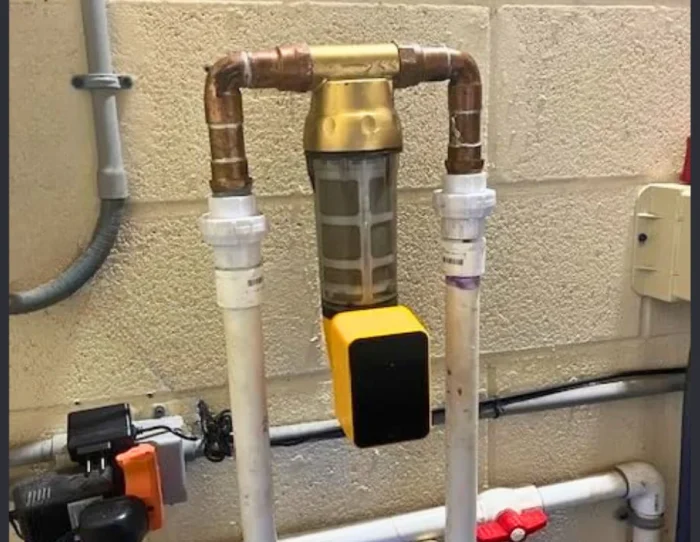
The iSpring WSP50ARB is not a complete well-water filtration system. It is a protective first stage for wells carrying sand, grit, rust flakes, or other large sediment particles.
The listed 50-micron screen is intended for coarse sediment. That makes it useful before finer cartridges, water softeners, UV chambers, reverse osmosis systems, valves, and water heaters. Keeping large debris out of those components can reduce premature clogging, pressure drops, and unnecessary filter replacements.
One feature I like about the design is that the screen is reusable and flushable. In a high-sediment installation, flushing accumulated debris is more practical than replacing a disposable cartridge every time the housing loads up.
The 50-micron rating is too coarse for very fine silt, and the filter cannot remove dissolved iron, sulfur gas, bacteria, hardness, heavy metals, nitrates, or other dissolved contaminants. A finer cartridge may still be necessary downstream.
Cloudiness does not always mean coarse sediment. See why your water is cloudy before assuming a spin-down filter will solve the problem.
Best for: Wells producing visible sand, grit, rust flakes, or coarse sediment.
Do not use it alone if: The main problem is iron staining, sulfur odor, bacteria, hardness, or dissolved contamination.
VIQUA VH200 — Best UV System for Bacteria
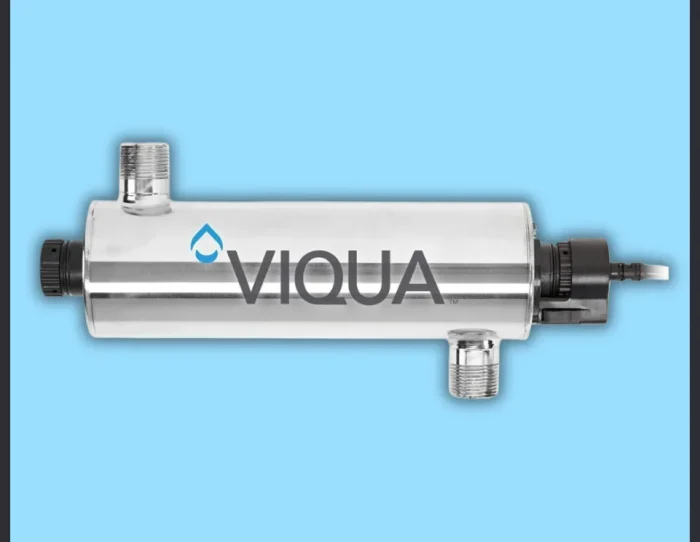
Microbiological contamination requires a different approach from iron, sediment, sulfur, or hardness. The VIQUA VH200 is the system in this lineup intended for that role.
The VH200 is a stainless-steel UV water treatment system rated at 9 gallons per minute. That may suit many small or medium households, but sizing should be based on peak household demand rather than bathroom count alone.
UV light inactivates susceptible microorganisms as water passes through the chamber. It does not physically remove contaminants or improve hard water, staining, odor, dissolved solids, arsenic, nitrates, or sediment.
Incoming water must also be clear enough for UV light to reach the organisms effectively. Sediment, turbidity, iron, manganese, and scale can interfere with performance or foul the quartz sleeve. Correct flow and sufficient exposure time are essential because excessive flow can reduce effective contact time inside the chamber.
A positive E. coli result should not be handled as an ordinary product-selection problem. Use a safe alternative water supply, investigate the contamination source, disinfect the well and plumbing where appropriate, and retest according to local health guidance. UV may provide ongoing protection, but it does not repair a failed well cap, damaged casing, flooding pathway, or septic problem.
Pros
- Designed for microbiological treatment
- Does not add a chemical taste
- Compact stainless-steel chamber
- Suitable as a final whole-house treatment stage
Cons
- Does not remove physical or chemical contaminants
- Requires clear, pretreated water
- Lamp and sleeve maintenance are necessary
For alternative systems in this category, compare the best UV water purifiers.
SoftPro Elite HE 64,000 Grain — Best for Hard Well Water
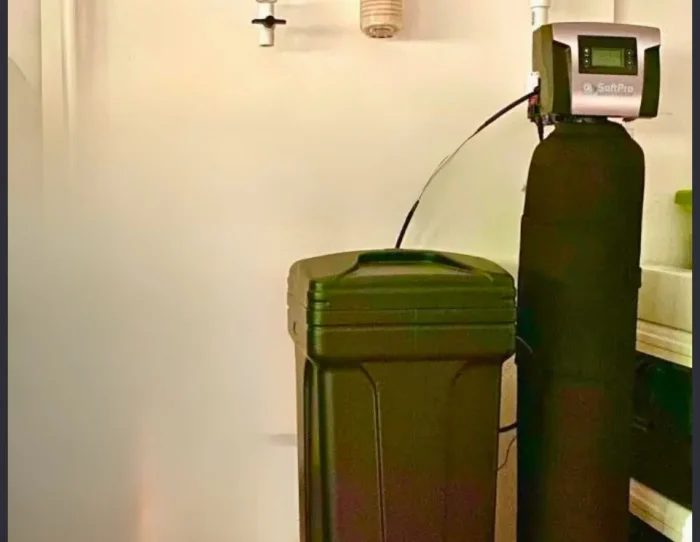
The SoftPro Elite HE is included because hardness requires a true water softener rather than a conventional filter.
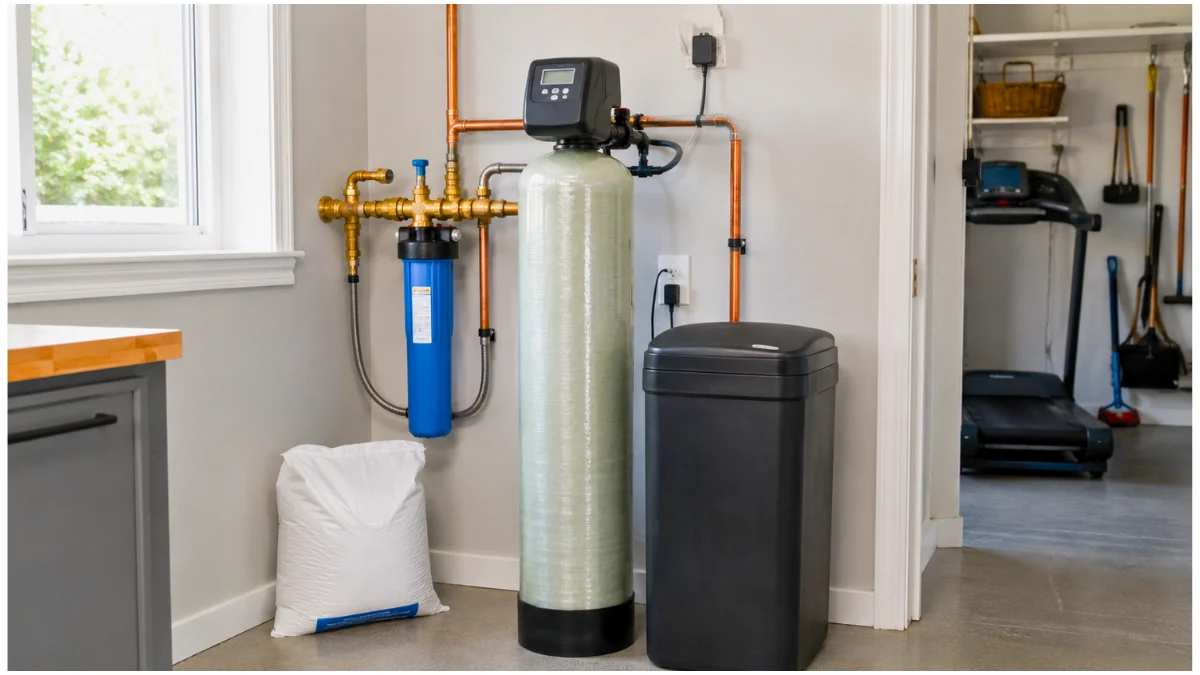
It uses ion exchange to remove calcium and magnesium, the minerals responsible for scale buildup, soap scum, poor lather, and mineral deposits in fixtures and water-heating equipment. A salt-free conditioner does not remove hardness in the same way.
The 64,000-grain designation gives this model substantial nominal capacity, but softener sizing should account for measured hardness, household water use, iron content, and the desired interval between regenerations. Buying the largest unit without proper programming can reduce efficiency rather than improve it.
In a well-water treatment train, iron and sediment should normally be addressed before they create problems inside the softener. The exact order still depends on water chemistry and the equipment manufacturer’s installation requirements.
Ownership involves adding salt, maintaining the brine tank, checking performance, and ensuring the system has a suitable drain connection. The upfront price is only part of the cost; salt, water used during regeneration, installation, and long-term maintenance also matter.
Pros
- True ion-exchange softening
- Reduces scale and soap scum
- Helps protect fixtures and water-heating equipment
- Suitable for higher-capacity applications when correctly sized
Cons
- Requires salt and regeneration maintenance
- Does not disinfect water
- Does not replace iron, sulfur, or contaminant filtration
Best for: Homes with laboratory-confirmed hard water and scale problems.
Look elsewhere if: You need bacteria treatment, sulfur control, iron removal, or point-of-use purification.
Waterdrop T4-A Alkaline pH+ — Best Drinking Water RO Add-On
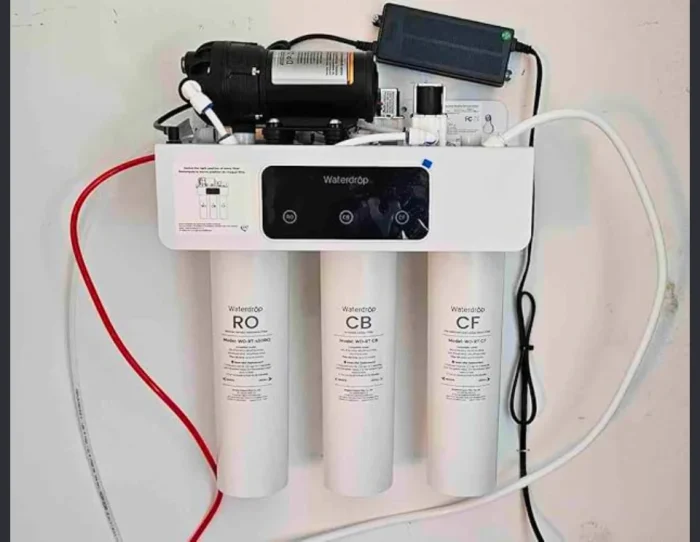
The Waterdrop T4-A makes the most sense as the final drinking-water stage after the main well-water problems have already been corrected.
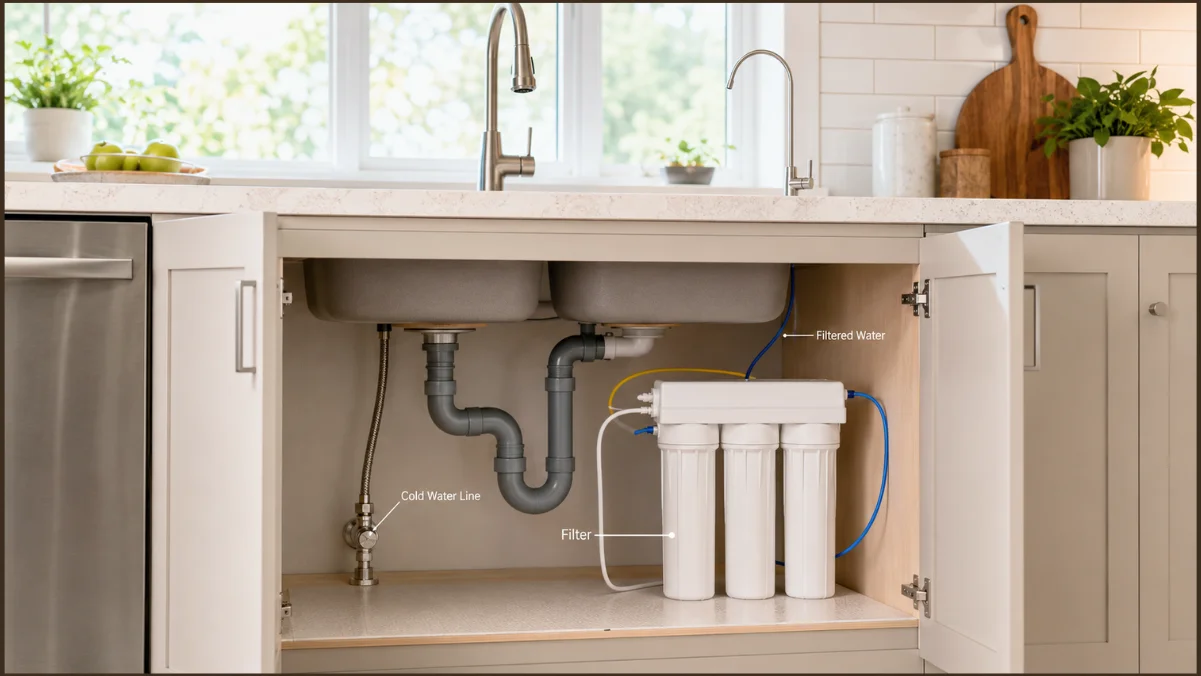
This is a tankless under-sink RO system, so it treats one faucet rather than the entire house. Waterdrop lists it as a 450 GPD system with alkaline remineralization and a 2:1 pure-to-drain ratio.
The tankless design saves cabinet space and provides water on demand without a conventional storage tank. The remineralization stage may also produce a taste some users prefer over standard RO water.
Reverse osmosis can be useful when a laboratory test identifies a contaminant the exact membrane and cartridge configuration is certified or documented to reduce. It can also reduce total dissolved solids, although a high TDS reading by itself does not identify which substances are present or whether they represent a health risk.
Pretreatment is the main concern on a private well. Sediment, iron, manganese, hardness, sulfur-related problems, and microbiological contamination can shorten membrane life or create performance issues. I would not connect this unit directly to difficult raw well water and expect it to solve every problem.
Best for: Homeowners who want additional drinking-water treatment after correcting whole-house well problems.
Choose another product if: You need to treat showers, laundry, iron stains, sulfur odor, sediment, or bacteria throughout the home.
|| For comparable point-of-use options, see the best tankless RO systems and the broader guide to the best reverse osmosis systems.
Express Water 3-Stage Whole House System — Best Cartridge Alternative
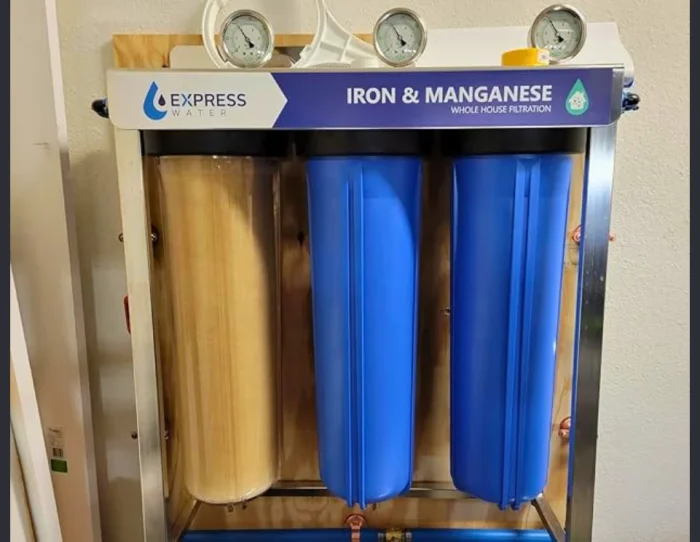
The Express Water 3-Stage system is the most suitable option here for homeowners who specifically prefer a frame-mounted, replaceable-cartridge design.
Its three housings and pressure gauges make the treatment stages and cartridge restriction easier to monitor. As cartridges accumulate debris, the gauges can help show when pressure loss is developing across the system.
The important point is that filter performance depends on the exact cartridges installed. A three-stage frame is only the housing platform; contaminant reduction comes from the selected media and its verified capabilities.
Before relying on this system for lead, arsenic, PFAS, volatile organic compounds, or another health-related contaminant, confirm that the exact cartridge configuration has appropriate third-party certification or reliable performance documentation for that substance.
I would be cautious about installing a cartridge system directly on a well with heavy sand, severe iron, manganese, or strong sulfur odor. Those conditions can exhaust or clog cartridges quickly and are usually better handled by dedicated pretreatment.
Pros
- Straightforward cartridge layout
- Pressure gauges help monitor restriction
- Organized frame-mounted design
- Treatment can be tailored through cartridge selection
Cons
- Cartridge performance depends on the exact configuration
- Can clog quickly on difficult raw well water
- Does not replace dedicated iron, sulfur, softening, or UV treatment
Best for: Homes with controlled sediment and a clearly identified contaminant that matches an appropriate cartridge.
Avoid it as the primary solution if: The well has heavy sediment, severe staining, sulfur odor, hard water, or a positive bacteria test.
Compare the products
Choose the products you want to compare. Ratings retain each product’s original rubric.
| Product | Aquasana Rhino WH-WELL-CT-UV — Best Packaged Whole-House System | DuraWater Air Injection Iron Eater — Best for Iron and Rotten-Egg Odor | iSpring WSP50ARB — Best Sediment Pre-Filter | VIQUA VH200 — Best UV System for Bacteria | SoftPro Elite HE 64,000 Grain — Best for Hard Well Water | Waterdrop T4-A Alkaline pH+ — Best Drinking Water RO Add-On | Express Water 3-Stage Whole House System — Best Cartridge Alternative |
|---|---|---|---|---|---|---|---|
| Check current price | Check price on Amazon ↗ | Check price on Amazon ↗ | Check price on Amazon ↗ | Check price on Amazon ↗ | Check price on Amazon ↗ | Check price on Amazon ↗ | Check price on Amazon ↗ |
How to Choose a Well Water Filtration System
Start With the Confirmed Contaminant
Do not buy equipment because the water looks bad or because a filter system has more stages.
Use the laboratory result to identify the treatment type:
- Sediment: physical filtration
- Iron and manganese: oxidation and filtration
- Hydrogen sulfide: oxidation or suitable catalytic carbon treatment
- Hardness: ion exchange
- Low pH: neutralization or controlled pH correction
- Bacteria: source correction, disinfection, and possibly UV
- Dissolved contaminants: contaminant-specific media or reverse osmosis
Check Peak Flow, Not Just Average Use
Whole-house water filters must supply enough water when several fixtures operate at once. An undersized filter, softener, or UV system can restrict water pressure, cause pressure drops, or allow water to pass too quickly for effective treatment.
Measure or estimate peak demand and compare it with the manufacturer’s service-flow rating. Also confirm that backwashing equipment is compatible with the well pump’s available flow.
Plan the Treatment Order
A common arrangement may look like this:
- Pressure tank
- Coarse sediment protection
- Iron or sulfur treatment
- Water softener
- Whole-house carbon filter or specialty filtration
- UV disinfection
- Point-of-use reverse osmosis
That is only a general example. Fine sediment placement, oxidation equipment, softener order, low-pH correction, and specialty media may change according to the water chemistry and the manufacturers’ instructions.
Compare Upfront Price and Ownership Cost
A low-cost filter is not always the least expensive system to own. Compare:
- Upfront price
- Installation cost
- Replacement cartridges or media
- Salt
- Electricity
- Backwash water
- UV lamps
- RO membranes
- Professional service requirements
A more expensive media tank may cost less over time than two filters that require frequent replacement. The correct choice depends on contaminant load, household use, and maintenance frequency.
Consider Maintenance Before Buying
Every filtration system creates an ownership task:
- Spin-down filters require flushing
- Cartridges require replacement
- Iron filters require backwashing
- Softeners require salt and brine-tank care
- UV systems require lamp and sleeve maintenance
- RO systems require filter and membrane changes
A technically capable system will not protect the water supply if maintenance is ignored.
Verify Certifications Carefully
Do not rely on a general certification logo. Confirm:
- The exact product or cartridge model
- The applicable NSF/ANSI standard
- The specific contaminant-reduction claim
- Rated capacity and flow
- Required replacement schedule
- Incoming-water limits
Certification for materials safety is not the same as certification for removing arsenic, lead, PFAS, bacteria, or another specific contaminant.
Common Well Water Filtration Mistakes
Buying One System to Treat Everything
Most difficult wells need a treatment train. A homeowner with sand, iron, hardness, and bacteria may need sediment protection, an iron filter, a water softener, and UV treatment.
Treating Rust Particles as Dissolved Iron
A sediment filter may catch rust flakes, but dissolved iron can pass through it. Confirm the iron form and concentration before selecting equipment.
Ignoring Low pH
Acidic well water can corrode plumbing and release metals from pipes and fixtures. Correcting low pH may need to happen before certain downstream treatment stages.
Installing UV Before Correcting Turbidity
UV works best on clear water. Sediment, iron, manganese, and scale can interfere with the chamber and quartz sleeve.
Sending Difficult Raw Water Directly to RO
RO membranes are not intended to replace whole-house sediment, iron, sulfur, hardness, or microbiological treatment. Proper pretreatment protects membrane life and performance.
Ignoring Backwash Requirements
Media tanks need enough flow to lift and clean the bed. A system may be correctly sized for household use but still fail to regenerate properly if the well pump cannot provide the required backwash rate.
Choosing by Capacity Alone
A larger softener or filter is not automatically better. Water chemistry, flow, contact time, regeneration frequency, media limits, and programming matter more than the largest advertised number.
Which Well Water Filtration System Should You Choose?
| Main water problem | Best match from this list |
|---|---|
| Broad packaged whole-house treatment | Aquasana Rhino WH-WELL-CT-UV |
| Iron, manganese, or rotten-egg odor | DuraWater Iron Eater |
| Sand, grit, or coarse sediment | iSpring WSP50ARB |
| Confirmed microbiological risk | VIQUA VH200 |
| Hard water and scale | SoftPro Elite HE |
| Drinking-water RO treatment | Waterdrop T4-A |
| Contaminant-specific cartridge treatment | Express Water 3-Stage |
More than one product may be necessary. The safe buying decision is not to choose the system with the longest feature list. It is to select each treatment stage for a confirmed problem and arrange the equipment so the stages protect one another.
For a broader comparison across filtration categories, see the best water filtration systems.
Final Recommendation
For broad packaged treatment, the Aquasana Rhino WH-WELL-CT-UV is the most complete option in this group. I would not choose it automatically, however. When iron or sulfur is the main problem, the DuraWater Iron Eater is the more focused solution.
Use the iSpring WSP50ARB for coarse sediment protection, the VIQUA VH200 for properly pretreated water with a confirmed microbiological concern, and the SoftPro Elite HE for hard water. The Waterdrop T4-A is best reserved for drinking-water treatment after the main well problems are controlled. The Express Water system makes sense only when its exact cartridge configuration matches the contaminant.
The best water filtration system for well water is the one designed around your laboratory results, household flow rate, water pressure, plumbing, upfront price, and maintenance capability. Test first, treat each confirmed problem with the right technology, and verify that health-related contaminant-reduction claims apply to the exact product you are buying.
Editorial Transparency
This roundup combines practical product evaluation, engineering judgment, manufacturer specifications, treatment-system design considerations, safety guidance, and editorial analysis. Product capabilities and contaminant-reduction claims should always be confirmed for the exact model and configuration before installation.
This section is ready for your content in the CMS.
Engr. Hm Jamal
Founder & Lead Technical EditorFounder of Wits Engineer, with a practical background in electrical and water systems. His product reviews focus on setup, performance, maintenance and the trade-offs that affect everyday ownership.