LEVOIT LVAC-300 Review: Strong Carpet Pickup for Less
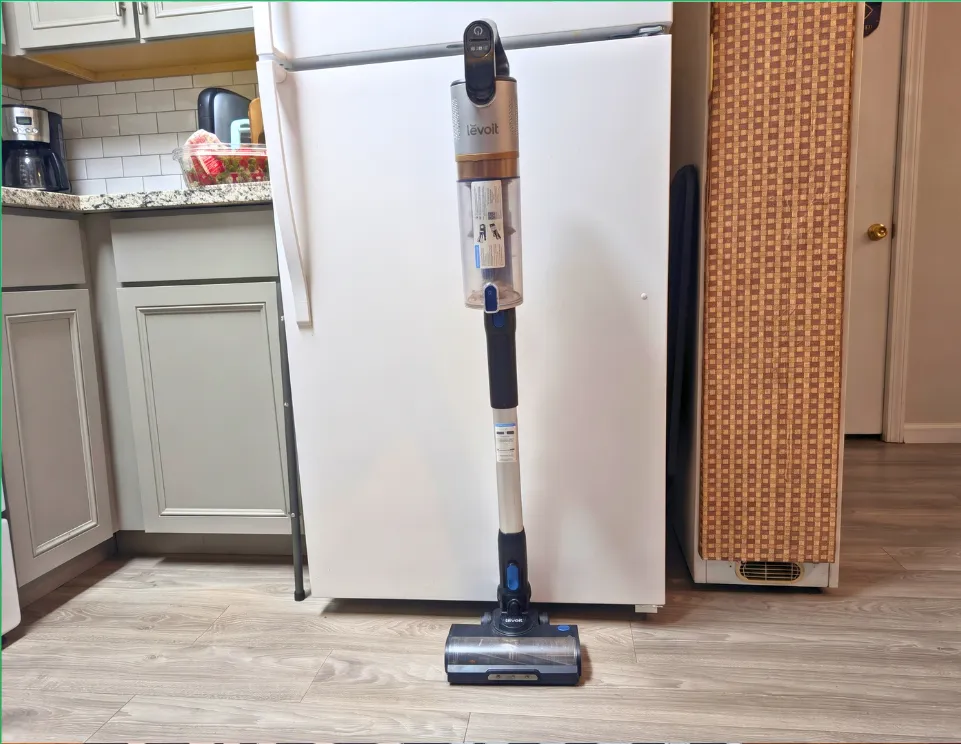

The LEVOIT LVAC-300 offers more than quick crumb collection. Our team recovered 95–96% of embedded sand from medium-pile carpet, and its included mini motorized brush extended cleaning to upholstery and stair treads. For smaller homes, that combination gives it a useful role without Dyson’s premium price.
Its limitations appeared on different tasks. The floorhead struggled more with dirt recessed between boards, while tall cereal pieces could collect ahead of the intake. Plush carpet increased pushing resistance. Strong medium-pile cleaning did not make it equally effective—or comfortable—everywhere.
Hair handling revealed another distinction. Our 14-inch hair test left no wrapping around the main roller, but strands could gather around the dust cup’s internal shroud. Less roller cleanup did not mean maintenance-free emptying.
The LVAC-300 earned our Best Midrange Cordless recommendation in our best vacuum cleaners comparison. Choose it for regular floor and furniture cleaning in smaller spaces, particularly if manual power selection suits your routine.
Editorial ratings interpret the supplied test findings using the same weighting as our roundup: carpet 30%, hard floors 25%, hair handling 15%, handling and attachments 15%, and maintenance 15%. The overall rating is separate from measured pickup percentages and excludes price.
Our verdict
Strong Medium-Pile Cleaning; Less Effective in Floor Gaps
| Metric | Weight | Rating | Notes |
|---|---|---|---|
| Carpet cleaning | Not supplied | 9.0/10 | Recovered 95–96% of embedded medium-pile sand; plush carpet increased resistance. |
| Hard-floor cleaning | Not supplied | 7.0/10 | Collected loose fine debris effectively, but deep gaps and tall cereal exposed limitations. |
| Hair handling | Not supplied | 8.0/10 | No main-roller wrapping with 14-inch hair; some accumulation around the internal shroud. |
| Handling and attachments | Not supplied | 8.0/10 | Self-standing pauses and a motorized mini brush improve convenience; overhead use can tire the hand. |
| Emptying and maintenance | Not supplied | 7.0/10 | Quick-release roller access helps cleanup, but packed hair can require manual removal from the bin. |
- Strong embedded-sand recovery on medium-pile carpet.
- Mini motorized brush included for furniture and stairs.
- No main-roller wrapping in the 14-inch hair test.
- Stands upright during pauses.
- Weaker extraction from deep floor gaps.
- Tall debris can gather ahead of the head.
- Plush carpet increases pushing effort.
- Hair can collect around the bin shroud.
Our LEVOIT LVAC-300 Review & Experience
Source overall rating: 7.9/10. The original rubric is retained below; no missing weights were inferred.
Performance Rating
Key Specifications
| Specification | LEVOIT LVAC-300 |
|---|---|
| Vacuum type | Cordless, bagless stick; converts to handheld |
| Power settings | Eco, Mid, and Turbo; manual selection |
| Assembled weight | Approximately 6.6 pounds |
| Handheld weight | Approximately 3.47 pounds |
| Attachments | Mini motorized brush and two-in-one dusting/crevice tool |
| Storage feature | Self-standing design |
| Brushroll access | Quick-release removal |
The LVAC-300 does not adjust suction automatically or provide manual floorhead-height adjustment. Power selection changes suction demand; it does not raise the head above resistant carpet.
Cleaning Performance: Carpet Agitation Is the Strength
Hard Floors: Loose Dirt Clears More Easily Than Recessed Grit
The LVAC-300 collected fine dust, sand, and rice effectively from flat hard flooring. Larger, taller cereal pieces presented more difficulty: some gathered ahead of the head rather than passing beneath it.
Floor gaps exposed a separate weakness. Fine material lodged between boards or in deeper grout needed more attention than debris lying on the surface. Higher power helped, but the main head’s crevice performance remained less convincing than its carpet cleaning.
Along baseboards, the roller’s proximity to the head’s edge helped collect loose debris. That does not establish equally effective extraction from cracks beside the wall.
For smooth floors with everyday dust and small crumbs, the Levoit worked well. Pronounced gaps and frequent bulky spills made cleanup less straightforward.
Carpet: Strong Medium-Pile Recovery, More Effort on Plush Rugs
Our embedded-sand tests returned 95–96% recovery from medium-pile carpet. The powered roller’s agitation helped loosen grit from the fibers, giving the LVAC-300 a stronger cleaning role than its modest crevice performance might suggest.
For ordinary surface dirt, low-pile cleaning was effective. Medium pile benefited from Mid or Turbo; Eco was less effective for that workload.
Plush carpet increased pushing and pulling resistance. With no manual height adjustment, we could not raise the head to change its contact with the pile. Buyers with extensive thick carpet should weigh that effort alongside the pickup result.
Hair and Upholstery: Check Where the Strands Finish
The 14-inch hair test produced no wrapping around the main roller. However, concentrated hair loads could gather around the metal mesh shroud inside the dust cup.
Inspecting only the brushroll would therefore miss part of the maintenance. Hair had moved off the floor successfully, but some still needed clearing from the collection chamber.
The included mini motorized brush worked well on pet fur pressed into upholstery. Attaching it directly to the handheld body made cushions, pet beds, and stair treads easier to approach than using the full floorhead. That attachment is a meaningful part of the package, especially when furniture cleaning is a regular job.
Battery Life and Power Settings
Powered-Floorhead Runtime Matters Most
With the powered floorhead attached, our endurance runs lasted 24–31 minutes in Mid and 10–13 minutes in Turbo. The difference matters when deciding whether the LVAC-300 can finish your usual cleaning session.
Mid provided a longer working window for routine cleaning. Frequent Turbo use shortened the session substantially, making the Levoit less convenient when several carpeted rooms needed sustained higher power.
The advertised 60-minute maximum uses a passive attachment in Eco. It describes a lighter workload than running the motorized floorhead across carpet and should not be treated as whole-home floor-cleaning time.
Manual Control Is Simple, but Requires Attention
The LVAC-300 uses manually selected Eco, Mid, and Turbo settings. Unlike the Dyson V15 Detect Plus, it does not increase suction automatically as cleaning demand changes.
That was manageable for predictable jobs: select the setting, clean the area, and increase power where necessary. Moving repeatedly between loose dust and embedded dirt required more attention to the controls.
Higher power was not always the answer on plush rugs. Increased floorhead resistance could make movement harder, so judge the setting by both pickup and pushing effort.
Handling, Stairs, and Furniture Cleaning
Self-Standing Pauses Make a Useful Difference
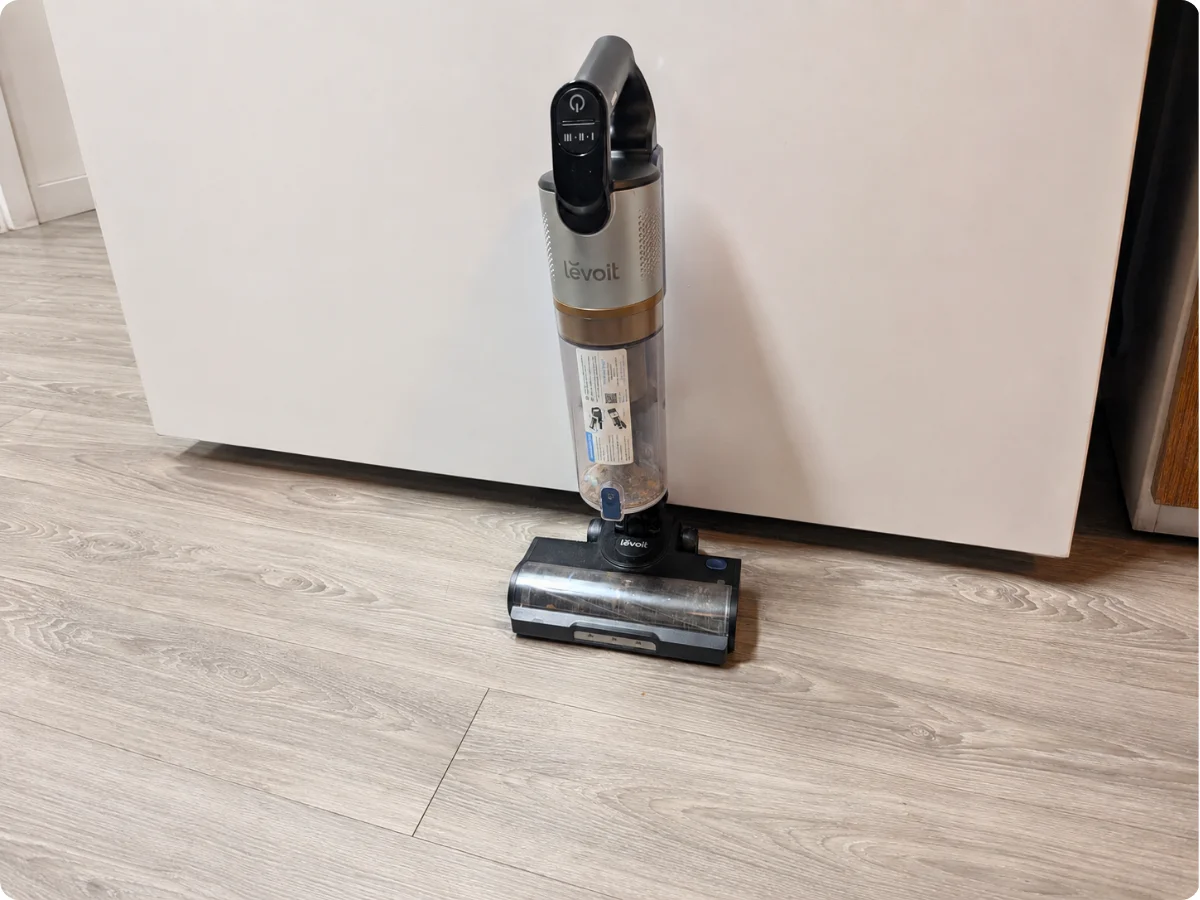
The LVAC-300 stands upright when paused, allowing us to move a chair or clear an obstruction without finding somewhere to lean it. This is a small feature that becomes useful during an interrupted cleaning session.
Swivel steering helped around chair legs and furniture corners. At approximately 6.6 pounds assembled, the vacuum was also straightforward to carry between rooms. Its balance mattered more during prolonged handheld work, where the motor and battery remained close to the hand.
The Mini Motorized Brush Strengthens the Package
Removing the wand and attaching the mini brush directly to the handheld body made stair treads and upholstery easier to reach. There was no upright body to reposition or stretch hose pulling against a parked machine.
The compact brush worked well on pet beds and cushions. Its electric drive distinguishes it from Kenmore’s suction-driven Pet HandiMate, which slowed under firm pressure against fabric.
The Levoit does not have a flexible hose. Its rigid handheld and wand configurations cover many jobs, but offer less freedom when reaching around awkward furniture or into confined spaces.
Low Furniture and Overhead Work Present Different Demands
The wand reclined flat for powered cleaning beneath furniture, provided the opening accommodated the head and body. Supports farther underneath could still restrict access.
For shelves and curtains, the two-in-one dusting/crevice tool extended its usefulness beyond floors. Holding the handheld unit up for longer periods became tiring, however. Easy carrying between rooms did not translate into equally comfortable overhead cleaning.
Dust Disposal and Maintenance
Hair Can Collect Inside the Bin
The bottom-release door emptied loose dry debris easily. Packed hair needed more attention: strands could collect around the metal mesh shroud rather than falling out with the rest of the contents.
This helps explain why a clear brushroll did not mean effortless disposal. The anti-tangle design moved hair into the collection chamber, where concentrated loads sometimes required manual removal.
Pickup declined as debris accumulated around the mesh intake, at roughly half to two-thirds capacity in our checks. With heavy hair loads, inspect that area rather than waiting for the chamber to fill completely. For heavy shedding, inspect the chamber rather than waiting for the bin to look completely full.
Brushroll Access Is Straightforward
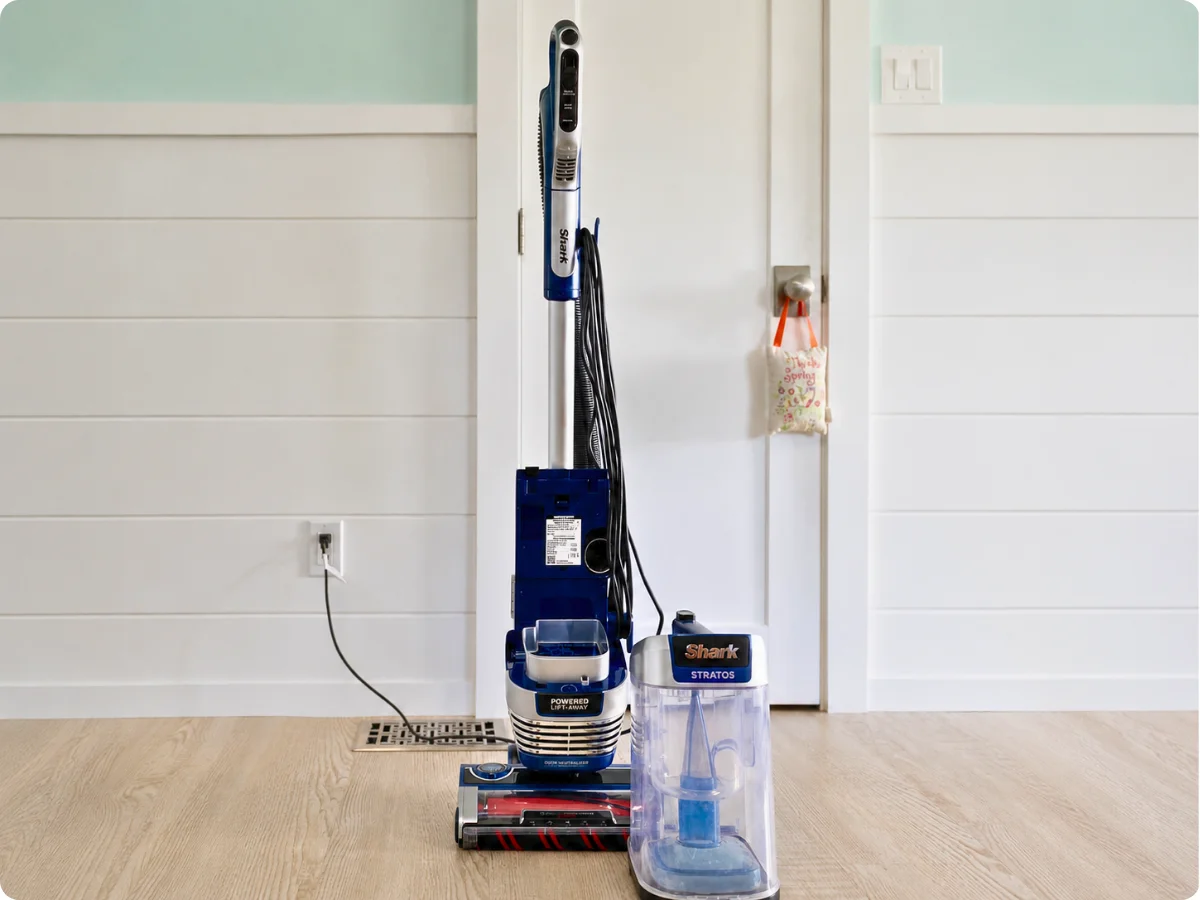
A quick-release latch allows the main roller to be removed for cleaning. That provides easier access than Shark’s main brushroll when debris needs clearing.
Check the roller ends and intake as well as the central brush surface. The low wrapping result does not rule out a blockage elsewhere.
The filter assemblies are accessible, but follow the model’s instructions for washing and drying each component. Keep dust-cup cleaning and filter care separate: clearing visible hair from the bin will not resolve a loaded filter.
Unplug the charger and switch the vacuum off before maintenance. Refit washed components only after they have dried completely.
How it Compares
How the LEVOIT LVAC-300 Compares
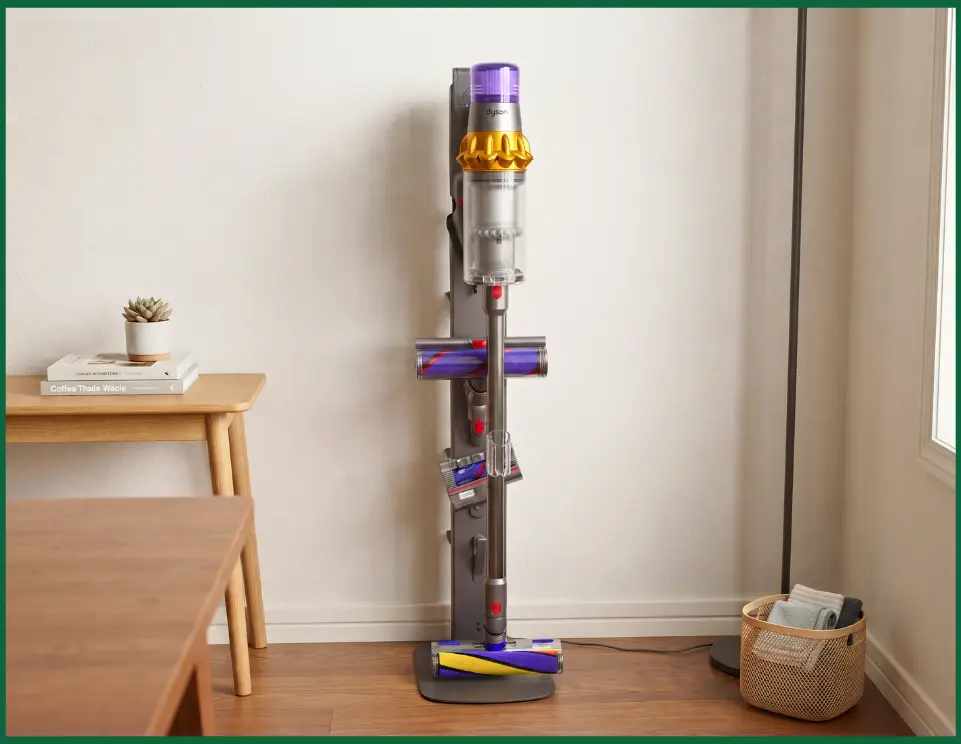
LEVOIT LVAC-300 vs. Dyson V15 Detect Plus
Both include motorized furniture brushes, so choosing the less expensive Levoit does not mean giving up a powered tool for stairs and cushions.
Dyson adds automatic suction adjustment and separate Fluffy Optic and Digital Motorbar floorheads. Levoit requires manual power selection but avoids changing heads between floor types.
Both performed well in medium-pile embedded-sand testing. Both delivered strong medium-pile sand recovery, but the results do not establish a directly comparable winner. Dyson’s automatic adjustment and separate floorheads are clearer reasons to upgrade; Levoit offers simpler manual controls at a lower price.
Choose Levoit when its floorhead and attachments cover your routine. Dyson’s premium makes more sense when automatic adjustment and its dedicated hard-floor head will see frequent use.
LEVOIT LVAC-300 vs. Kenmore DU5092
Kenmore is better suited to longer floor-cleaning sessions without charging breaks. Its 2-liter cup also accommodates more bulky debris before emptying.
Levoit is easier to carry through shorter jobs and has an electrically powered mini brush. Kenmore’s Pet HandiMate relies on suction to rotate, making it more sensitive to pressure against fabric.
Both main floorheads showed weaknesses with recessed dirt. Choose between them around endurance, carrying, and attachment use rather than expecting either to eliminate targeted crevice cleaning.
How We Tested the LEVOIT LVAC-300
How We Tested the LEVOIT LVAC-300
Our team assessed the LVAC-300 on hard flooring, low-pile carpet, and thicker rugs. Hard-floor checks included fine dust, sand, rice, larger cereal pieces, edges, and recessed dirt. Carpet assessment distinguished surface debris from embedded-sand recovery.
The 95–96% medium-pile sand result describes that cleaning task; it does not establish equivalent performance on plush carpet or in floor gaps.
We checked wrapping with 14-inch hair, then inspected both the main roller and the collection chamber. Attachment assessment included the mini motorized brush on furniture and stairs, along with carrying, steering, self-standing pauses, and overhead use.
Battery runs used the powered floorhead, with Mid and Turbo results reported separately. Maintenance checks covered emptying, shroud accumulation, roller removal, and changes in pickup as debris collected inside the bin.
The 7.9/10 editorial performance rating uses the same weighting as our roundup. It combines cleaning results with handling and maintenance judgments; price is assessed separately when recommending the LVAC-300 as our midrange cordless pick.
Conclusion
Conclusion: Should You Buy the LEVOIT LVAC-300?
The LVAC-300 suits smaller homes where cleaning happens in manageable sessions across floors, rugs, and furniture. Strong medium-pile sand recovery, a useful motorized mini brush, and self-standing pauses give it practical value beyond its lower price.
Its limits become more noticeable with deep floor gaps, plush carpet, and heavy hair loads inside the bin. Frequent Turbo use also shortens the available cleaning window.
Choose it when manual power selection and occasional shroud cleanup are acceptable. For sustained floor cleaning, Kenmore avoids the battery constraint. For automatic adjustment and a dedicated hard-floor head, consider Dyson.
_Engineer Md Jamal, Ruly Jathra, Wits Engineer Team.
Engr. Hm Jamal
Founder & Lead Technical EditorFounder of Wits Engineer, with a practical background in electrical and water systems. His product reviews focus on setup, performance, maintenance and the trade-offs that affect everyday ownership.