Best HEPA Filter Vacuums for Allergies, Dust, Pollen, and Pet Dander
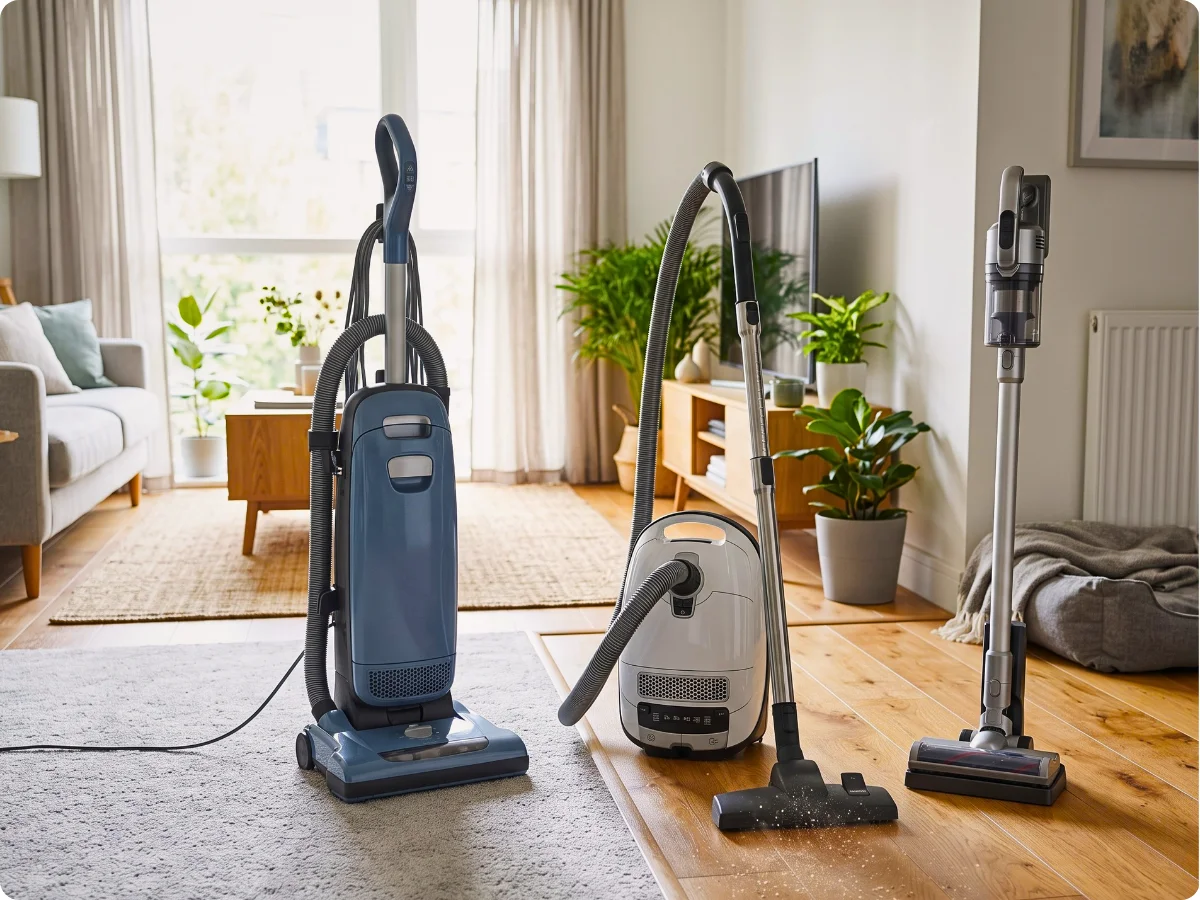

A good HEPA vacuum should do more than pick up visible dirt. For allergy control, the real question is whether the vacuum captures fine dust, pollen, pet dander, and carpet debris without leaking dirty air back into the room.
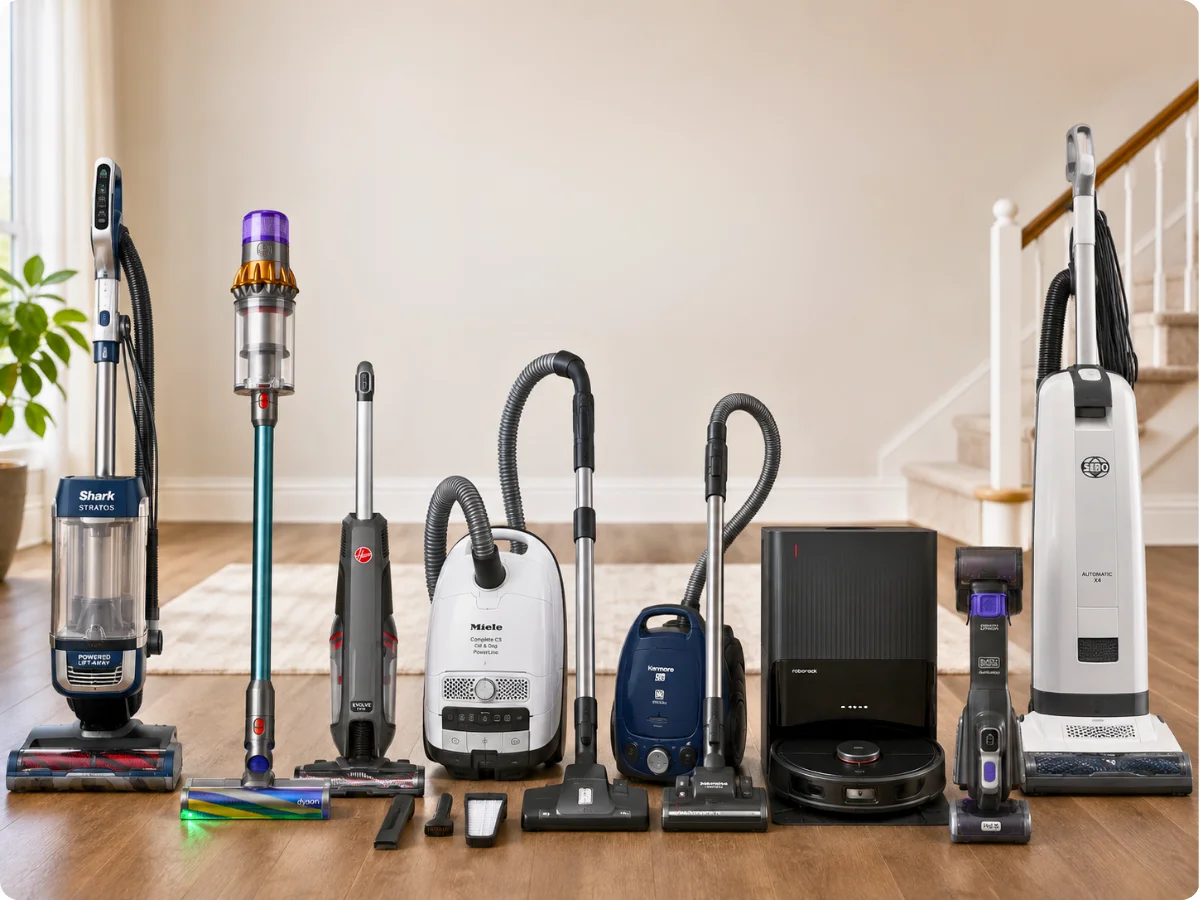
After comparing these models through practical use, engineering judgment, filtration design, maintenance needs, and official product information, the Shark Stratos AZ3002 is the best HEPA vacuum for most homes. It combines strong upright cleaning, a sealed allergen system, pet-focused tools, and enough flexibility for carpets, hard floors, stairs, and upholstery.
If your main concern is dust exposure during emptying, I would choose the Miele Complete C3 Cat & Dog with the HEPA AirClean filter upgrade. A sealed bagged canister is still one of the cleanest choices for allergy-sensitive households.
Quick Answer
| Rank | Product | Best For | Main Trade-Off |
|---|---|---|---|
| 1 | Shark Stratos AZ3002 | Best overall HEPA vacuum for most homes | Bagless emptying can expose you to dust |
| 2 | Miele Complete C3 Cat & Dog | Best bagged canister for allergy control | Expensive, and HEPA filter may be an upgrade |
| 3 | Dyson Gen5detect | Best cordless HEPA vacuum | High price and smaller bin |
| 4 | SEBO Dart 9855AM | Best durable bagged upright | S-Class filtration, not marketed like a True HEPA model |
| 5 | Kenmore Elite 31150 | Best value bagged HEPA upright | Heavy, traditional upright design |
| 6 | Bissell Pet Hair Eraser Allergen Lift-Off 39883 | Best budget pet-allergen upright | Bagless dustbin still needs careful emptying |
| 7 | iRobot Roomba 415X | Best supplemental robot vacuum | Not a replacement for deep HEPA cleaning |
For a broader vacuum comparison, see our main guide to the best vacuum cleaners.
What Is a HEPA Vacuum?
A HEPA vacuum uses a high-efficiency particulate air filter designed to capture very small particles, including dust, pollen, mold spores, and pet dander. The EPA explains that a HEPA filter can theoretically remove at least 99.97% of dust, pollen, mold, bacteria, and other airborne particles at 0.3 microns.
That definition matters, but it is only part of the story.
In a vacuum cleaner, dirty air moves through a body, hose, dustbin or bag chamber, motor path, seals, and exhaust area. If the vacuum is not well sealed, fine dust can leak around the filter before the air ever reaches the HEPA media.
That is why I give more weight to vacuums with sealed HEPA systems, sealed allergen systems, whole-machine filtration, or strong bagged containment.
Best HEPA Vacuums at a Glance
| Award | Product | Type | Filtration Focus | Best Buyer |
|---|---|---|---|---|
| Best Overall | Shark Stratos AZ3002 | Corded upright | Anti-Allergen Complete Seal + HEPA filter | Most homes with pets, carpet, hard floors, and dust |
| Best Bagged Canister | Miele Complete C3 Cat & Dog | Bagged canister | AirClean system, Active AirClean filter, HEPA AirClean upgrade option | Allergy-sensitive homes that want cleaner disposal |
| Best Cordless | Dyson Gen5detect | Cordless stick | Fully sealed whole-machine HEPA filtration | Buyers who want premium cordless convenience |
| Best Durable Upright | SEBO Dart 9855AM | Bagged upright | S-Class exhaust microfilter + AeraPure bag | Carpet-heavy homes that value durability |
| Best Value Bagged Upright | Kenmore Elite 31150 | Bagged upright | HEPA filter and bagged dust containment | Budget-focused allergy households |
| Best Budget Pet Upright | Bissell Pet Hair Eraser Allergen Lift-Off 39883 | Bagless upright | HEPA Sealed Allergen System | Pet owners who want sealed filtration at a lower price |
| Best Robot Supplement | iRobot Roomba 415X | Robot vacuum/mop | Replaceable filter, automated maintenance | Daily surface dust control between deep cleans |
How We Evaluated These HEPA Vacuums
I evaluated these vacuums around the issues that matter most in allergy homes:
- Whether the filtration claim applies to the filter alone or the whole machine.
- How well the design controls dust during cleaning.
- Whether emptying the vacuum exposes the user to dust.
- How practical the vacuum is for carpet, hard floors, stairs, upholstery, and pet areas.
- How often filters, bags, bins, and brush rolls need attention.
- Whether the vacuum is realistic as a primary cleaner or only a maintenance tool.
For allergy use, the vacuum should reduce exposure. It should not be treated as a medical device or allergy treatment.
The Asthma & Allergy Friendly Certification Program notes that some vacuums release particles back into the air, so certified products are tested against standards intended to trap allergens and irritants during cleaning.
Best HEPA Vacuum by Home Type
Our Top Picks
Detailed product reviews
Shark Stratos AZ3002 — Best Overall HEPA Vacuum for Most Homes
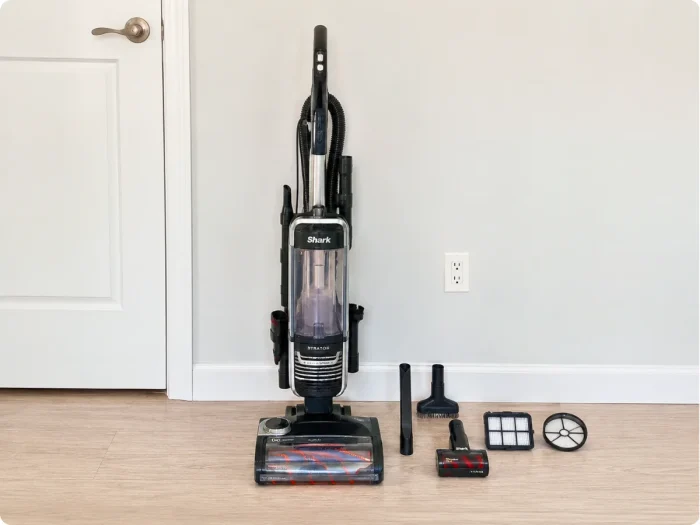
The Shark Stratos AZ3002 is the best overall pick because it balances allergen control, carpet cleaning, pet hair pickup, hard-floor usability, and price better than the other models here.
Shark lists this model with Anti-Allergen Complete Seal, a HEPA filter, DuoClean PowerFins HairPro, Powered Lift-Away, and pet-focused tools. That combination matters because allergy cleaning is not just about pulling dirt from the carpet. The vacuum also needs to control the fine particles that pass through the airflow path.
During use, the Stratos feels like the most practical “one vacuum for most homes” option in this group. The upright body gives it enough floor-cleaning authority for carpets and rugs, while Powered Lift-Away makes stairs, upholstery, and tight pet zones easier than a fixed upright.
The main weakness is emptying. It is still a bagless vacuum, and any bagless dustbin can release dust when opened. If you are highly sensitive to dust, empty it outside, keep your face away from the bin, and clean the filters on schedule.
I would choose the Shark Stratos AZ3002 if you want one sealed HEPA upright for pets, carpet, hard floors, and general allergy-focused cleaning without moving into premium canister pricing.
Pros:
- Sealed allergen system with HEPA filter.
- Strong all-around fit for carpets, rugs, and hard floors.
- Powered Lift-Away helps with stairs and upholstery.
- Pet tools are genuinely useful in homes with shedding animals.
- Better primary vacuum than a robot or small cordless model.
Cons:
- Bagless emptying can expose users to dust.
- Heavier than cordless stick vacuums.
- More filters and parts to maintain than a simple bagged design.
Miele Complete C3 Cat & Dog — Best Bagged Canister for Allergy Control
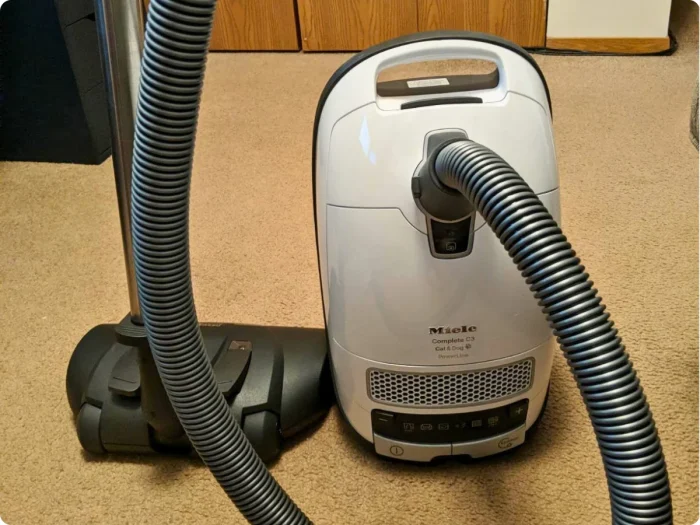
The Miele Complete C3 Cat & Dog is the vacuum I would point allergy-sensitive buyers toward when dust exposure during emptying is a major concern.
A bagged canister has one practical advantage that many bagless vacuums cannot match: the dirt stays inside a disposable bag. That matters when you are dealing with pollen, pet dander, dust mite debris, and fine carpet dust. You are not shaking a plastic bin over a trash can and hoping the cloud misses your face.
Miele lists the Complete C3 Cat & Dog with an Active AirClean filter, which is designed for odor control. For HEPA-focused allergy use, the important detail is that Miele’s SF-HA 50 HEPA AirClean filter is listed for Complete C3 models and is HEPA class 13 under DIN EN 1822/2019, with annual replacement guidance.
That distinction is important. I would not describe the standard Cat & Dog configuration as the strongest HEPA setup unless the HEPA AirClean filter is installed. With that upgrade, it becomes one of the cleanest choices in this list for dust containment.
The canister format is also excellent for hard floors, furniture, stairs, baseboards, and under-bed dust. If your home has a mix of pet areas, carpeted rooms, and allergy-sensitive bedrooms, the Miele feels more controlled and deliberate than most uprights.
The drawbacks are cost and ownership expense. Bags and filters are not optional, and genuine replacements add to the long-term price. But for allergy households, that cost can be worth it because disposal is cleaner and maintenance is more predictable.
Pros:
- Bagged design reduces dust exposure during emptying.
- Compatible HEPA AirClean filter option for Complete C3 models.
- Excellent for hard floors, upholstery, stairs, and detailed cleaning.
- Strong choice for allergy-sensitive bedrooms and pet homes.
- More hygienic disposal than most bagless vacuums.
Cons:
- Expensive upfront.
- Bags and filters add recurring cost.
- Cat & Dog model commonly emphasizes Active AirClean
- so HEPA setup should be confirmed.
- Canister format is not everyone’s preference.
Dyson Gen5detect — Best Cordless HEPA Vacuum
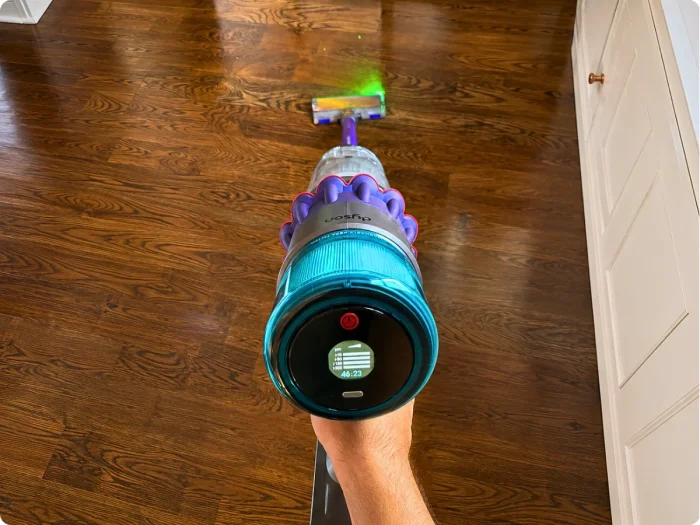
The Dyson Gen5detect is the best cordless HEPA vacuum here. It is the right choice if you want strong filtration, cordless convenience, and the ability to clean before dust builds up.
Dyson describes the Gen5detect as having a fully sealed whole-machine HEPA filtration system designed to capture 99.99% of particles down to 0.1 microns. That is Dyson’s stated filtration claim, not an independent Wits Engineer lab measurement.
The practical advantage is frequency. A cordless vacuum that is easy to grab often gets used more. In allergy homes, that matters. Dust, pollen, pet hair, and dander build up quickly on hard floors, along baseboards, around litter areas, and on stairs. The Gen5detect makes those smaller cleaning sessions easier.
The dust illumination is also useful. It does not make the vacuum “more HEPA,” but it helps show fine dust on hard floors that people normally miss. In daily cleaning, that visibility changes behavior. You clean more thoroughly because you can see what is still there.
The compromise is that this is still a bagless cordless vacuum. The bin is smaller than a full-size upright or canister, and emptying it can expose you to dust. Runtime also depends on mode and floorhead. For a large carpet-heavy house, I would still prefer a corded upright or bagged canister as the primary allergy vacuum.
Choose the Dyson Gen5detect if you want the best cordless HEPA option for quick cleaning, hard floors, stairs, furniture, and frequent dust maintenance. If you need one machine for deep carpet cleaning across a large home, Shark, Miele, SEBO, or Kenmore makes more sense.
Pros:
- Fully sealed whole-machine HEPA filtration claim.
- Cordless convenience encourages frequent cleaning.
- Dust illumination helps on hard floors.
- Strong handheld conversion for stairs, upholstery, and car interiors.
- Good fit for apartments and smaller homes.
Cons:
- Expensive.
- Bagless emptying still exposes users to dust.
- Smaller bin than full-size vacuums.
- Not my first choice as the only vacuum for large carpet-heavy homes.
SEBO Dart 9855AM — Best Durable Bagged Upright with S-Class Filtration
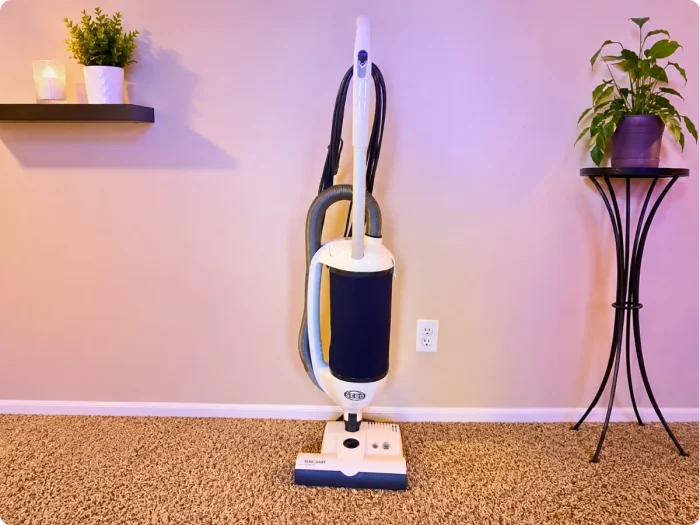
The SEBO Dart 9855AM is the most practical choice here for buyers who want a durable, serviceable bagged upright rather than a feature-heavy consumer vacuum.
SEBO lists the Dart with a pre-motor filter, three-layer AeraPure bag, and S-Class exhaust microfilter. The bag has a hygiene cap designed to prevent dust from escaping during removal or disposal.
That bag design is the main reason the Dart ranks ahead of some flashier vacuums. For allergy cleaning, disposal matters. A vacuum can filter well while running, then undo some of that benefit if dust escapes when the bin or bag is emptied. SEBO’s bagged design is cleaner than most bagless systems in that moment.
The Dart is especially sensible for carpet. It feels more like a serious cleaning tool than a tech product. The design is upright, straightforward, and built around long-term service rather than screens, lasers, or smart features.
The limitation is wording. I would describe this as a strong bagged upright with S-Class filtration, not as a True HEPA vacuum unless you confirm the exact filter package being sold. For buyers who specifically want the clearest HEPA claim, Shark, Dyson, Bissell, Kenmore, or a Miele with HEPA AirClean installed will be easier to document.
Choose the SEBO Dart if you care about durability, carpet cleaning, clean bag disposal, and long-term ownership more than high-tech features.
Pros:
- Bagged system with hygiene cap.
- S-Class exhaust microfilter.
- Strong fit for carpet-heavy homes.
- Durable, practical upright design.
- Cleaner disposal than most bagless vacuums.
Cons:
- Not marketed as clearly as a True HEPA vacuum.
- Less flexible than a canister for above-floor cleaning.
- Fewer convenience features than Dyson or Shark.
- Utilitarian design may not appeal to everyone.
Kenmore Elite 31150 — Best Value Bagged HEPA Upright
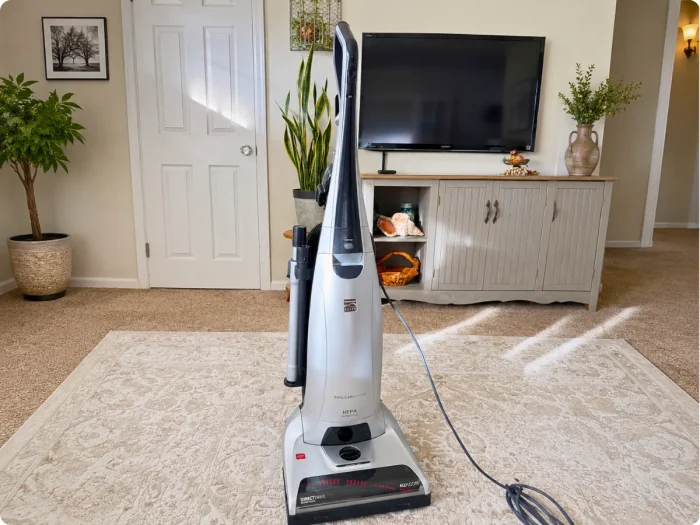
The Kenmore Elite 31150 is the best value choice if you want a bagged upright with HEPA filtration without paying Miele or SEBO money.
Kenmore lists the Elite 31150 as a pet-friendly bagged upright with a HEPA filter, dirt sensors, and pet hair attachments. That gives it the right basic formula for allergy households: bagged dust containment, HEPA filtration, carpet-focused cleaning, and tools for pet areas.
In practical use, the biggest strength is its old-school cleaning approach. It is not sleek or lightweight, but it gives you a full-size upright body, height adjustment, and a bagged system that keeps disposal cleaner than a bagless bin.
The trade-off is weight and maneuverability. This is not the vacuum I would choose for someone who needs to carry a machine up and down stairs every day. It also does not have the same refined sealing story as Shark’s Anti-Allergen Complete Seal or Dyson’s whole-machine HEPA claim.
Still, if your budget is limited and you want bagged HEPA cleaning for carpets, pet hair, and dust, the Kenmore Elite 31150 is one of the more practical choices on this list.
Pros:
- Bagged upright with HEPA filter.
- Better dust disposal than bagless budget vacuums.
- Pet attachment included.
- Dirt sensor helps identify areas that need more passes.
- Good value for carpeted homes.
Cons:
- Heavy.
- Traditional upright design feels less modern.
- Less flexible for stairs and furniture than a canister.
- Filtration details are not as complete as premium sealed systems.
Bissell Pet Hair Eraser Allergen Lift-Off 39883 — Best Budget Pet-Allergen Upright
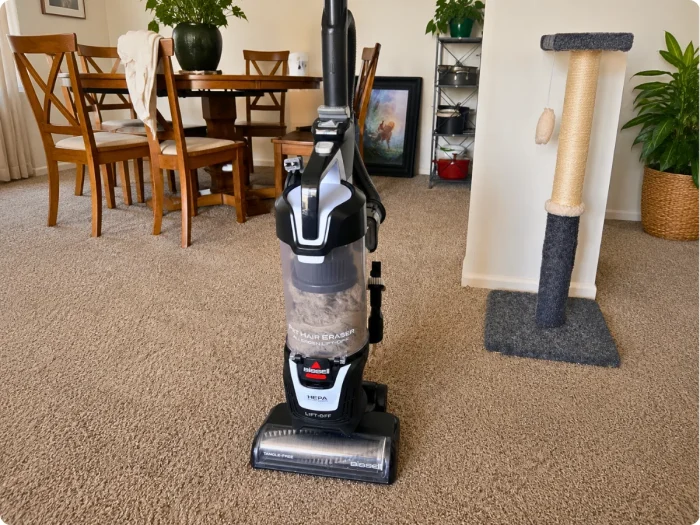
The Bissell Pet Hair Eraser Allergen Lift-Off 39883 is the best budget-friendly pet-allergen upright in this group.
Bissell lists this model with a HEPA Sealed Allergen System designed to keep small particles, including dust, pollen, and pet dander, from being released back into the home’s air. Bissell also notes ASTM F1977 testing at 0.3 microns.
That is a strong claim for the price class. Many budget pet vacuums focus on hair pickup but say less about fine-particle containment. This Bissell is more allergy-relevant because it combines pet tools, a sealed filtration claim, and a lift-off design.
During use, the lift-off pod is the part that makes the most sense for pet homes. Hair and dander do not stay neatly on the main carpet. They collect on stairs, couch cushions, pet beds, baseboards, and corners. A removable pod helps reach those areas without dragging the full upright body everywhere.
The limitation is the dustbin. Like Shark and Dyson, this is bagless. If emptying the bin triggers symptoms, a bagged Miele, SEBO, or Kenmore is the better choice. I also would not expect the same long-term build feel as the premium machines.
Choose the Bissell 39883 if you want sealed allergen filtration and pet-focused cleaning at a more approachable price, and you are willing to empty the bin carefully.
Pros:
- HEPA Sealed Allergen System.
- Good pet-focused design for the price.
- Lift-Off pod helps with stairs and furniture.
- Tangle-free brush roll reduces hair-wrap frustration.
- Strong value for pet owners.
Cons:
- Bagless emptying can release dust.
- Not as premium as Miele, SEBO, or Dyson.
- Less ideal for highly sensitive users who want sealed bag disposal.
- More maintenance than a simple bagged upright.
For homes where pet hair is the main problem, see our dedicated guide to the best vacuums for pet hair.
iRobot Roomba 415X — Best Supplemental Robot Vacuum for Daily Dust Control
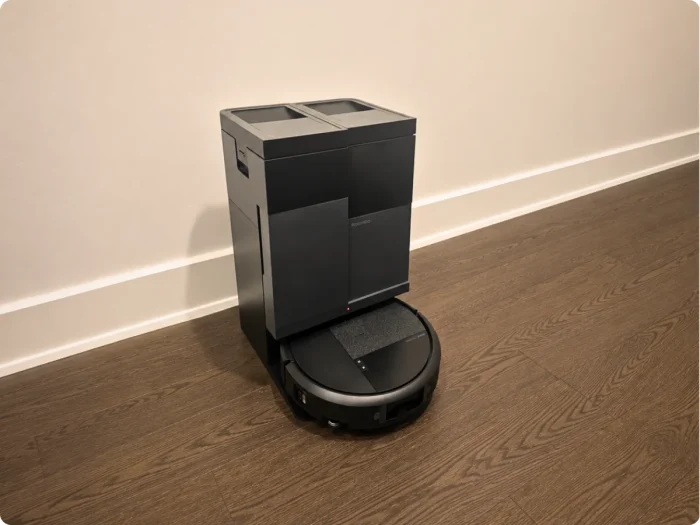
The iRobot Roomba 415X is useful, but it should not be treated as the main HEPA vacuum for allergy cleaning.
Robot vacuums help because they reduce daily surface dust. If a robot runs regularly, less debris sits on hard floors, under furniture, and along common traffic paths. That can make the home easier to maintain between deeper cleaning sessions.
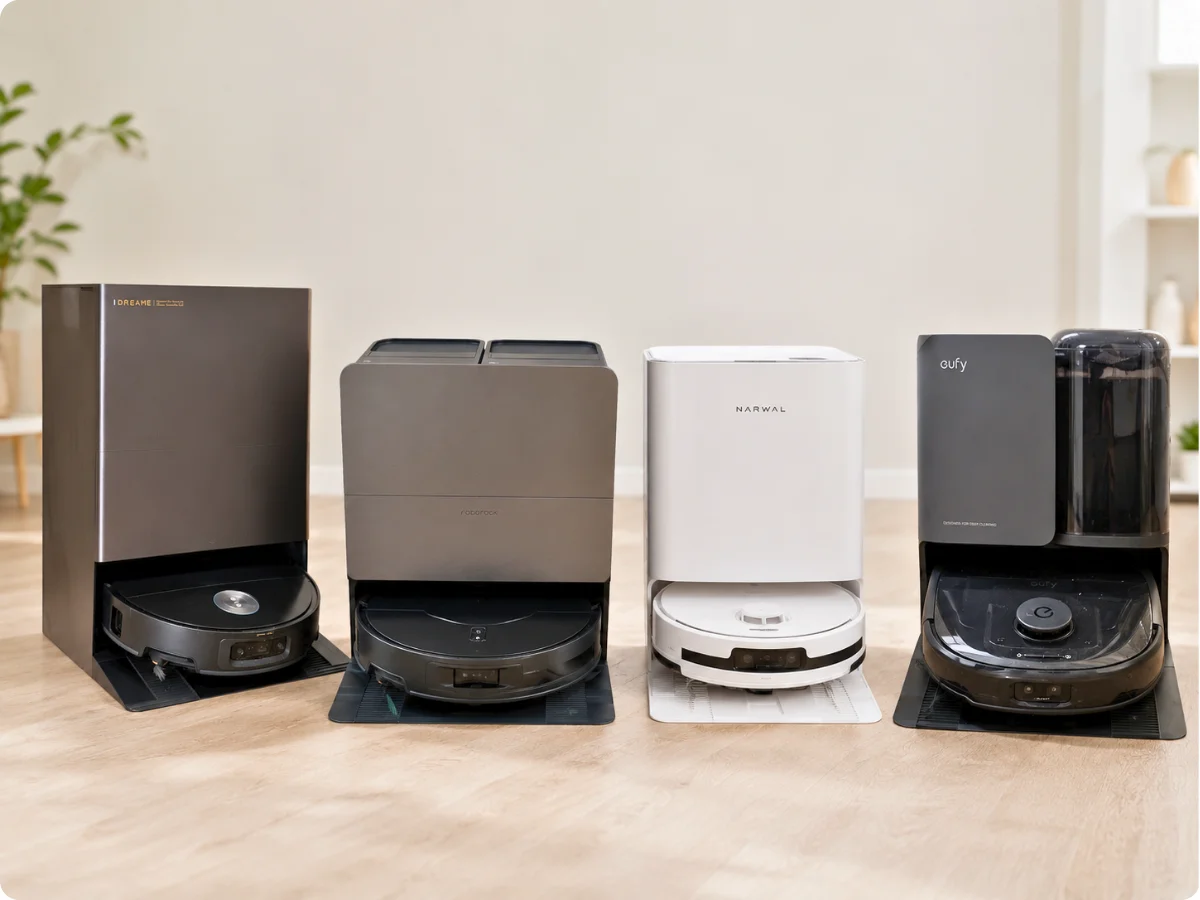
The Roomba 415X is also more of a convenience tool than a deep-cleaning allergy vacuum. iRobot’s official page emphasizes setup, LiDAR mapping, vacuuming and mopping, dock care, and filter replacement every 3–6 months. I did not find the same clear True HEPA or sealed whole-machine filtration language that Shark, Dyson, or Bissell provide for their allergy-focused vacuums.
That does not make the Roomba useless. It just changes its role. It is best for daily maintenance, especially on hard floors. Roomba 415X is not the vacuum I would rely on for deep carpet cleaning, mattresses, upholstery, stair edges, or allergy-sensitive bedrooms.
Choose the Roomba 415X if you already have or plan to buy a sealed upright or canister and want a robot to reduce daily dust between proper vacuuming sessions.
Pros:
- Helps reduce daily surface dust.
- Good for maintenance cleaning.
- Convenient for busy households.
- Useful on hard floors and open areas.
- Mapping and docking features reduce manual effort.
Cons:
- Supplemental, not a deep allergy-cleaning replacement.
- No clear True HEPA claim found in official product wording.
- Not ideal for deep carpet or upholstery allergen removal.
- Filter and dock maintenance still matter.
Compare the products
Choose the products you want to compare. Ratings retain each product’s original rubric.
| Product | Shark Stratos AZ3002 — Best Overall HEPA Vacuum for Most Homes | Miele Complete C3 Cat & Dog — Best Bagged Canister for Allergy Control | Dyson Gen5detect — Best Cordless HEPA Vacuum | SEBO Dart 9855AM — Best Durable Bagged Upright with S-Class Filtration | Kenmore Elite 31150 — Best Value Bagged HEPA Upright | Bissell Pet Hair Eraser Allergen Lift-Off 39883 — Best Budget Pet-Allergen Upright | iRobot Roomba 415X — Best Supplemental Robot Vacuum for Daily Dust Control |
|---|---|---|---|---|---|---|---|
| Check current price | Check price on Amazon ↗ | Check price on Amazon ↗ | Check price on Amazon ↗ | Check price on Amazon ↗ | Check price on Amazon ↗ | Check price on Amazon ↗ | Check price on Amazon ↗ |
True HEPA vs HEPA-Like: What Buyers Should Watch For
True HEPA matters because it refers to a defined filtration performance level. The EPA’s HEPA explanation centers on 99.97% capture at 0.3 microns.
The problem is that vacuum marketing can get vague. Terms like “HEPA-like,” “HEPA-type,” or “high-efficiency filter” may sound similar, but they are not always the same as a verified HEPA claim.
For allergy use, look for wording such as:
- True HEPA.
- HEPA filter.
- Sealed HEPA system.
- Whole-machine HEPA filtration.
- HEPA sealed allergen system.
- HEPA class 13.
- Tested filtration statement with a particle size.
The best wording combines filtration and sealing. A good filter in a leaky body is not enough.
Sealed System vs HEPA Filter Only
A sealed HEPA system is better for allergies because it forces dirty air through the filter instead of allowing dust to leak through gaps in the vacuum body, bin, hose, or exhaust path.
This is one reason the Shark Stratos, Dyson Gen5detect, and Bissell 39883 are stronger allergy choices than vacuums that only mention a HEPA filter. Shark uses Anti-Allergen Complete Seal with a HEPA filter, Dyson uses fully sealed whole-machine HEPA filtration language, and Bissell uses HEPA Sealed Allergen System wording.
A sealed system matters most when cleaning:
- Carpeted bedrooms.
- Pet sleeping areas.
- Upholstery.
- High-pollen entryways.
- Dusty rugs.
- Homes where vacuuming triggers sneezing or irritation.
Bagged vs Bagless HEPA Vacuums for Allergies
Bagged HEPA vacuums are usually better for allergy sufferers because sealed bags reduce dust exposure during emptying. Bagless vacuums can still clean well, but emptying the dustbin may release dust and dander.
This is why Miele, SEBO, and Kenmore deserve serious consideration even if they look less modern than Dyson or Shark. The cleaning session is only half the job. Disposal matters too.
A bagless vacuum can be a good choice if:
- You empty it outside.
- You do not let the bin overfill.
- You clean or replace filters correctly.
- You are not highly sensitive to dust clouds.
- You value convenience over the cleanest disposal.
A bagged vacuum is usually better if:
- Emptying dustbins triggers symptoms.
- You have pets and carpet.
- You vacuum bedrooms often.
- You want less contact with fine dust.
- You prefer predictable maintenance.
The Pet Dander vs Pet Hair: Why the Difference Matters
Pet hair is visible. Pet dander is not always visible.
That distinction matters because many “pet vacuums” are good at collecting hair but less clear about allergen containment. Hair wraps around brush rolls, collects on upholstery, and makes the home look dirty. Dander, saliva proteins, and fine dust are the particles allergy-sensitive users are usually more worried about.
For pet homes, I look for two things:
First, the vacuum needs a brush roll and tools that remove hair from carpet, rugs, stairs, and upholstery. Second, it needs filtration and sealing that keep fine particles from blowing back into the room.
That is why Shark and Bissell are strong pet-allergy picks, while Miele is the cleaner choice for buyers who want bagged disposal.
Cordless vs Corded HEPA Vacuums
Cordless HEPA vacuums are good enough when the main goal is frequent dust control, quick pet cleanup, stairs, hard floors, and small-to-medium homes.
Corded vacuums are better when you have:
- Large carpeted areas.
- Multiple bedrooms.
- Heavy shedding pets.
- Thick rugs.
- Longer cleaning sessions.
- Allergy-sensitive rooms that need thorough cleaning.
The Dyson Gen5detect is the best cordless option here because its filtration claim is stronger than most cordless vacuums. But if I were cleaning a large carpeted allergy home, I would still want a corded sealed upright or bagged canister as the primary machine.
Dust Mites, Carpet, and Allergen Reservoirs
Carpet behaves like a reservoir. It holds dust, pollen, pet dander, dust mite debris, soil, and fine particles that settle over time.
A robot vacuum can help with surface dust, but it cannot replace a powered upright or canister for deeper carpet cleaning. For carpets, brush agitation and controlled airflow matter. Slow passes matter too. Rushing over carpet once is not the same as giving the brush roll time to lift embedded dust.
How to Vacuum Without Triggering Allergy Symptoms
A HEPA vacuum helps most when it is used correctly.
Use slow passes on carpet. Fine dust does not always come out with one fast pass. Give the brush roll and airflow time to work.
Empty bagless bins outside if possible. Keep the bin low inside the trash bag, turn your face away, and let the dust settle before closing the bag.
Replace filters on schedule. A clogged filter can reduce airflow and make the vacuum work harder.
Do not wash filters unless the manual says they are washable. A damp or damaged filter can reduce filtration and create odor problems.
Clean upholstery and pet beds. Dander does not stay on floors.
Do bedrooms last if you are sensitive. Vacuum, leave the room, and let disturbed dust settle before sleeping.
Filter Maintenance Mistakes That Reduce Allergen Control
The most common HEPA vacuum mistake is treating the filter as permanent.
Filters load with dust over time. Bags fill. Seals get dirty. Brush rolls collect hair. Hoses clog. Once airflow drops, cleaning performance drops too.
Avoid these mistakes:
- Washing non-washable HEPA filters.
- Reinstalling damp filters.
- Using off-brand filters that do not seal properly.
- Letting dustbins overfill.
- Ignoring pre-motor filters.
- Running the vacuum with a loose filter cover.
- Skipping bag changes to save money.
- Forgetting robot filter replacement.
Common Buying Mistakes
Buying a HEPA Filter Instead of a Sealed HEPA Vacuum:
A HEPA filter alone does not guarantee clean exhaust air. Look for sealed system language when allergy control is the priority.
Choosing Bagless Without Thinking About Emptying:
Bagless vacuums can clean well, but emptying the bin can release dust. If that bothers you, buy bagged.
Assuming Pet Hair Pickup Means Dander Control:
Hair pickup and allergen control are related, but they are not the same. Pet homes need both good tools and strong filtration.
Using a Robot Vacuum as the Only Allergy Vacuum:
A robot is excellent for maintenance. It is weak as your only deep-cleaning tool.
Ignoring Filter Replacement:
A HEPA vacuum with a neglected filter becomes less effective and more frustrating to use.
Buying Cordless for a Large Carpeted Home:
Cordless vacuums are convenient, but a large carpeted home usually needs a corded full-size vacuum too.
Final Recommendation
For most homes, I would buy the Shark Stratos AZ3002. It gives the strongest mix of sealed HEPA filtration, upright cleaning power, pet tools, and practical flexibility without reaching premium canister pricing.
For the cleanest disposal experience, I would choose the Miele Complete C3 Cat & Dog with the HEPA AirClean filter upgrade. If you are sensitive to dust clouds when emptying a vacuum, bagged disposal is worth paying for.
The safest buying advice is simple: prioritize sealed filtration first, bagged disposal if dust emptying bothers you, and the right vacuum type for your floors. A HEPA label helps, but the whole vacuum design matters more.
Editorial Transparency
This article combines practical product evaluation, engineering judgment, official documentation, manufacturer specifications, filtration standards, buyer-use considerations, and editorial analysis.
Product recommendations are based on allergen control, sealed filtration, dust disposal, floor compatibility, maintenance, and overall ownership value.
This section is ready for your content in the CMS.
Engr. Hm Jamal
Founder & Lead Technical EditorFounder of Wits Engineer, with a practical background in electrical and water systems. His product reviews focus on setup, performance, maintenance and the trade-offs that affect everyday ownership.